


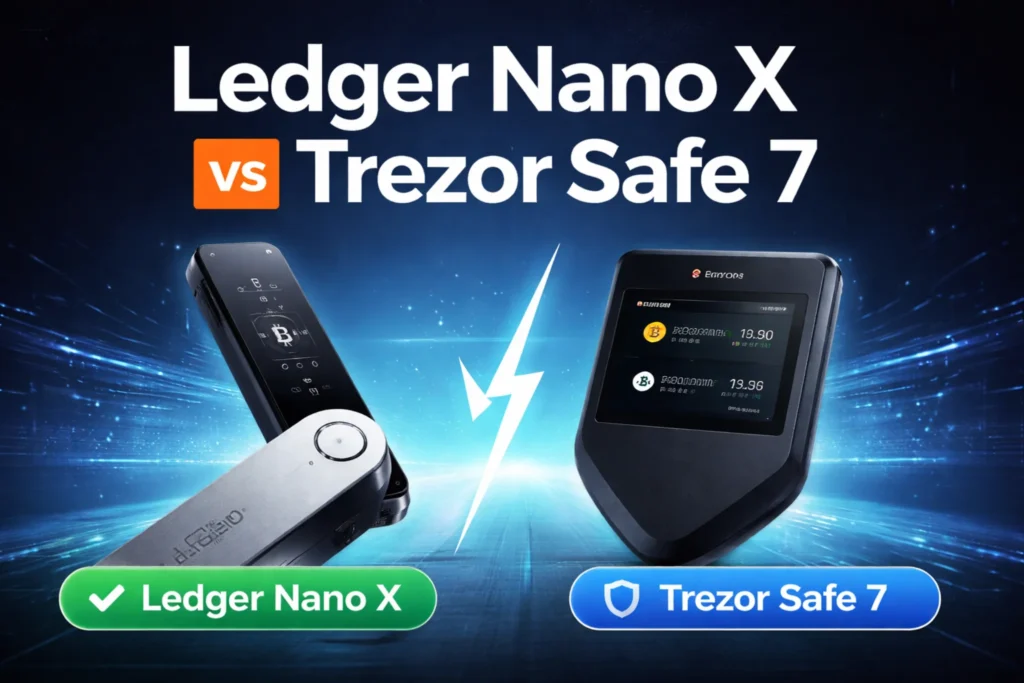
In this Ledger Nano X vs Trezor Safe 7 comparison, we break down security architecture, usability, asset support, and long-term durability to help you choose the right hardware wallet in 2026.
This Ledger Nano X vs Trezor Safe 7 comparison is designed to help you choose based on risk tolerance, not marketing.
Last Updated: February 2026
Author: Snout0x
Transparency Note: This guide contains affiliate links. If you purchase through them, I may earn a commission at no extra cost to you.
Disclaimer: This content is for educational purposes only. It is not financial advice.
5 Key Takeaways
- Ledger Nano X supports 5,500+ assets and offers the strongest mobile experience.
- Trezor Safe 7 introduces the world’s first auditable secure element (TROPIC01).
- Ledger uses a CC EAL5+ certified secure chip but closed-source firmware.
- Trezor is fully open-source and built for long-term security transparency.
- Active traders lean Ledger. Long-term cold storage users lean Trezor.
Why Self-Custody Still Matters in 2026
Exchange failures, account freezes, and regulatory pressure continue to prove one thing:
If you don’t control your private keys, you don’t control your crypto.
If you’re new to cold storage, start with our complete Crypto Starter Guide 2026.
Custodial platforms can freeze withdrawals. They can change terms of service. They can be hacked. They can be forced into compliance decisions that don’t align with your interests.
When you hold your assets on an exchange, you don’t own crypto — you own a claim.
If you’re new to cold storage, start with our complete Crypto Starter Guide 2026, where we break down wallets, seed phrases, and security layers step by step.
What Self-Custody Actually Means
Self-custody doesn’t just mean “move funds off exchanges.”
It means:
- You generate and store your own private keys
- You verify every outgoing transaction on a trusted device
- You eliminate third-party counterparty risk
- You take full responsibility for backup and recovery
A hardware wallet isolates your private keys from internet-connected devices. Even if your laptop is compromised, the attacker cannot access your keys without physical access and your PIN.
But here’s where most comparisons oversimplify things:
Not all hardware wallets use the same security philosophy.
Some prioritize:
- Certified secure hardware modules
- Controlled firmware environments
- Streamlined mobile usability
Others prioritize:
- Full open-source transparency
- Auditable hardware design
- Long-term cryptographic flexibility
This is why choosing between devices like Ledger Nano X vs Trezor Safe 7 is not just about price.
It’s about trust model.
What This Comparison Covers
In this Ledger Nano X vs Trezor Safe 7 breakdown, we evaluate:
- Security architecture — secure elements, firmware transparency, attack resistance
- Coin support — native asset compatibility and ecosystem breadth
- Usability — mobile support, transaction signing experience, interface clarity
- Long-term durability — hardware build quality and firmware longevity
- ROI impact — how wallet design influences risk protection
- Risks and trade-offs — real limitations, not marketing bullet points
Because in 2026, the question isn’t:
“Which wallet looks cooler?”
It’s:
“Which wallet aligns with how I manage risk?”
A hardware wallet moves your assets from custodial risk into personal cold storage. But not all wallets are built with the same philosophy.
This comparison breaks down:
- Security architecture
- Coin support
- Usability
- Long-term durability
- ROI potential
- Risks and trade-offs
Official Manufacturer Links
- 🔒 Get Ledger Nano X from the official site
- 🔒 Get Trezor Safe 7 from the official site
Ledger Nano X Overview
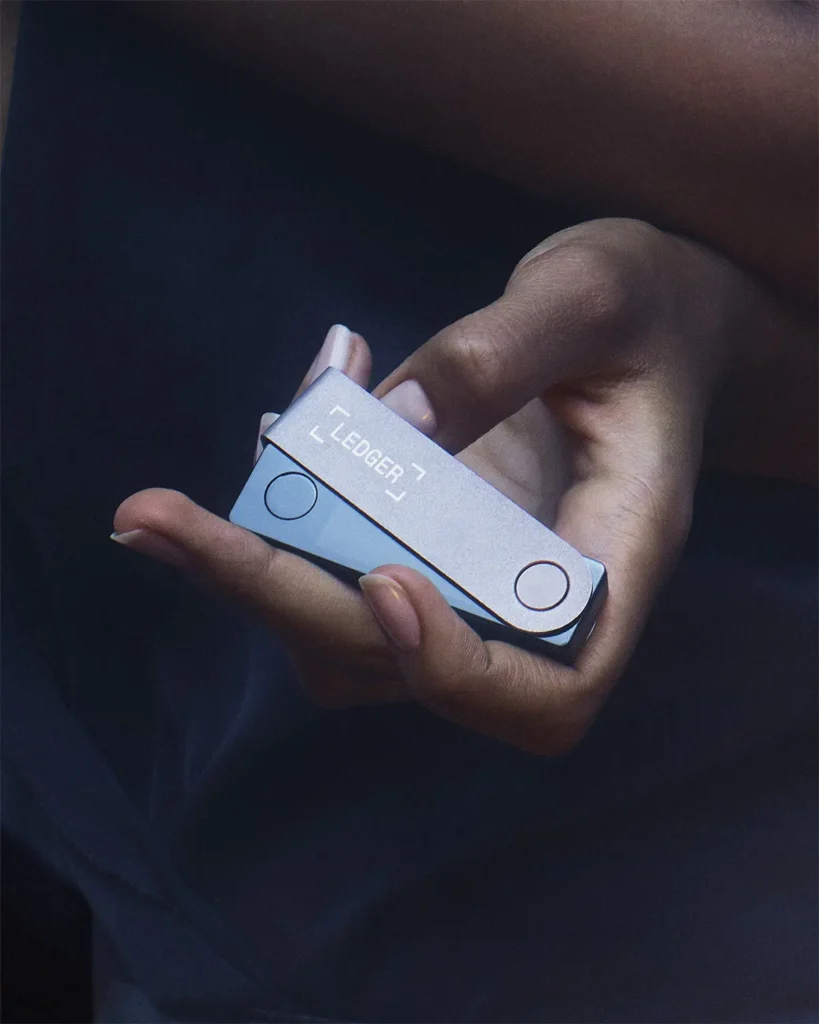
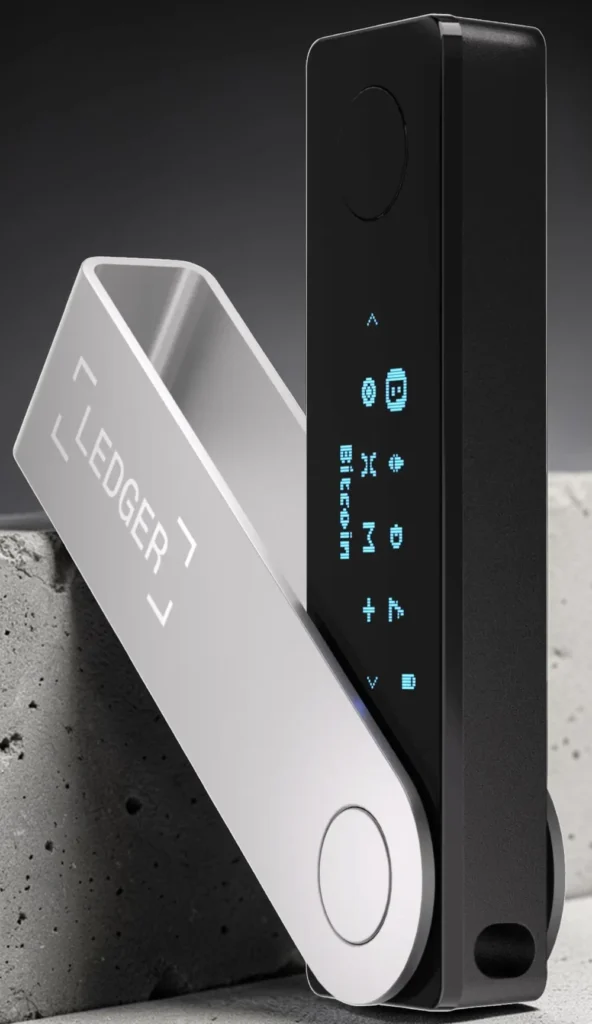
Price: ~$149
Best For: Active traders, DeFi users, NFT participants, multi-chain users
The Ledger Nano X has been on the market for years and remains one of the most widely adopted hardware wallets globally. It was designed for people who actually use their crypto — not just store it and forget it.
Where Ledger differentiates itself is ecosystem maturity.
Strengths
1. Ledger Live Ecosystem
Ledger Live is arguably the most refined hardware wallet companion app available today.
It allows you to:
- Manage 5,500+ coins and tokens
- Stake supported assets directly inside the app
- Track portfolio performance
- Connect to DeFi protocols
- Manage NFTs across multiple chains
You can check current pricing and availability directly on the official Ledger website.
For users active on Ethereum, Solana, Polygon, and other ecosystems, this level of integration reduces friction significantly.
Instead of juggling multiple third-party wallets, Ledger centralizes most functions inside one interface.
You can check current pricing and availability directly on the official Ledger website.
2. Bluetooth Connectivity (True Mobile Use)
The Nano X supports Bluetooth, allowing you to sign transactions wirelessly through the Ledger Live mobile app.
For users who:
- Travel frequently
- Trade on the go
- Use DeFi from mobile devices
This removes the cable dependency common with older hardware wallets.
Security-wise, Bluetooth does not expose private keys. The private key never leaves the secure element; only signed transaction data is transmitted.
This makes the Nano X one of the few truly mobile-first hardware wallets.
3. Secure Element Chip (CC EAL5+)
Ledger uses a CC EAL5+ certified secure element — the same class of chip found in passports and banking cards.
This chip:
- Is designed to resist physical extraction attacks
- Stores private keys in an isolated hardware environment
- Prevents raw key export under normal conditions
Ledger’s approach prioritizes certified hardware security and controlled firmware execution.
Risks & Considerations
Closed-Source Firmware
Ledger’s firmware is not fully open-source.
This means users must trust Ledger’s internal security practices rather than independently verifying the entire stack.
For some users, this is a non-issue.
For others, it’s a philosophical red flag.
The 2023 “Ledger Recover” Controversy
In 2023, Ledger introduced an optional subscription service called Ledger Recover.
While optional, it revealed that firmware could technically fragment and export encrypted key shards under specific conditions. This triggered significant backlash within the self-custody community.
Ledger maintains that:
- The service is opt-in
- It requires identity verification
- It does not bypass physical device security
However, the event permanently shifted the “trust model” debate around Ledger.
Smaller Screen Limitations
Compared to modern touchscreen devices, the Nano X’s small OLED display can make:
- Long wallet addresses harder to verify
- Complex smart contract interactions less intuitive
For simple transfers, this is manageable.
For heavy DeFi users signing advanced contracts, screen size matters more than many expect.
Bottom Line on Ledger Nano X
Ledger prioritizes:
- Ecosystem integration
- Multi-chain flexibility
- Mobile usability
- Certified hardware security
It balances convenience and security rather than maximizing ideological transparency.
For active users, that trade-off often makes sense.
For long-term “deep cold storage” purists, it may not.
Trezor Safe 7 Overview
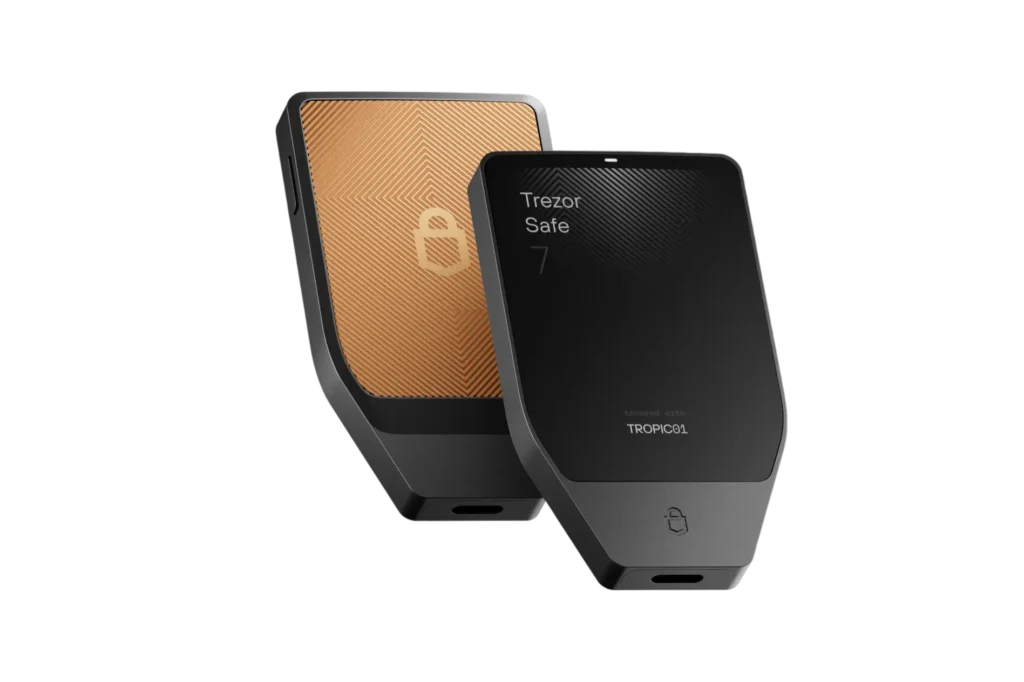
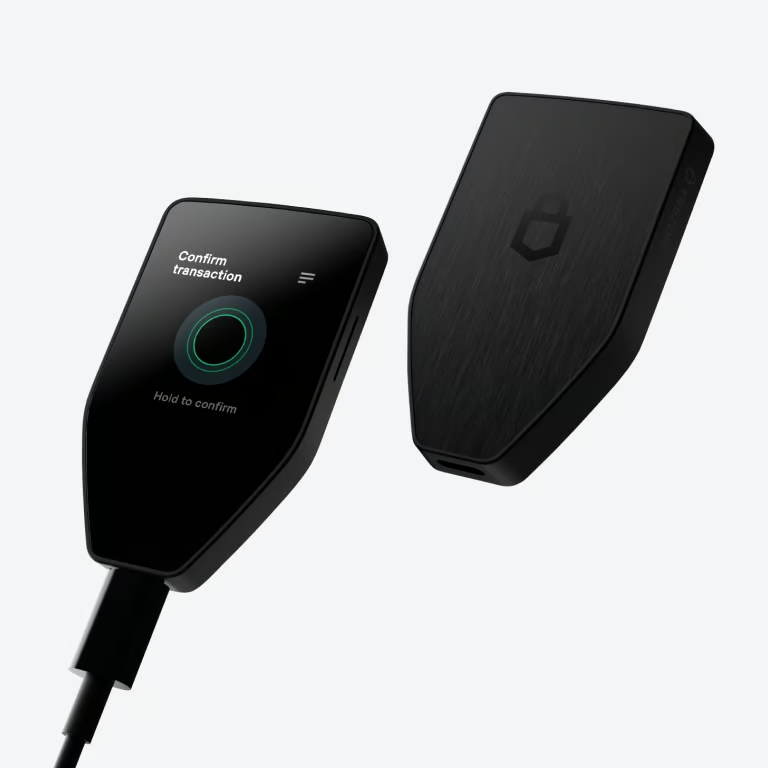
$249
Best For: Long-term holders, Bitcoin-focused investors, security-first users, open-source advocates
The Trezor Safe 7 represents a shift in hardware wallet design philosophy.
While earlier Trezor models emphasized open-source firmware, the Safe 7 goes further by addressing long-standing criticisms around physical security.
This device is built for users who prioritize transparency and long-term resilience over ecosystem convenience.
Strengths
1. TROPIC01 Open-Source Secure Element
For years, critics argued that Trezor lacked a certified secure element, making it more vulnerable to certain physical extraction attacks.
The Safe 7 addresses this directly with the TROPIC01 secure element — the world’s first auditable, open-source secure chip.
This matters because:
- The chip architecture can be independently reviewed
- There are no undisclosed “black box” components
- Security claims can be verified by third parties
In contrast to proprietary secure elements, Trezor’s approach prioritizes transparency over obscurity.
For users uncomfortable with closed firmware ecosystems, this is a major differentiator.
See full specs and pricing on the official Trezor site.
2. Quantum-Ready Architecture
While practical quantum attacks on Bitcoin are not imminent, long-term holders think in decades, not months.
The Trezor Safe 7 is designed to support future post-quantum cryptographic standards through firmware updates.
This means:
- The device can adapt if ECDSA or current signature schemes become vulnerable
- It is architected with forward-compatibility in mind
- Long-term cold storage risk is reduced
For a deeper dive into its architecture, read our full Trezor Safe 7 review.
For investors holding generational wealth, this forward-looking design philosophy is part of the appeal.
3. 2.5-Inch Gorilla Glass Touchscreen
One of the most practical improvements over older hardware wallets is the large touchscreen.
Why it matters:
- Full address verification is easier
- Smart contract data is clearer
- Transaction signing errors are reduced
- PIN and passphrase input feels less restrictive
In DeFi-heavy environments, phishing attacks often rely on users blindly signing transactions.
A larger screen with clear-signing support materially reduces this risk.
From a usability perspective, the Safe 7 feels closer to a modern device than older button-based wallets.
Risks & Considerations
Higher Price Point
At roughly $249, the Safe 7 sits significantly above entry-level hardware wallets.
For users holding small portfolios, the cost may not justify the added transparency features.
Fewer Native Assets
Compared to Ledger’s 5,500+ asset support, Trezor natively supports fewer coins.
While it can integrate with third-party wallets like MetaMask or Rabby, this adds complexity.
For heavy altcoin traders, this may create friction.
Third-Party Wallet Dependence
For certain chains and tokens, Trezor relies on external wallet integrations.
This is not inherently insecure, but it introduces:
- Additional software layers
- Extra user configuration steps
- Potential compatibility issues
Users comfortable with advanced setups won’t mind. Beginners might.
Bottom Line on Trezor Safe 7
Trezor prioritizes:
- Open-source transparency
- Auditable hardware design
- Long-term cryptographic adaptability
- Clear on-device verification
It leans heavily toward security-first architecture rather than ecosystem convenience.
For long-term Bitcoin holders and users who prefer to verify everything independently, that philosophy aligns perfectly.
For high-frequency traders, it may feel more rigid.
| Feature | Ledger Nano X | Trezor Safe 7 |
|---|---|---|
| Approx. Price | ~$149 | ~$249 |
| Secure Element | CC EAL5+ certified (closed-source firmware) | TROPIC01 auditable secure element (open-source) |
| Firmware Transparency | Closed-source | Fully open-source |
| Asset Support (Native) | 5,500+ assets | ~1,200 native assets |
| Third-Party Wallet Support | MetaMask, Rabby, many integrations | MetaMask, Rabby, external bridges often required |
| Bluetooth | ✔️ Yes | ✔️ Yes |
| Screen | Small OLED display | 2.5″ Gorilla Glass touchscreen |
| Mobile Experience | Excellent (Ledger Live app) | Good, but more desktop-focused ecosystem |
| Quantum-Ready Architecture | Not specifically marketed as quantum-ready | Designed for post-quantum firmware updates |
| Best For | Active traders, DeFi, NFT users | Long-term holders, security-first users |
If you’re considering a lower-cost alternative, see our SafePal S1 review for comparison.
Ledger Nano X vs Trezor Safe 7: Security Comparison
Ledger Security Model:
Relies on certified secure hardware + proprietary firmware.
We break down Ledger’s security controversies in detail here: Is Ledger Nano X Safe in 2026?.
Trezor Security Model:
Relies on full transparency + open hardware verification.
When comparing Ledger Nano X vs Trezor Safe 7 from a security architecture perspective, the difference comes down to trust model rather than raw protection capability.
There is no absolute winner only philosophical preference:
- Trust manufacturer + certification → Ledger
- Verify everything yourself → Trezor
ROI Perspective: Does Wallet Choice Impact Returns?
A hardware wallet does not generate yield.
Its ROI comes from:
- Preventing exchange collapse exposure
- Preventing phishing drains
- Protecting long-term holdings
For long-term BTC holders, security longevity matters more than coin variety.
For active traders, convenience reduces friction.
Risks and Common Mistakes
- Buying from Amazon or third-party sellers
- Not verifying device authenticity
- Losing recovery phrase
- Storing seed phrase digitally
- Not updating firmware
Always purchase directly from the official manufacturer.
Mobile wallets introduce different risk layers, which we explain here: Mobile wallet security risks
Final Verdict
Choose Ledger Nano X if:
- You trade regularly
- You use DeFi and NFTs
- You prioritize mobile usability
Choose Trezor Safe 7 if:
- You are storing long-term Bitcoin or large holdings
- You prioritize open-source transparency
- You want future-proof architecture
Ultimately, the Ledger Nano X vs Trezor Safe 7 decision depends on how you balance convenience and transparency.
Where to Buy Safely
Never buy hardware wallets from Amazon or third-party marketplaces.
Buy directly from the manufacturer:
FAQ
Is Ledger Nano X better than Trezor Safe 7?
Ledger offers stronger usability and broader asset support. Trezor offers greater transparency and open-source verification.
Which wallet supports more coins?
Ledger Nano X supports over 5,500 assets natively. Trezor supports fewer natively but can expand via integrations.
Is Trezor Safe 7 quantum-proof?
It is designed to support post-quantum cryptographic standards via firmware updates.
Is Ledger Recover mandatory?
No. It is an optional subscription service.

