

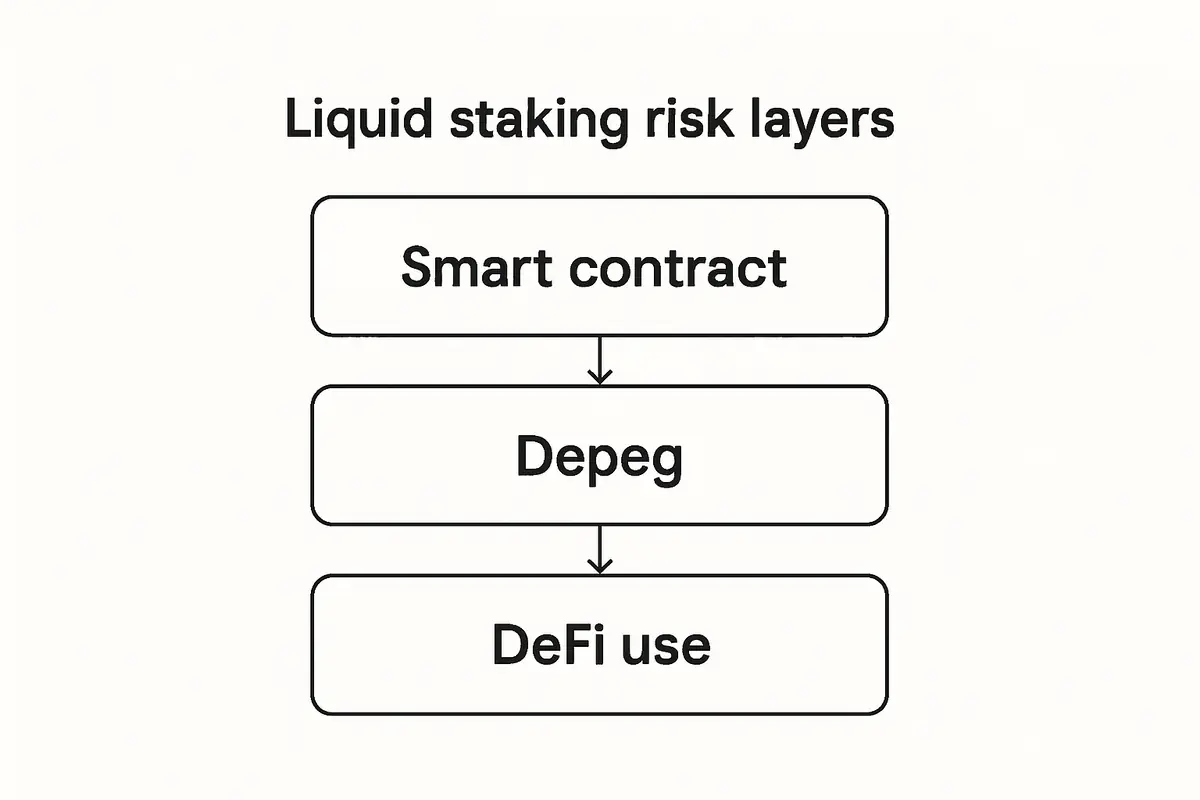
Liquid staking protocols let users stake assets and receive a liquid token representing the staked position, which can then be used in DeFi without losing staking rewards. This sounds like a straightforward improvement over locking tokens in native staking, but it introduces additional risk layers that native staking does not have. Each layer is worth understanding before committing significant capital.
For the risk side of this topic, see Why 20% APY Is a Trap.
The practical question is not whether liquid staking is “good” or “bad.” It is whether you actually need the extra liquidity badly enough to accept a second set of risks. If the token is only going to sit in your wallet, native staking is often the cleaner structure. Liquid staking starts to make sense when the flexibility itself is valuable, and when you can tolerate exits that happen through a queue or a market discount instead of instant parity.
This content is for educational purposes only and should not be considered financial or investment advice.
Key Takeaways
- Liquid staking adds smart contract risk that native staking does not have.
- Liquid staking tokens (LSTs) can depeg from the underlying asset during market stress.
- Large liquid staking protocols concentrate validator power, which creates network centralization risk.
- Using LSTs in DeFi compounds risk: smart contract risk from the staking protocol plus smart contract risk from the DeFi protocol.
- Unbonding or emergency withdrawal paths are not always available at full value.
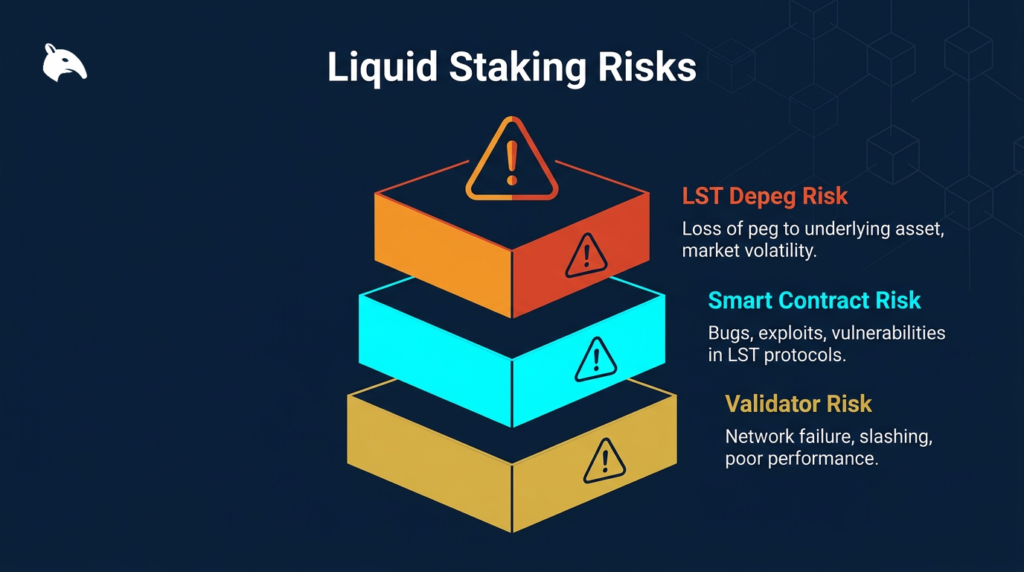
Smart Contract Risk
Native staking on proof-of-stake chains (such as directly running an Ethereum validator) involves minimal smart contract interaction. Liquid staking protocols like Lido or Rocket Pool require depositing assets into smart contracts that manage validator operations, distribute rewards, and issue the liquid token. These contracts are audited but not immune to exploits.
A bug in the liquid staking contract could result in loss or locking of deposited assets. The history of DeFi includes significant protocol exploits across multiple audited codebases. Smart contract risk is not hypothetical and scales with the amount deposited.
Depeg Risk
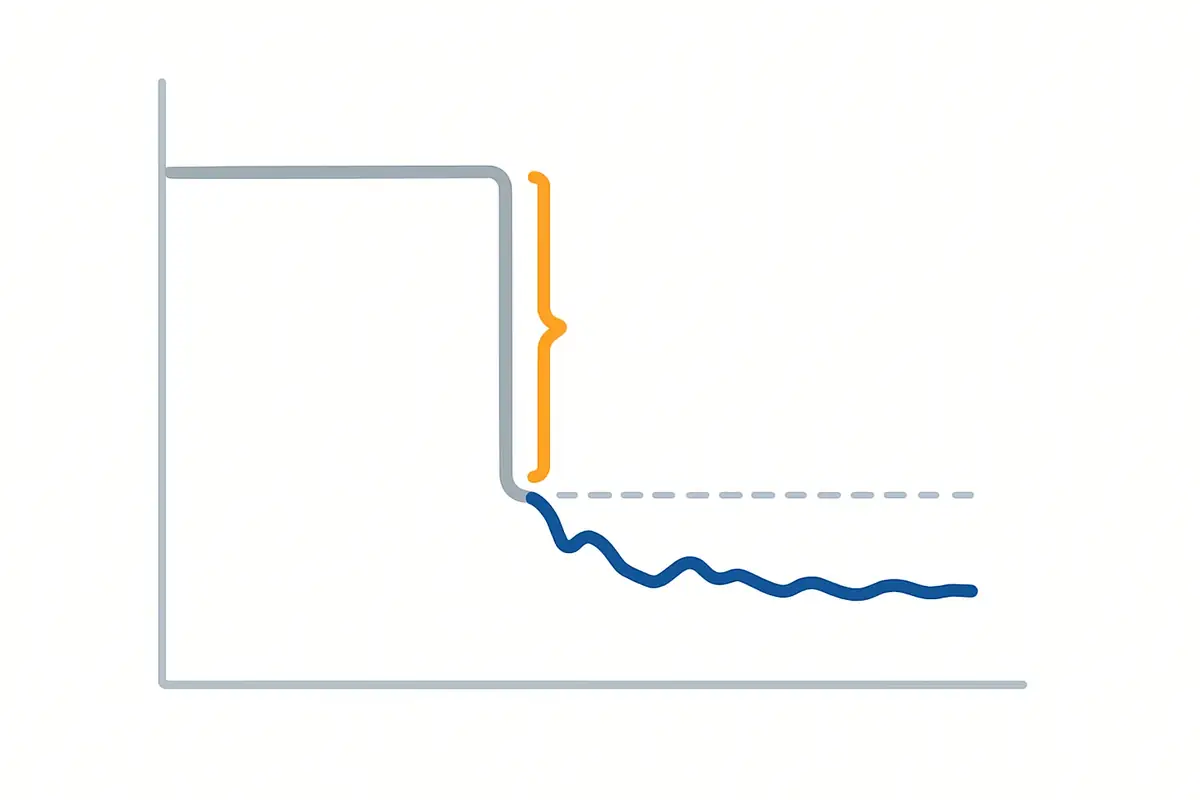
A liquid staking token (LST) like stETH is intended to trade at parity with the underlying asset (ETH). In practice, the LST trades at a slight discount or premium depending on market conditions. During periods of high redemption demand or market panic, the discount can widen significantly.
If you need to exit your position quickly during a depeg event, you may sell your LST at a loss compared to the actual staked ETH value. The underlying staked ETH may be unbonding or otherwise unavailable for immediate redemption, making market sale the only practical exit.
Validator Concentration Risk
Liquid staking protocols that control a very large share of total staked ETH (or other assets) represent a concentration of validator power. If a single protocol controls enough stake to influence consensus, it creates a systemic risk for the broader network. A security incident at that protocol could have network-wide effects beyond just the users of the protocol.
This risk is less immediate for individual users but is worth considering when choosing between protocols. Smaller or more diversified liquid staking options reduce concentration risk at the network level, which also reduces the attractiveness of the protocol as a single target for attackers.
Practical Usage: Limit Layered DeFi Exposure
The primary use case for LSTs is deploying them in DeFi protocols to earn additional yield. Each protocol layer adds its own smart contract risk. An LST deployed in a lending protocol means you are exposed to the liquid staking protocol’s contract risk, the lending protocol’s contract risk, and any liquidation risk if you are using the LST as collateral.
For the risk side of this topic, see Staking Crypto in: Risks & Real Yields.
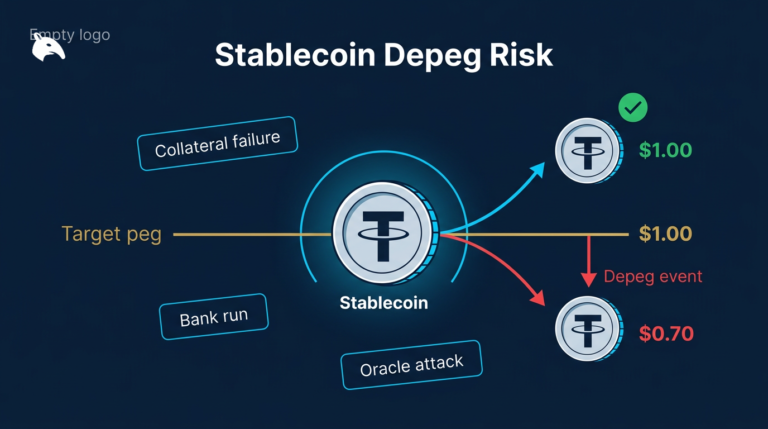
Compounding yield across multiple protocols looks attractive in calm periods but can accelerate losses when depegs and liquidation triggers interact. For the market-dislocation side of that risk, Stablecoin Depeg Risk is a useful parallel: in both cases, the problem is not just the asset itself, but what happens when many holders rush for the exit at once.
An operator rule that saves people a lot of pain is to avoid stacking borrowed exposure on top of an LST position unless you already understand the liquidation math without looking at a dashboard. Another useful habit is to separate “staking exposure” from “DeFi strategy exposure” in your own notes. The moment the same token is being counted as both long-term yield capital and active collateral, many users stop noticing how many failure points they have actually added.
A practical sizing framework is to ask one question before using any LST in DeFi: if this token trades below peg for a week and I cannot redeem immediately, am I still comfortable holding it? If the answer is no, the position is too large or too layered. Liquid staking is easiest to manage when the capital does not need to be sold on a precise schedule.
A common real-world failure path looks like this: a user deposits ETH into a liquid staking protocol, receives an LST, posts that LST as collateral elsewhere, then needs liquidity during a market drawdown. The LST trades below peg, the collateral value falls, and the user is forced to unwind at exactly the worst time. The original staking yield becomes irrelevant because the exit mechanics now dominate the result.
Risks and Common Mistakes
Assuming the LST is always redeemable 1:1 with the underlying asset is the most common mistake. The peg holds most of the time but can break under stress. Plan your exit before entering the position, not during a crisis.
Another mistake is treating liquid staking as equivalent to native staking in terms of risk. The additional protocol layer is real, even if audited. Only use liquid staking protocols with long track records, significant audits, and healthy onchain liquidity for the LST.
Frequently Asked Questions
Is Lido safe for liquid staking?
Lido is the largest liquid staking protocol by TVL and has been running since 2020 without a major exploit. It is audited and widely used. However, its size also makes it the single largest validator concentration point on Ethereum, which is a systemic risk factor independent of individual security. “Safe” in this context is relative and subject to smart contract risk like any DeFi protocol.
What happens to my LST if the protocol is exploited?
It depends on the nature of the exploit. In the worst case, the staked assets are lost or frozen and the LST becomes worthless. In less severe cases, the protocol may be paused while a fix is deployed, temporarily preventing withdrawals. Each protocol has different insurance and compensation mechanisms; review these before depositing.
Can I withdraw my staked assets at any time with liquid staking?
Most liquid staking protocols offer a withdrawal path, but it may involve an unbonding period (matching the underlying chain’s unbonding schedule) or a market sale of the LST at the prevailing rate. During high redemption periods, the withdrawal queue may be long. Check the specific protocol’s withdrawal mechanics before entering a position.
How is liquid staking different from a staking pool?
A staking pool aggregates small deposits and runs validators collectively. Liquid staking protocols do this while also issuing a transferable token representing the staked position. The token is the key difference: it lets you keep the staking exposure while using the token elsewhere, but it adds the token mechanism as an additional layer of complexity and risk.
Does validator slashing affect liquid staking users?
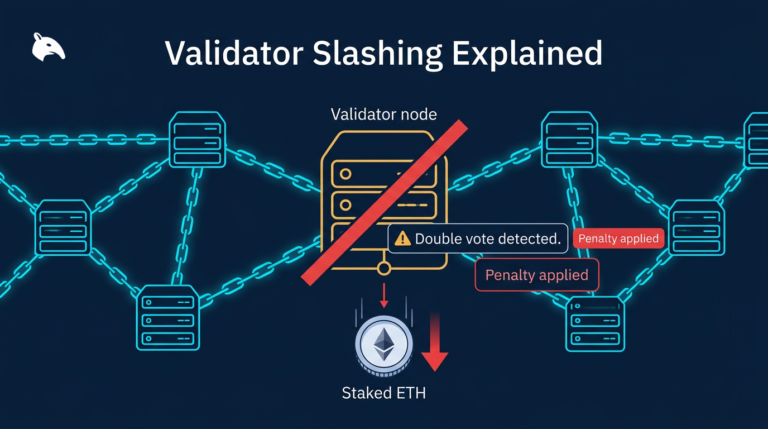
Yes. If validators run by the liquid staking protocol are slashed, the penalty is shared across all depositors proportionally. The LST may decrease slightly in value relative to the underlying asset as a result. Large slashing events are rare but have occurred on Ethereum. For more on how slashing works, see Validator Slashing Explained.