


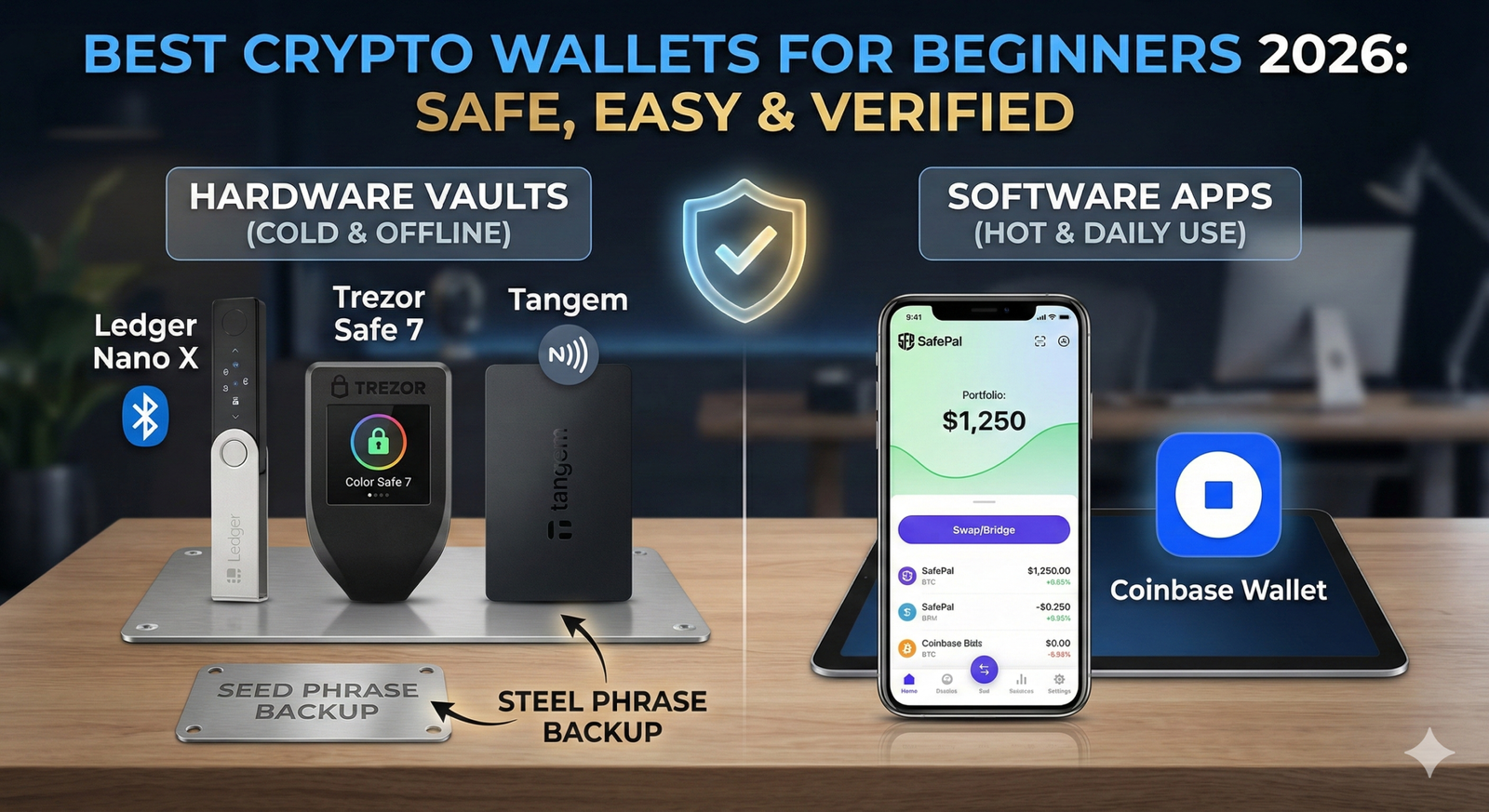
Best Crypto Wallets for Beginners 2026: Safe, Easy & Verified
Full Disclosure: Most of these links are affiliate links. If you buy a wallet, I get a small commission that keeps the sarcasm flowing and the coffee hot. I’d still roast these products if they sucked, but hey, if you want to support the grind without it costing you a penny extra, use these.
Stop scrolling. If your crypto is still on Binance or Coinbase, you are one regulation away from losing it. Here is the 30-second summary to save your bags:
-
Best for Active Traders (The Daily Driver): Ledger Nano X.
-
Why? It connects to iPhone/Android via Bluetooth. Perfect for moving alts quickly.
-
-
Best for Security Maxis (The Vault): Trezor Safe 7.
-
Why? Fully open-source, color touchscreen, and zero “trust me bro” architecture.
-
-
Best for Total Beginners (The “No-Brainer”): Tangem Wallet.
-
Why? It’s a card. You tap it to your phone. No cables, no confusion.
-
-
Best Free App: Rabby Wallet (Desktop) or SafePal (Mobile).
-
Why? They simulate transactions so you don’t blind-sign a drainer contract.
-
The Golden Rule: Hardware is for savings. Apps are for spending. Never mix the two.
If you are reading this, congratulations.
You have decided to finally take custody of your own money.
Most people treat cryptocurrency like a casino chip. They buy it on an app, watch the number go up (or down), and never actually own the asset. But here is the brutal truth: If your crypto is sitting on an exchange like Coinbase, Binance, or Kraken, it is not your crypto. It is an IOU, And if the ghosts of 2022 taught us anything (remember FTX? Celsius?), it is that IOUs are worthless when the doors lock.
In 2026, self-custody is not just for “tech bros” in hoodies. With the implementation of the Global Travel Rule and the Clarity Act, centralized exchanges can now freeze your assets if you interact with the “wrong” smart contract. Self-custody is mandatory for survival.
This guide will break down the best crypto wallets for beginners, comparing the “Vaults” (Hardware) vs. the “Spending Cash” (Software), so you can stop trusting billionaires with your life savings.
Cold Wallets vs. Hot Wallets: The Difference
Before you buy anything, you need to understand the architecture of storage. It’s not about “brands” yet; it’s about connectivity.
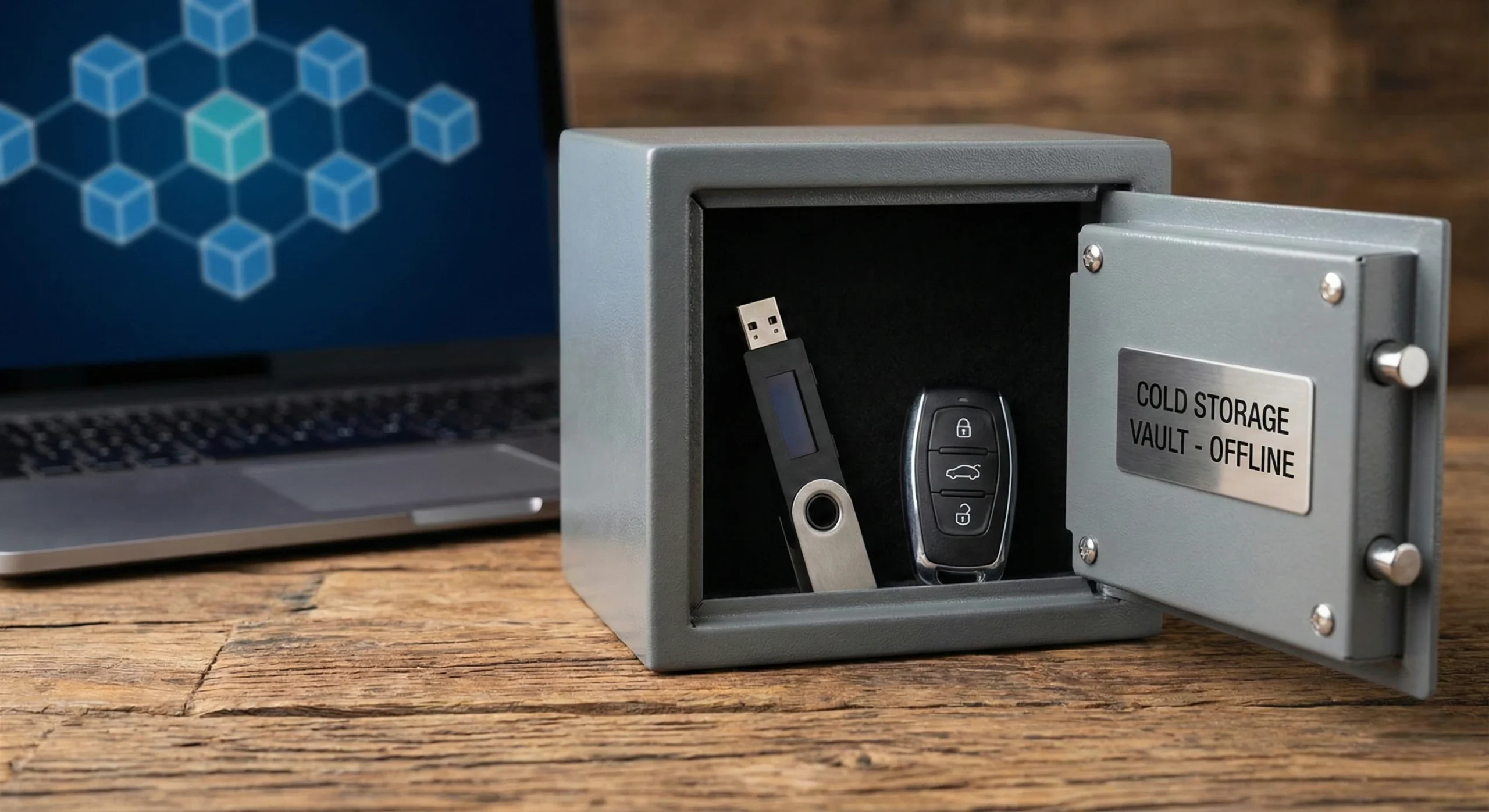
Cold Wallets (Hardware)
Think of this as your Vault.
-
What it is: A physical device that looks like a USB stick or a car key.
-
Security: 99.9%. It is “Air-Gapped,” meaning it is offline. Hackers cannot touch it unless they physically break into your house and steal it.
-
Use Case: Your life savings, your retirement stack, the Bitcoin you won’t touch for 5 years.
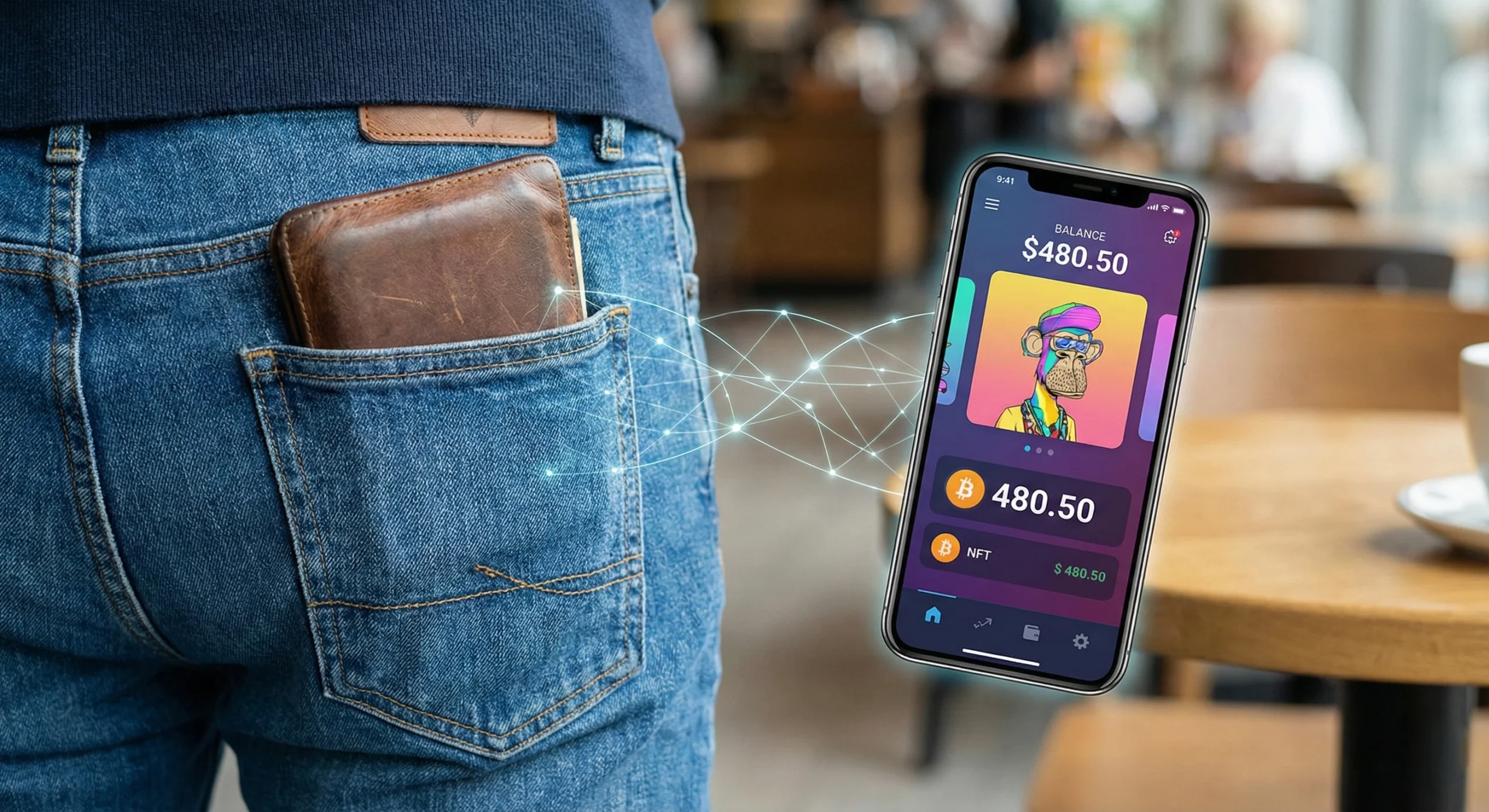
Hot Wallets (Software)
Think of this as your Physical Wallet in your back pocket.
-
What it is: An app on your phone (iOS/Android) or a browser extension.
-
Security: Medium. It is connected to the internet 24/7. This makes it convenient, but if you click a bad link or download a virus, your funds can be drained.
-
Use Case: Spending money, trading NFTs, or buying memecoins on a Tuesday night.
The Golden Rule: Keep $500 in your Hot Wallet for fun. Keep everything else in your Cold Wallet for survival. For a deeper dive, read my full guide on [Understanding Cold Storage: Hot vs. Cold Wallets Explained].
The Best Cold Wallets (Hardware) for 2026
If you hold more than $1,000 in crypto, you must buy one of these. It is not optional.
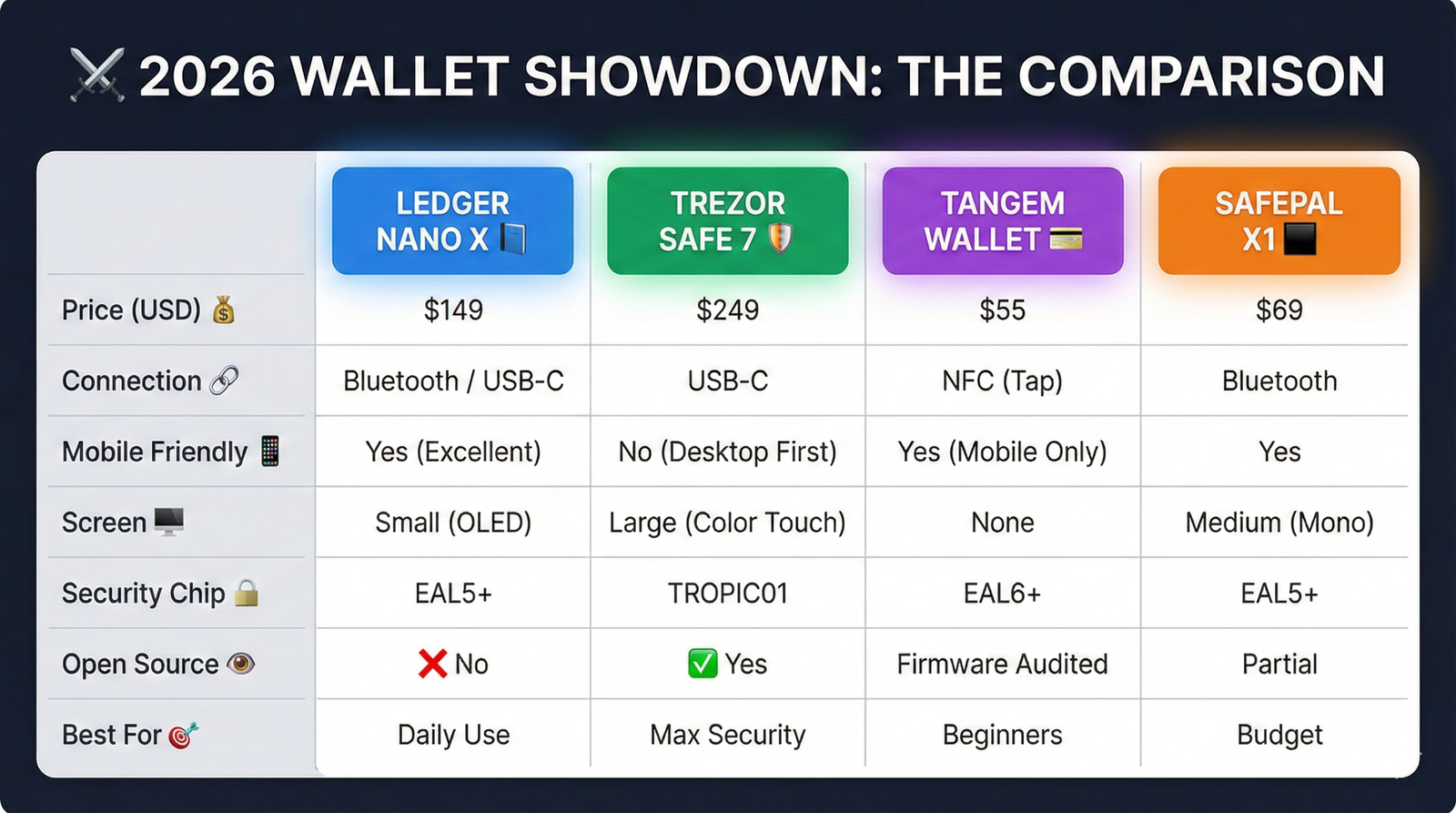
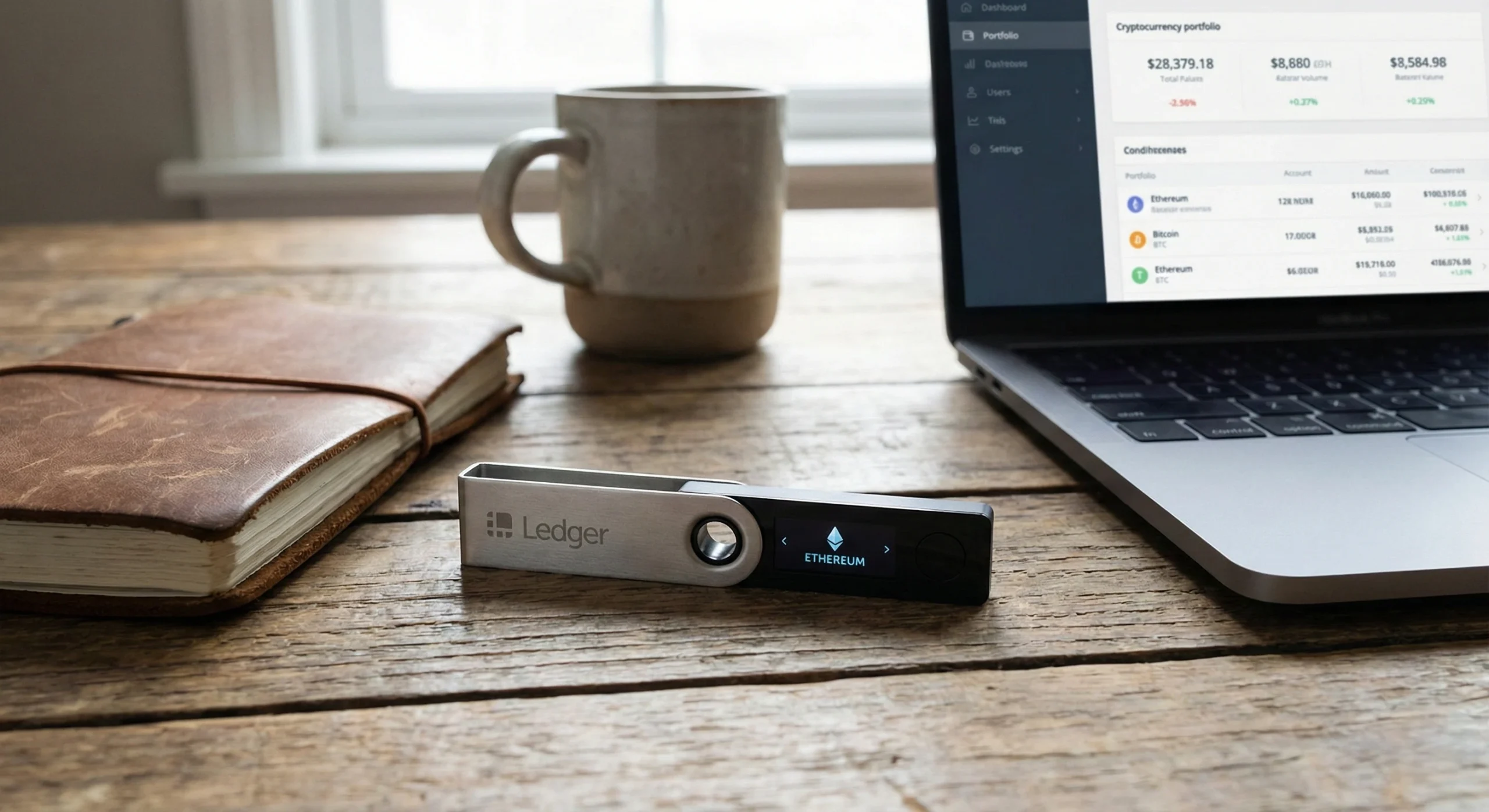
1. The Mobile King: Ledger Nano X ($149)
This is the industry standard. While its younger brother (the Nano S Plus) is cheaper, the Ledger Nano X is the one you buy if you actually want to use your crypto on the go without carrying a laptop.
-
Why I like it: It has Bluetooth (BLE 5.2). This is the killer feature for 2026. You can connect it wirelessly to your iPhone or Android and approve transactions anywhere at a coffee shop, on the train, or in bed without messing with cables or “OTG” adapters.
-
The App: It uses the Ledger Wallet app (formerly Ledger Live), which is the “Apple of Crypto” apps. It now features a dedicated Earn Dashboard that simplifies staking ETH, SOL, and DOT, plus a Transaction Check feature that acts like an antivirus to flag sketchy smart contracts before you sign them.
-
The “Recover” Factor: The Ledger Recover service (an encrypted, ID-linked backup for your seed phrase) is now fully live. While privacy purists hate it, it’s a massive win for beginners who are terrified of losing a piece of paper and losing their life savings. It’s optional, but it’s the “Reset Password” button crypto has needed for years.
-
The Catch: It has a 100mAh battery that lasts about 3-4 hours of active use or a few weeks on standby. Unlike the newer Ledger Stax, the Nano X does not have wireless charging you still need to plug it into a USB-C port to juice it up.
-
Best For: iPhone users, active DeFi traders, and anyone who wants a “Mobile First” experience without paying $400 for a touchscreen.
-
Verdict: ⭐⭐⭐⭐⭐ (Usability)
-
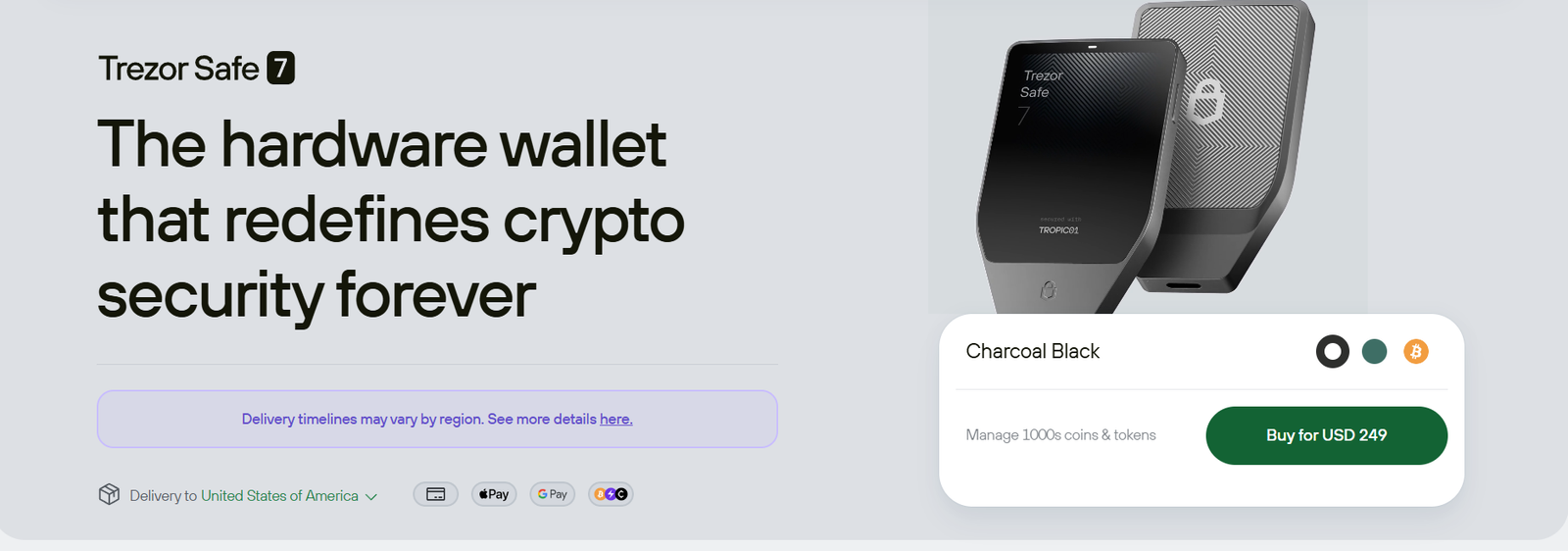
2. The Premium Fortress: Trezor Safe 7 ($249)
If the Ledger is a slick sports car, this is the armored tank. The Trezor Safe 7 is the new flagship for 2026, featuring a massive 2.5-inch color touchscreen and a rugged aluminum unibody.
-
Why I like it: It is the first wallet to solve the “Black Box” problem. Most wallets use “Secure Elements” from big tech companies that keep their designs secret. Trezor uses the TROPIC01 chip, the world’s first fully auditable secure element. This means the community can actually verify there are no backdoors in the chip itself not just the software.
-
Future Proofing: It is Quantum-Ready. While quantum computers aren’t stealing your BTC today, this device is designed to receive post-quantum cryptographic updates without you needing to buy a new wallet in three years.
-
The “Wrench” Defense: Beyond the “Duress PIN,” it natively supports Shamir Backup. Instead of one 24-word seed, you can split your recovery into multiple “shares” (e.g., 3-of-5) and hide them in different cities. If one share is stolen, the thief has exactly zero of your coins.
-
Physical Build: It features Gorilla Glass protection and an IP67 rating (fully dustproof and water-resistant). It also finally adds Qi2 wireless charging, so you don’t even need a cable to power it up.
-
The Catch: At $249, it’s a “buy once, cry once” investment. It’s bulkier than a Ledger, and for simple HODLers, the quantum features might feel like overkill until they aren’t.
-
Best For: Privacy purists, “generational wealth” holders, and anyone who wants a device that can survive a decade in a safe.
-
Verdict: ⭐⭐⭐⭐⭐ (Security)
-
3. The “I Hate Cables” Pick: Tangem Wallet ($55)
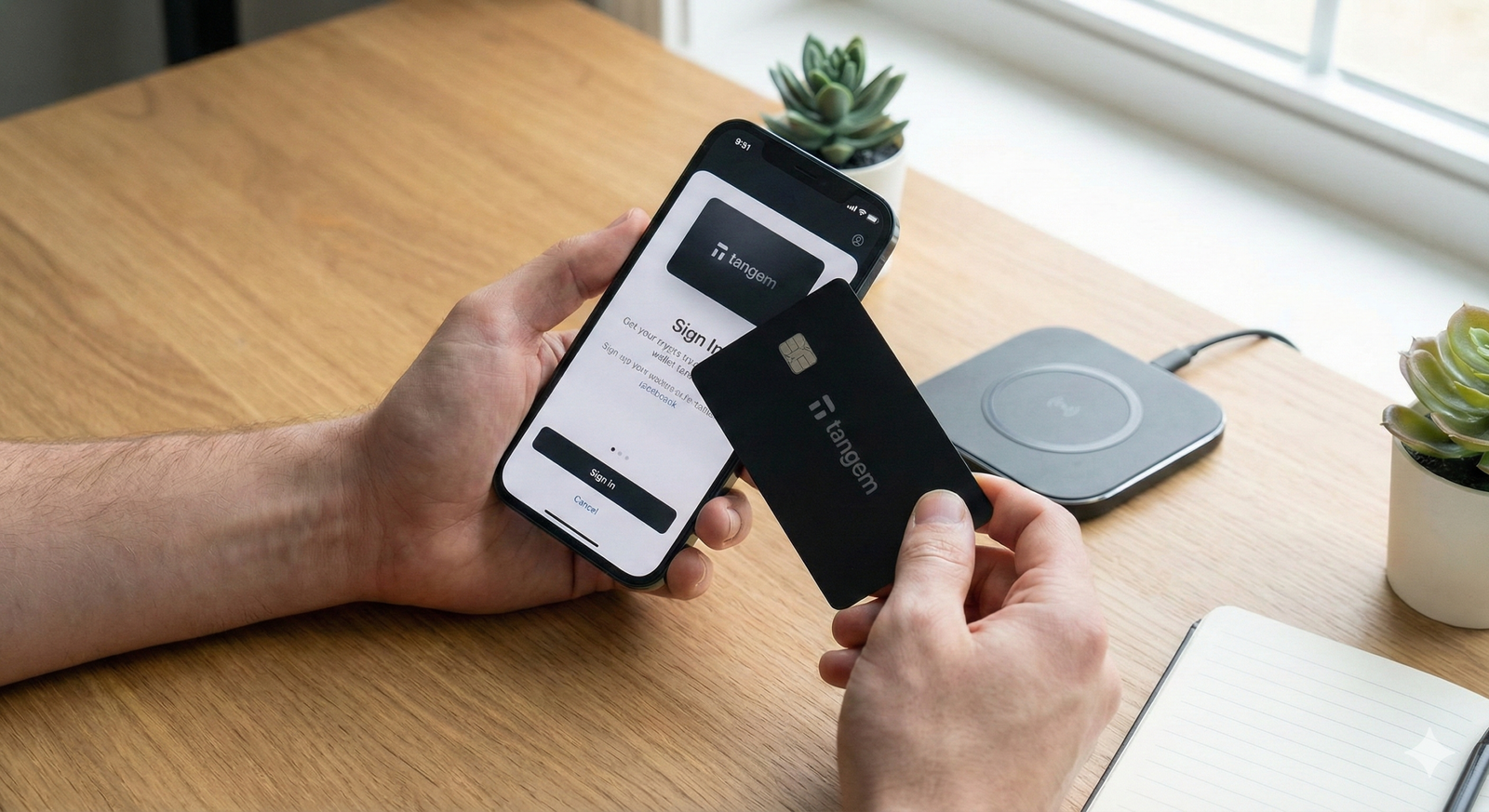
This is the wildcard. Tangem looks exactly like a credit card. No buttons, no screens, no cables.
-
How it works: Download the app, tap the card to your phone via NFC, and you’re in. It uses the same EAL6+ chip technology found in biometric passports to sign transactions offline.
-
Why I like it: It is indestructible. You can freeze it, boil it, or sit on it. More importantly, it features non-updatable firmware meaning no one (not even Tangem) can push a “malicious update” to steal your keys later. It also comes with a 25-year warranty, which is unheard of in tech.
-
The Catch: Historically, Tangem was “seedless” (the card was the key). While the 2026 model now allows you to generate a 12/24-word seed phrase, using a seed phrase actually introduces a digital “weak point” that the original card-only design avoids.
-
The “Secret” Perk: Tangem is “Smart Backup” ready. You can clone your private key onto up to three cards during setup, so you can hide one in a safe and another at a secondary location.
-
Best For: People who find USB sticks intimidating and want a “Tap-to-Pay” experience for their life savings.
-
Verdict: ⭐⭐⭐⭐ (Ease of Use)
-
[Visit Official Tangem Store] – USE CODE NFXE2F 10% Off
The Best Hot Wallets (Software) for 2026
You need these to interact with the blockchain (buy NFTs, swap coins, use DeFi). They are free to download.
1. The Hybrid Powerhouse: SafePal
Most wallets are either “Hot” or “Cold.” SafePal is unique because it bridges the gap.
-
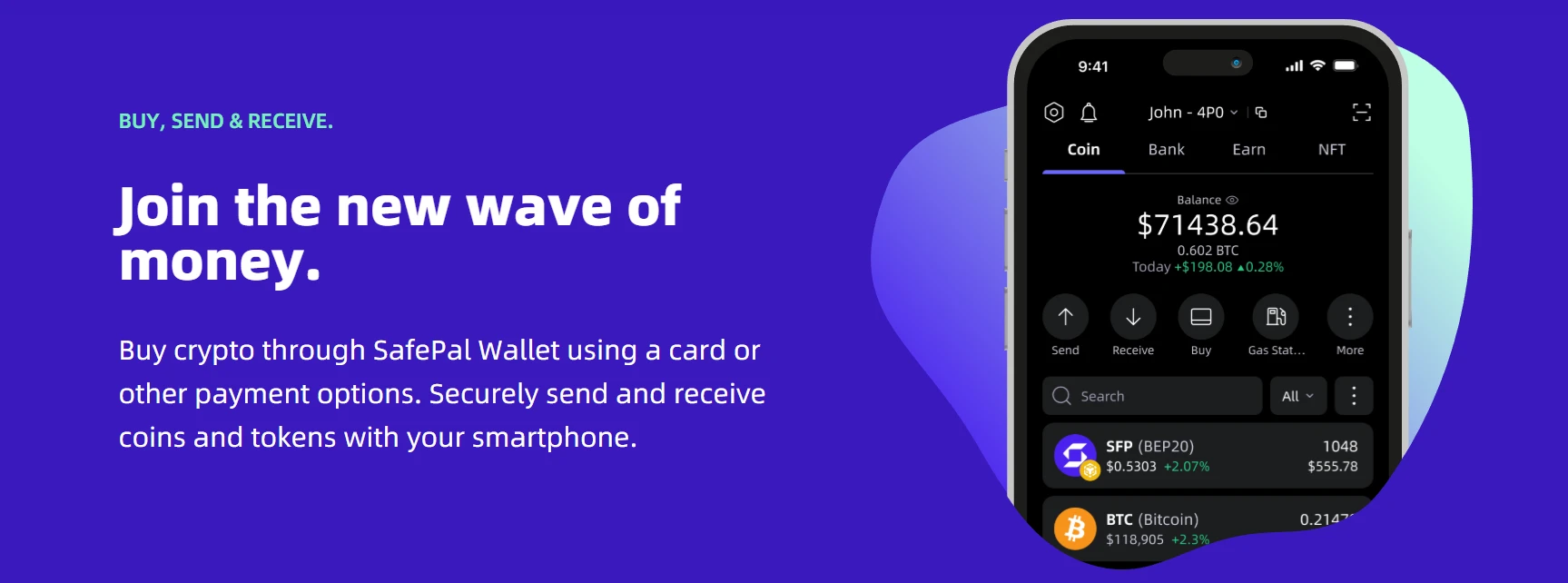
The Killer Feature: It is the All-in-One Ecosystem. You can start with the free SafePal App (Hot Wallet) which supports a massive 100+ blockchains. When you are ready to get serious, you can buy a SafePal X1 ($49) hardware wallet, and it integrates perfectly with the app you are already using.
-
Why Beginners Love It: It has a built-in “Bridge.” This means you can swap Bitcoin for Ethereum or Solana directly inside the app without using a sketchy exchange.
-
Verdict: The best mobile wallet if you plan on upgrading to hardware later.
-
Read more: Best SafePal Wallet Features 2026 or Visit SafePal Here
2. The Security Nerd: Rabby Wallet
If you use MetaMask, stop. Rabby is the superior alternative for Ethereum/EVM chains in 2026.
-
The Killer Feature: Transaction Simulation. Before you sign anything, Rabby shows you exactly what will happen. Instead of saying “Sign Hex Data 0x54…”, it says “You are sending 50 USDC to this address.”
-
Why it matters: 90% of hacks happen because people “blind sign” malicious contracts. Rabby acts like an antivirus for your transactions.
-
Verdict: Essential for DeFi users who don’t want to get phishing-scammed.
3. The Onboarding Hero: Coinbase Wallet
Note: This is different from the Coinbase Exchange app.
-
The Killer Feature: “Smart Wallet” tech. You don’t need to write down a seed phrase immediately; you can secure it with your FaceID or Passkey. It makes onboarding feel like signing up for Instagram.
-
Verdict: Great for your grandma or your friend who is scared of “private keys,” but less private than Rabby.
Final Step: Secure Your Seed Phrase
Your wallet is only as secure as your backup. When you set up a Ledger or Trezor, it gives you 12 or 24 words. This is your money. If your house burns down, you need those words to recover your funds on a new device. Paper burns. Ink fades.
-
The Pro Move: Buy a Steel Backup Plate (like a Billfodl). It is a piece of marine-grade stainless steel where you slide in metal tiles to spell your words. It is fireproof, waterproof, and idiot-proof.
-
The Cheap Option: Go to a hardware store, buy stainless steel washers and a metal stamp kit.
The “Don’t Do This” List (How to Stay Poor):
-
Store your Seed Phrase in Google Drive/iCloud: Hackers scan cloud storage for text files called “crypto.txt”. Write it on paper or steel. Never type it online.
-
Leave funds on an Exchange: If an exchange gets banned in your country tomorrow, your funds are frozen.
-
Buy a Hardware Wallet from eBay: Never buy a used wallet. The previous owner might have copied the keys. Only buy from the official manufacturer.
Conclusion:
Just Pick One Analysis paralysis is real. Don’t overthink it.
-
Got < $100? Use SafePal
-
Got > $1,000 and use iPhone? Buy a Ledger Nano X.
-
Got > $50,000? Buy a Trezor Safe 7 + Metal Backup.
The most important thing is that you take your assets off the exchange today. Not next week. Today.
WAGMI.
Frequently asked questions
What happens if I lose my hardware wallet?
You do not lose your money. Your money is on the blockchain, not inside the device. The device is just a key. As long as you have your 24-word recovery phrase (Seed Phrase), you can buy a new device, type in the words, and your funds will reappear instantly.
Can I use a Ledger and a Trezor at the same time?
Yes. You can actually use the same 24-word seed phrase on both devices. This creates a “clone” where both devices control the same funds. This is a great strategy for having a backup in a different location (e.g., one at home, one in a safety deposit box).
Is Tangem safe without a screen?
Tangem is highly secure (EAL6+ chip), but the lack of a screen means you have to trust the phone app to display the correct transaction details. For everyday use, it is safe. For storing millions, seasoned users prefer a device with a screen (like Trezor) to verify addresses visually.
Why shouldn’t I just leave crypto on Coinbase?
Because “Not your keys, not your coins.” If Coinbase goes bankrupt, gets hacked, or freezes your account due to a regulatory flag (common in 2026), you have zero recourse. Self-custody gives you legal ownership of the asset..
What is “Blind Signing” and why is it dangerous?
Blind signing happens when you approve a transaction on your wallet without being able to read exactly what it does (often because the code is complex). Hackers use this to trick you into giving them access to your wallet. Using a wallet like Rabby helps prevent this by translating the code into plain English.
Subscribe to our newsletter
Enjoy exclusive special deals available only to our subscribers.

