

Last Updated on April 3, 2026 by Snout0x
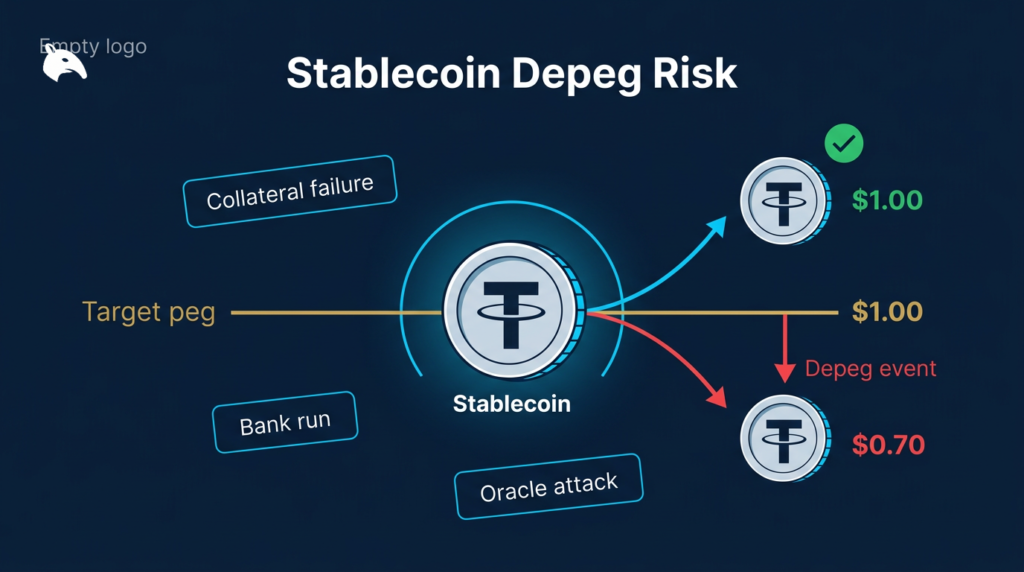
Stablecoins are designed to maintain a constant value, usually pegged to the US dollar at a 1:1 ratio. When that peg breaks, the consequences can be severe, ranging from a temporary discount that recovers in hours to a complete collapse that makes the stablecoin permanently worthless. Understanding what type of stablecoin you are using, what backs its peg, and what conditions could cause the peg to break is essential for anyone earning yield on stablecoins or holding them as a “safe” alternative to volatile crypto assets.
This content is for educational purposes only and should not be considered financial or investment advice.
Key Takeaways
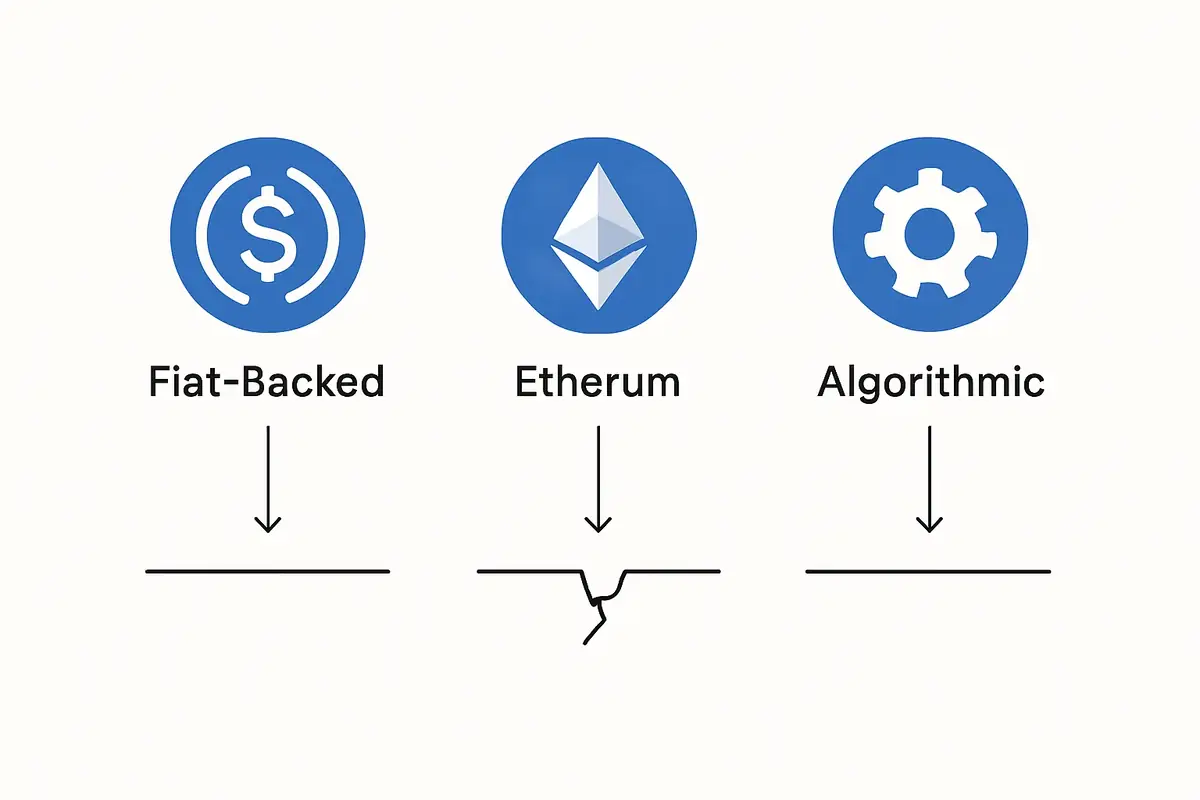
- Stablecoins maintain their peg through different mechanisms: fiat reserves (USDC, USDT), crypto collateral (DAI), and algorithmic mechanisms (UST, now defunct).
- Fiat-backed stablecoins are vulnerable to counterparty risk and regulatory seizure; they are not decentralized.
- Crypto-collateralized stablecoins can depeg if collateral values fall faster than the protocol can liquidate positions.
- Algorithmic stablecoins without hard collateral backing are vulnerable to reflexive death spirals, as demonstrated by TerraUST in 2022.
- Holding stablecoins for yield requires understanding the specific depeg failure mode of the stablecoin you are using.
Types of Stablecoins and Their Depeg Risks
Fiat-Backed (USDC, USDT, BUSD)
Fiat-backed stablecoins are backed by reserves of dollars (or dollar-equivalent short-term assets like Treasury bills) held by a centralized entity. The theory is simple: for every stablecoin in circulation, there is at least one dollar in reserve that can be redeemed on demand.
For a closely related follow-up, see How Much Crypto Should You Keep on an Exchange? A Safer Framework.
For a closely related follow-up, see Clipboard Hijacking Malware: How Crypto Addresses Are Silently Swapped.
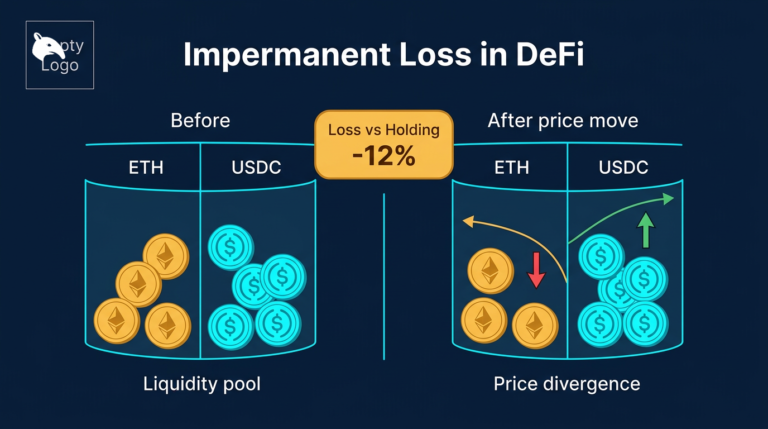
If you want the foundational definition behind this concept, read What Is Impermanent Loss in DeFi?.
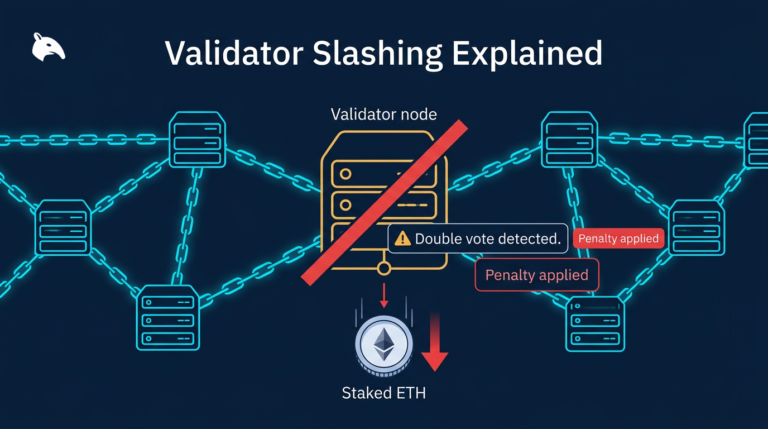
For the risk side of this topic, see Staking Crypto in: Risks & Real Yields.
The depeg risk here is counterparty risk: you are trusting the entity holding the reserves. Tether (USDT) has historically faced questions about the composition and adequacy of its reserves. USDC briefly depegged in March 2023 when Silicon Valley Bank (SVB) collapsed and Circle disclosed that $3.3 billion of USDC’s reserves were held there. USDC fell to as low as $0.87 on the secondary market before the US government’s decision to backstop SVB deposits allowed the peg to recover fully.
Regulatory risk is also real: governments have frozen or shut down stablecoin issuers (BUSD was effectively shut down in 2023 after regulatory action by the NYDFS against Paxos). A regulated shutdown of a major stablecoin issuer could prevent redemptions indefinitely.
Crypto-Collateralized (DAI, crvUSD)
Crypto-collateralized stablecoins are minted by locking up more crypto than the stablecoin value issued. DAI requires collateralization ratios of 150% or more, meaning you must lock $150 of ETH to mint $100 of DAI. This overcollateralization provides a buffer against collateral price drops.
The depeg risk is extreme market volatility that causes collateral values to fall faster than the protocol can liquidate positions and maintain solvency. During the March 2020 “Black Thursday” ETH crash, DAI depegged to as high as $1.12 (on the upside, because it was scarce) as the liquidation mechanism was overwhelmed by gas price spikes preventing timely liquidations. Large-scale collateral crashes with simultaneous network congestion are the specific failure scenario for crypto-collateralized stablecoins.
Algorithmic Stablecoins (UST, now collapsed)
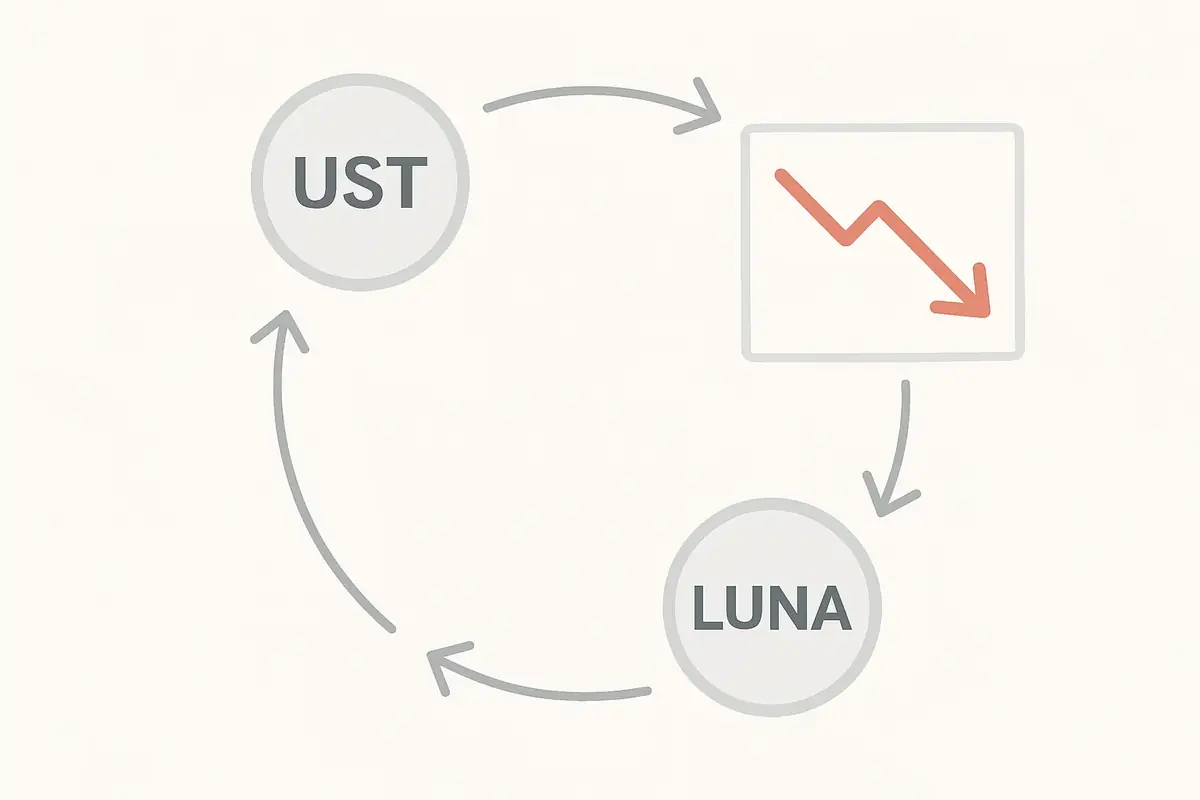
Algorithmic stablecoins attempt to maintain their peg through supply and demand mechanics rather than hard collateral. TerraUST (UST) maintained its dollar peg by allowing 1 UST to be burned for $1 worth of LUNA, the ecosystem’s governance token. This created a reflexive relationship: if UST depegged, burning UST for LUNA should restore the peg.
In May 2022, sustained selling pressure caused UST to depeg slightly. As LUNA was minted to support the peg, LUNA’s price fell. More LUNA being minted to restore UST caused further LUNA price decline, causing more UST selling. The reflexive death spiral destroyed approximately $40 billion in market value in days. UST went to near zero. LUNA went to near zero. Billions of retail investors lost funds they had deposited in Anchor Protocol for 20% yield.
The UST collapse is the most important case study in algorithmic stablecoin failure. Protocols offering extremely high yield on stablecoins backed by circular tokenomics should be treated as high-risk, regardless of the apparent historical stability of the peg.
Practical Usage: How to Evaluate Stablecoin Safety
When choosing which stablecoin to hold or earn yield on, consider these dimensions:
- Backing mechanism: Is it backed by fiat reserves, overcollateralized crypto, or an algorithmic mechanism? Hard backing provides more predictable failure modes.
- Reserve transparency: Are reserves audited by a reputable third party? Are attestation reports published regularly? USDC publishes monthly attestations. USDT’s audit history has been inconsistent.
- Regulatory standing: Is the issuer compliant with relevant regulations? A regulatory shutdown could restrict redemptions. USDC is issued by Circle, which is US-regulated and compliant.
- Historical peg stability: Has the stablecoin depegged before? By how much? How long did it take to recover? Past depegs indicate the mechanisms under stress.
- Yield source: Where does the yield come from? Sustainable yield (lending interest, real trading fees) is more credible than subsidized yield funded by token inflation or circular tokenomics.
Depeg Risk in Liquid Staking and DeFi Yield
Liquid staking tokens like stETH are not stablecoins in the traditional sense, but they are pegged to ETH. When stETH traded at a discount to ETH in June 2022 (during the Celsius and Three Arrows Capital insolvency crisis), users rushing to exit their positions created a temporary stETH depeg. This spread panic through DeFi because many protocols used stETH as collateral at near-ETH prices. A persistent stETH depeg would have caused cascading liquidations.
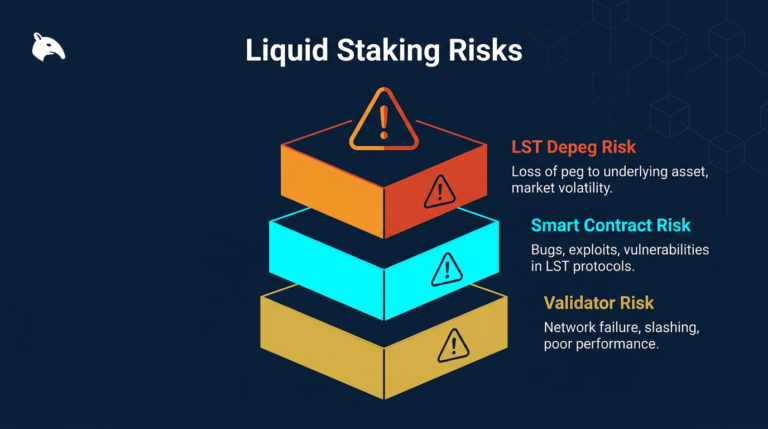
This illustrates that depeg risk extends beyond classical stablecoins to any asset designed to maintain price parity with another asset through a mechanism that can break under stress. For more on the risks in liquid staking specifically, see Liquid Staking Risks.
Risks and Common Mistakes
The most common mistake is treating all stablecoins as equally safe because they nominally hold $1 in value. The risk profile of USDC holding short-term US Treasuries in custody with a regulated issuer is fundamentally different from an algorithmic stablecoin backed by its own ecosystem token. Price history alone does not differentiate them; understanding the mechanism does.
Another mistake is chasing the highest stablecoin yield without understanding why it is so high. Sustainable lending yields on stablecoins in DeFi have historically ranged from 3 to 10 percent annually depending on market conditions. Yields significantly above this range are typically subsidized by token emissions or funded by unsustainable mechanisms. High yield is a signal to investigate the source, not a reason to deposit more.
Sources
- Circle: An Update on USDC and Silicon Valley Bank
- Chainalysis: The TerraUSD and LUNA Collapse
- Bank for International Settlements: Stablecoins and the Peg Mechanism
Frequently Asked Questions
Is USDT (Tether) safe?
USDT is the largest stablecoin by market cap and has maintained its peg through multiple market crises. However, Tether has historically provided less reserve transparency than USDC and has faced legal settlements with US regulators. Most market participants treat USDT as functionally safe for liquid use, but as a long-term large holding it carries more counterparty uncertainty than USDC.
What is the safest stablecoin?
There is no completely risk-free stablecoin. USDC is widely considered to have the clearest reserve transparency and regulatory standing among fiat-backed options. DAI from MakerDAO is the most battle-tested decentralized option. The “safest” depends on which risk you are most concerned about: counterparty/regulatory risk (use DAI), or smart contract/volatility risk (use USDC). Many sophisticated users diversify across both.
Can a stablecoin go to zero?
Yes. TerraUST went effectively to zero in May 2022. Iron Finance’s IRON stablecoin collapsed in 2021. Various algorithmic experiments have failed similarly. Even fiat-backed stablecoins could theoretically go to zero in a scenario involving total insolvency of the issuer with unrecoverable reserves, though this has not happened to date with major issuers.
How long do depegs typically last?
Temporary depegs on fiat-backed stablecoins caused by market panic rather than real insolvency typically resolve within hours to days. The USDC SVB depeg resolved within 48 hours after the government backstop was announced. Structural depegs caused by actual reserve inadequacy or algorithmic failure are permanent or effectively permanent.