

Last Updated on April 12, 2026 by Snout0x
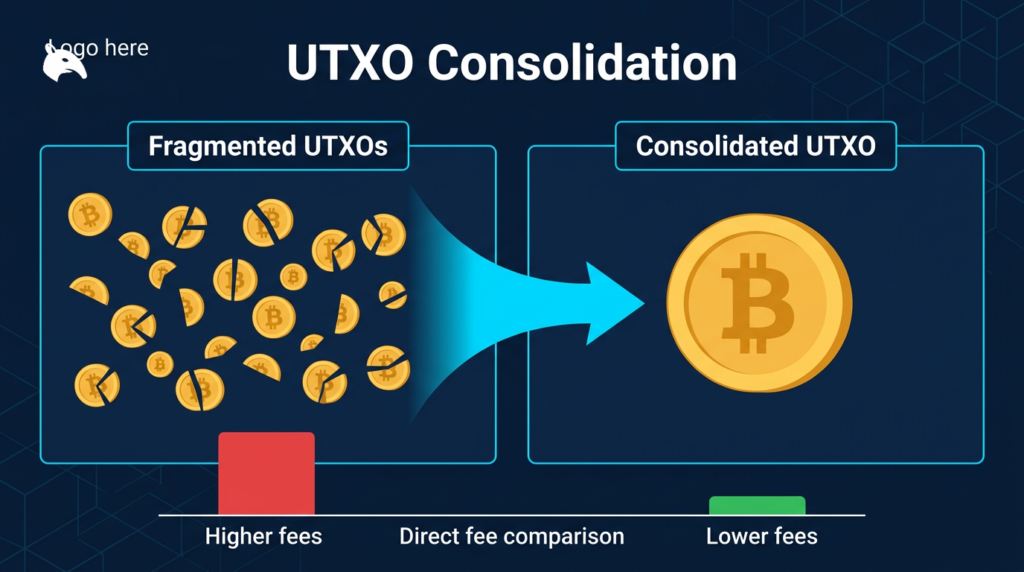
UTXO consolidation combines multiple small unspent transaction outputs into fewer, larger outputs. Because Bitcoin fees scale with transaction size (measured in bytes, not in value), a wallet holding many small UTXOs pays higher fees every time it spends. Consolidating during low-fee periods reduces that future cost and simplifies your wallet’s state.
For the broader overview around this topic, see What Is Blockchain?.
This content is for educational purposes only and should not be considered financial or investment advice.
Key Takeaways
- Bitcoin fees are determined by transaction byte size, not the amount being sent.
- Each UTXO used as an input adds roughly 148 bytes to a transaction; more inputs mean higher fees.
- Consolidation combines many small UTXOs into fewer large ones in a single low-fee transaction.
- The best time to consolidate is when mempool fees are low (e.g. weekends or off-peak hours).
- Consolidation has privacy trade-offs: it links multiple addresses to the same wallet on-chain.
Why UTXO Fragmentation Makes Consolidation Useful
To understand consolidation, you need to understand how the UTXO model works. Bitcoin tracks ownership as discrete outputs, not account balances. When you spend bitcoin, you consume entire UTXOs as inputs and create new outputs. For a broader comparison of how this differs from account-based systems, see Bitcoin vs Ethereum Transaction Models.
If you want the foundational definition behind this concept, read What Is a Hardware Wallet? Key Storage Explained.
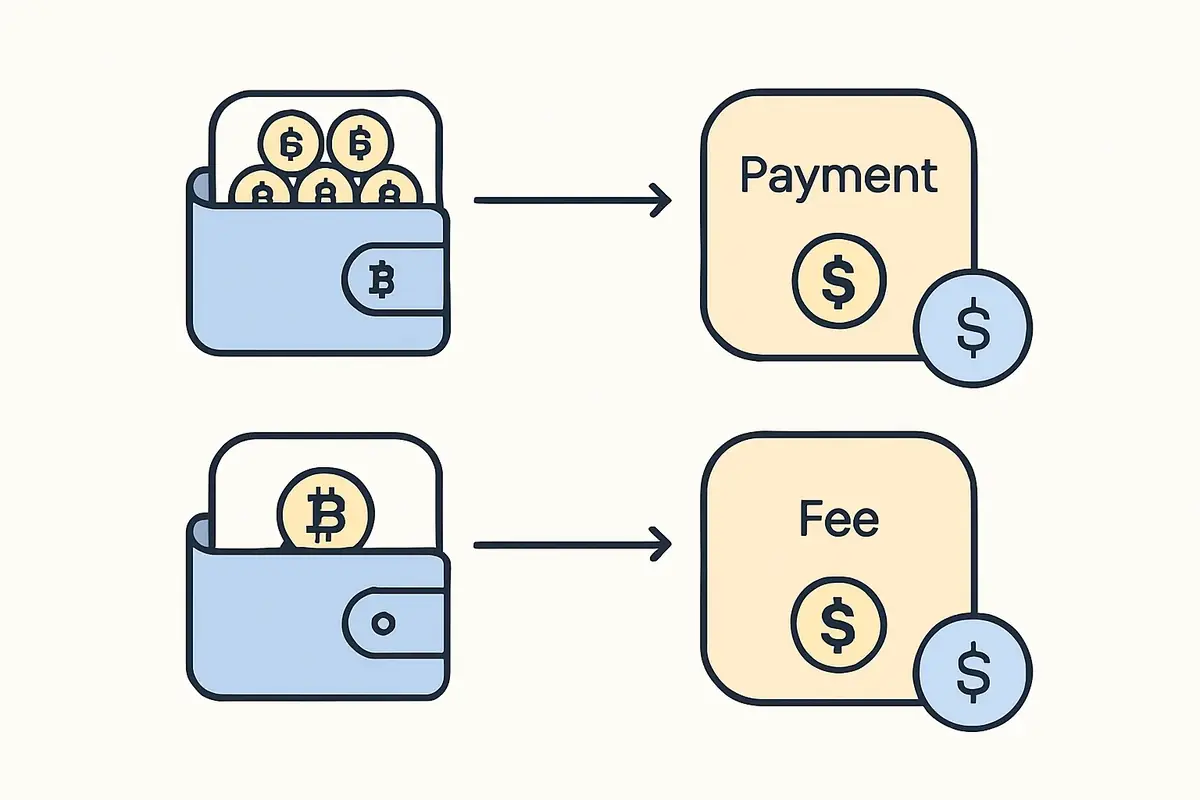
A transaction’s fee is proportional to its size in bytes. Each input (i.e. each UTXO being spent) consumes approximately 148 bytes in a standard legacy transaction (68 bytes for a native segwit input). Each output adds roughly 34 bytes. A transaction with one input costs much less in fees than one with ten inputs for the same payment amount.
Fragmentation happens naturally. Receiving many small payments, receiving change outputs from prior transactions, or using wallets that generate a new change address per transaction all accumulate UTXOs over time. The more fragmented your UTXO set, the larger and more expensive your future transactions become.
How Consolidation Works
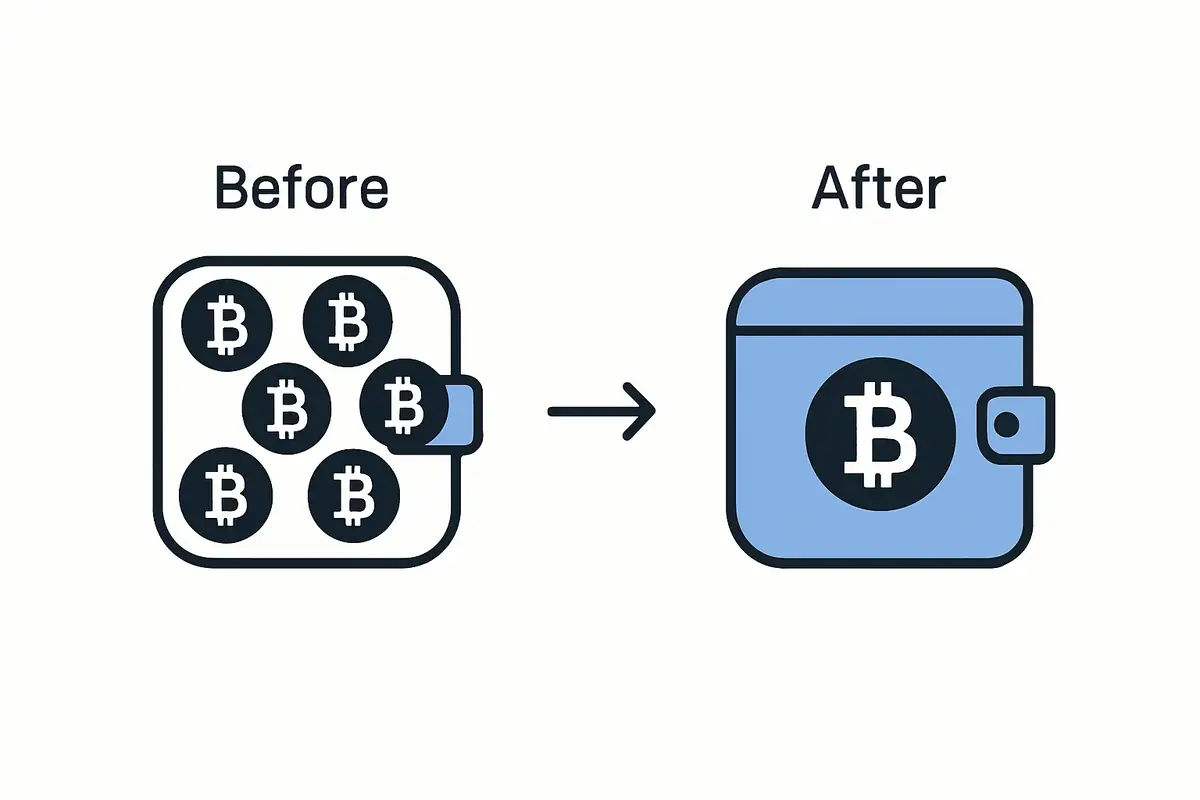
A consolidation transaction spends many small UTXOs as inputs and sends the total to one or two of your own addresses as outputs. You pay a fee for the consolidation transaction, but you end up with fewer, larger UTXOs.
For example: if you hold 20 UTXOs worth 0.001 BTC each, you could consolidate them into one UTXO worth approximately 0.020 BTC minus the consolidation fee. Your future transactions will then be smaller (one input instead of twenty) and proportionally cheaper.
You can do this in most Bitcoin wallets that support coin control. Bitcoin Core, Electrum, and most hardware wallet companion apps (including Sparrow Wallet) allow you to select which UTXOs to include as inputs. Select all small UTXOs, send to yourself, and broadcast during a low-fee window.
When to Consolidate
Consolidate when mempool fees are low. You can check the current mempool fee rate at resources like mempool.space. Fees tend to drop during weekend periods and off-peak hours in major time zones. Paying a low fee to consolidate now saves a larger fee cost later when you need to spend urgently.
Do not consolidate when:
- Mempool fees are high (the consolidation itself becomes expensive).
- You are concerned about on-chain privacy (see below).
- You have very few UTXOs that are already large enough for typical transactions.
Practical Usage: Planning a Consolidation Transaction
In practice, consolidation works best when you plan it like maintenance rather than an urgent spend. First, check whether the wallet actually contains enough small outputs to justify the extra transaction. If you only have a few large UTXOs already, there may be little fee benefit. If the wallet is heavily fragmented, wait for a low-fee period, review the inputs with coin control, and send the funds to a receive address you control inside the same wallet.
If you are unsure whether the fee environment is actually favorable, compare the current fee market with Mempool Congestion Explained before broadcasting. The practical goal is simple: pay one small maintenance fee now so future spends do not require many expensive inputs later.
Risks and Common Mistakes
Consolidation has a privacy cost. When you spend multiple UTXOs from different addresses in a single transaction, blockchain analysis can link those addresses to the same wallet. If you received funds from different parties and want to maintain address separation, consolidating reveals those connections on-chain.
Common mistakes include consolidating at high fees (paying more to consolidate than you will save), sending the consolidation transaction to a new address not controlled by your wallet, and accidentally including UTXOs you want to keep separate for privacy reasons. Always double-check the destination address before broadcasting.
For broader context on how the mempool and fee market work, see Mempool Congestion Explained.
Sources
Bitcoin fee mechanics and input/output byte sizing: BIP-141 (Segregated Witness) and Bitcoin Core documentation.
Frequently Asked Questions
Is consolidating UTXOs safe?
Yes, technically. You are sending funds to your own addresses. The security risks are the same as any Bitcoin transaction: confirm the destination address is yours, use a trusted wallet, and broadcast during a low-fee period.
How many UTXOs should I consolidate to?
There is no exact rule, but having 3 to 10 UTXOs of comfortable sizes is manageable for most users. Consolidating to a single UTXO is fine for simplicity but removes the option of spending from multiple outputs separately.
Does consolidation work for all Bitcoin address types?
Yes, but the fee savings are greater for native segwit (bech32, starting with bc1) addresses because they use fewer bytes per input. Legacy addresses (P2PKH, starting with 1) have larger inputs and benefit even more from consolidation proportionally.
Can I consolidate UTXOs from different wallet apps?
Only if those wallets share the same seed phrase (i.e. are derived from the same key). If your UTXOs are across genuinely separate wallets with different keys, you would need to consolidate within each wallet separately.
Will consolidation change my Bitcoin addresses?
Your addresses come from your seed phrase and do not change due to consolidation. The transaction creates new UTXOs locked to your existing addresses. Your wallet may generate a new change address for the consolidation output if configured to do so, but the funds remain under your seed phrase control.