

Last Updated on April 16, 2026 by Snout0x
Deciding how much crypto to keep on an exchange is really a custody question, not a portfolio-allocation question. Coins left on an exchange are easy to trade and convert, but they sit behind the platform’s wallet infrastructure, withdrawal policies, and account security controls instead of your own keys. For most investors, the right amount is the balance tied to an immediate job, while long-term holdings belong in wallets you control.
In practice, that usually means keeping only active trading inventory, near-term cash-out funds, or withdrawals already in progress on-platform. If a balance has no scheduled task over the next few days or weeks, it is usually no longer exchange inventory. It is dormant exposure, and it should probably move into a safer wallet tier.
This content is for educational purposes only and should not be considered financial or investment advice.
Key Takeaways: How Much Crypto to Keep on an Exchange
- Think in functions, not percentages: The safest exchange balance is usually the amount needed for active orders, near-term conversions, or withdrawals already in progress, not a fixed share of your net worth.
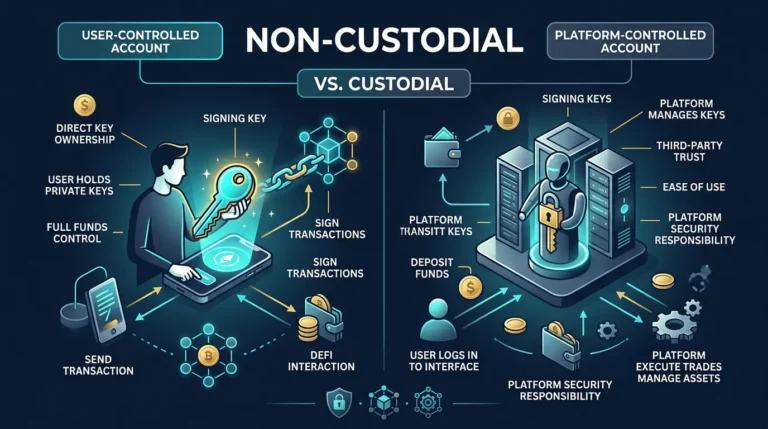
- An exchange balance is custodial exposure: You may have economic ownership, but the platform controls the signing keys, the withdrawal queue, and the account recovery process.
- Long-term holdings should usually leave the exchange: If funds are meant to sit untouched for months, they generally belong in a storage setup you control, not in a trading account.
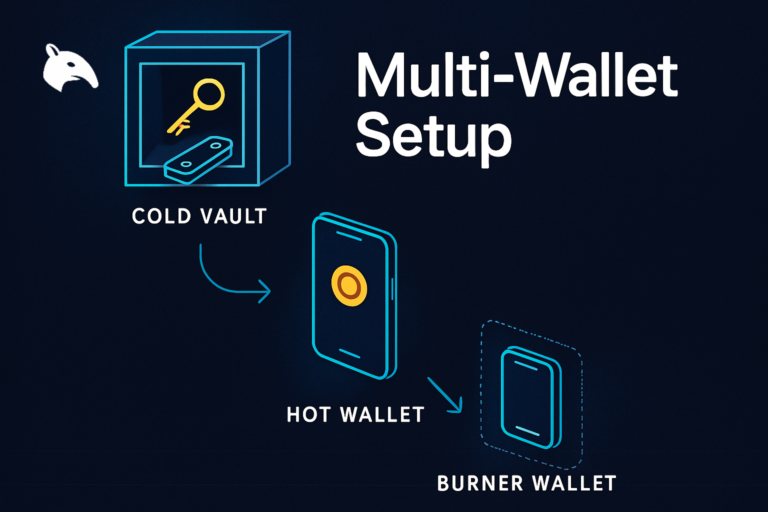
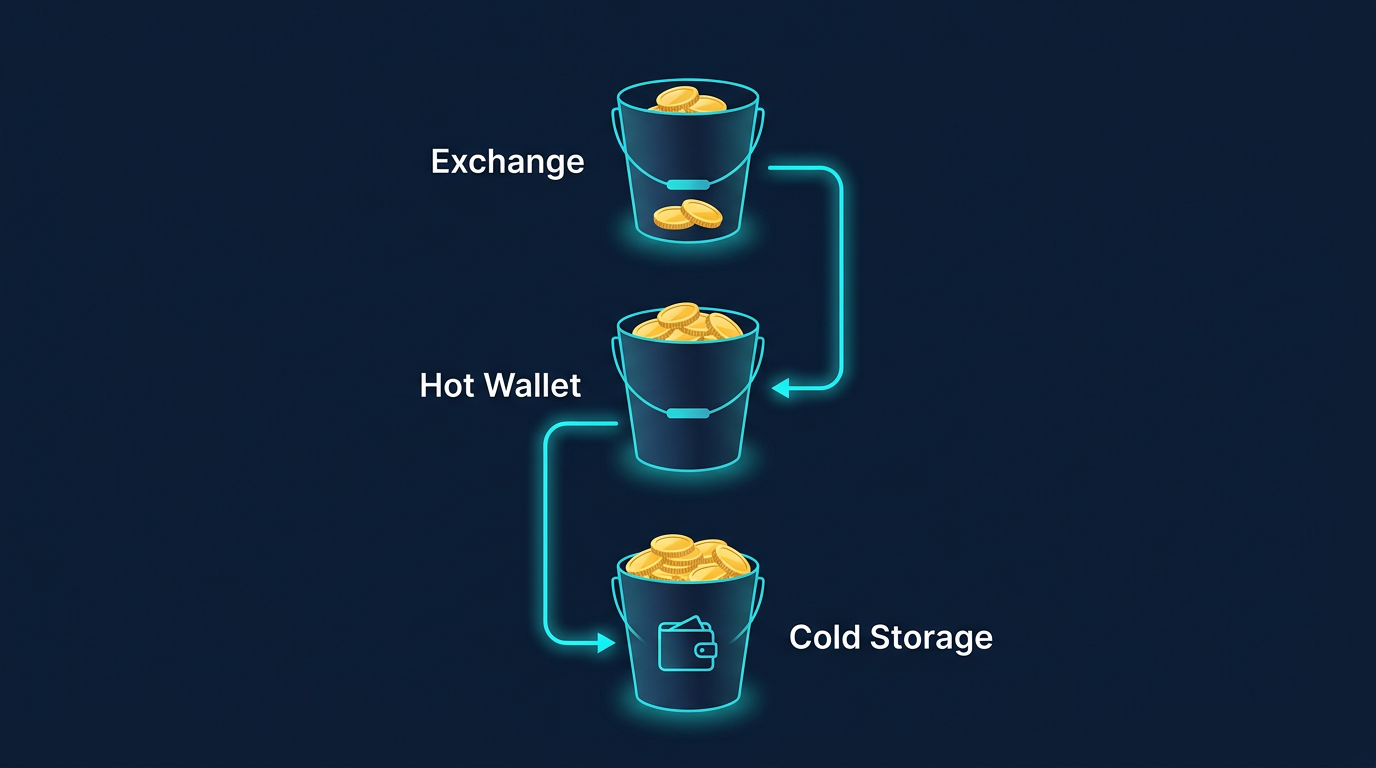
- Use separate custody buckets: Many investors are better served by an exchange bucket, a small hot-wallet bucket, and a colder long-term storage bucket.
- Plan your exit path before stress hits: Test withdrawals, verify addresses carefully, and avoid waiting until an outage, compliance review, or market panic to move funds.
What an Exchange Balance Really Represents
You hold a claim on a platform, not the signing keys
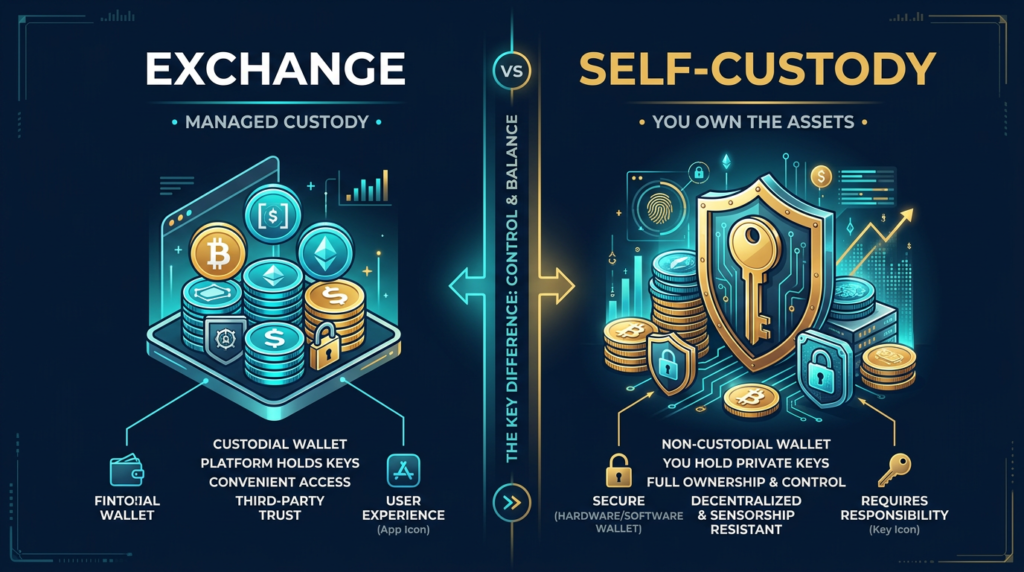
When crypto sits on a centralized exchange, the exchange usually holds the private keys in its own wallet infrastructure. Your dashboard balance is an internal ledger entry that says the platform owes you a certain amount of bitcoin, ether, or stablecoins. That distinction matters because the asset may exist on-chain, but the ability to move it depends on the exchange’s custody system, policies, and solvency rather than your direct control.
Exchanges are effective at matching orders, converting between assets, and providing fiat ramps. The problem begins when investors treat a trading venue like a vault. The longer funds remain parked without an immediate purpose, the more your risk shifts from market volatility to custodial dependency.
Why withdrawal rules change the meaning of available funds
In practice, exchanges batch withdrawals, maintain internal hot and cold wallet pools, review suspicious activity, and sometimes pause transfers during maintenance or sudden volatility. A balance that can be sold instantly inside the exchange may still be slow to leave the exchange, a pattern documented in Exchange Withdrawals Will Pause Again. If those coins are part of your emergency reserves, that delay matters. If they are simply waiting for the next trade, it matters less. The purpose of the funds should decide where they live.
A useful mental model is to think of an exchange account like a workstation, not a warehouse. A workstation holds the tools and inventory needed for the job in front of you right now. A warehouse holds reserves. The confusion starts when long-term savings are left on the workstation simply because it is already open and convenient.
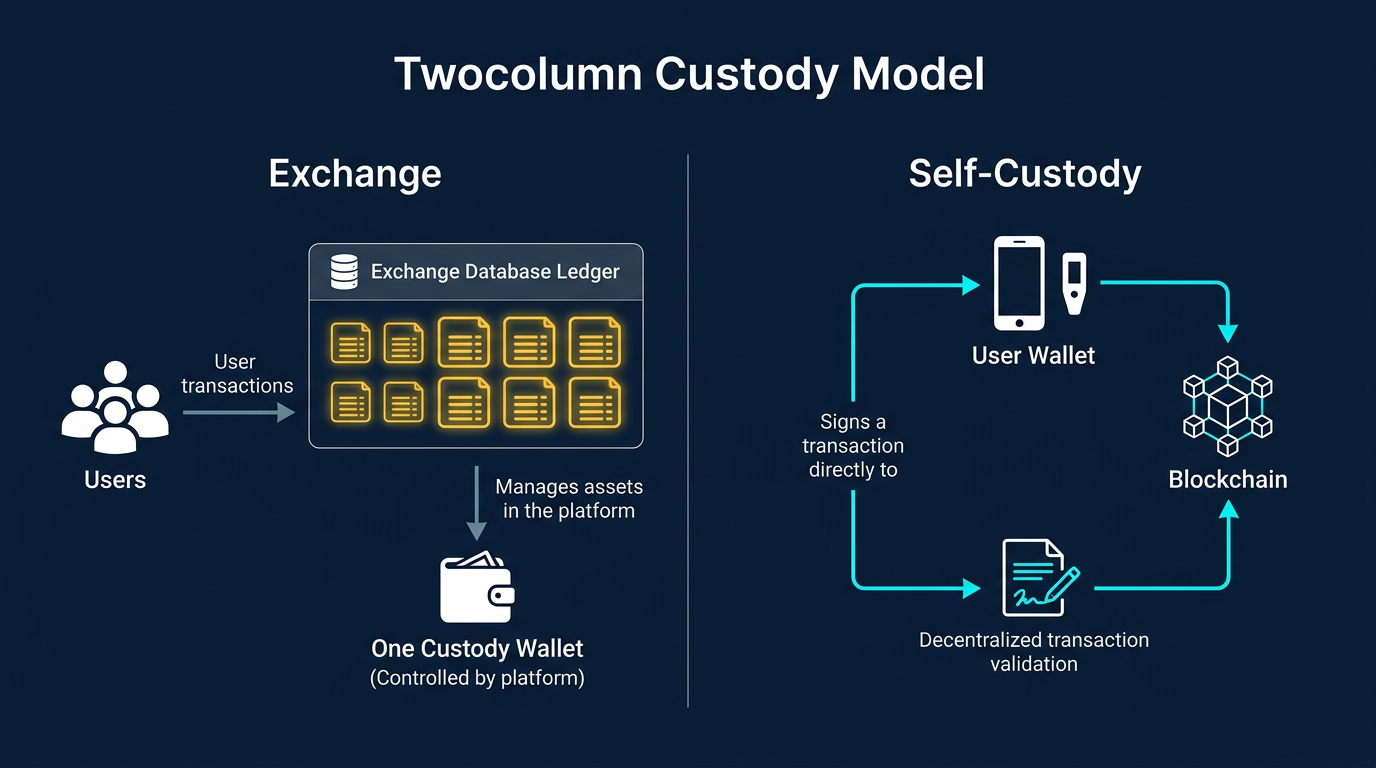
How Much Crypto to Keep on an Exchange Depends on Function
Once you know the exchange bucket should stay small, the next decision is what wallet structure should hold the rest. That is where how to choose a crypto wallet becomes useful, and how to store crypto safely covers which custody layer should take over once the platform has finished its job.
Trading inventory should match active orders and near-term setups
If you trade regularly, some exchange balance is operationally necessary. Open orders, margin buffers, stablecoins reserved for entries, and proceeds you plan to rotate soon all belong in the trading bucket. This bucket should be sized around what you expect to use over the near term, not around your total conviction in a coin.
A useful mental model is to ask whether each asset on the platform has a scheduled task. If the answer is yes, perhaps it is waiting to be sold, converted, or withdrawn within days, keeping it there may be justified. If the answer is no, it has probably become convenience float. That float feels harmless until it quietly grows into a balance large enough that an outage or freeze would become a serious problem.
Cash-out and payment balances need a short runway
Some people keep crypto on an exchange because they expect to cash out to a bank account, pay tax liabilities, or settle recurring conversions to fiat. That is reasonable, but the runway should still be short. Funds that are staged for an identifiable near-term transfer can remain on platform temporarily. Funds without a date, destination, or purpose usually drift into indefinite custody exposure.
This distinction is especially important with stablecoins. A stablecoin balance on an exchange may look low risk because price volatility is limited, but the custody risk is still present. If the exchange is the only place from which you can access that value, you still carry platform risk, account-lock risk, and operational delay risk even if the asset itself is designed to hold a dollar peg.
Strategic reserves usually belong off the platform
Coins held for long-term conviction, strategic savings, or multi-month inactivity usually do not benefit from sitting on an exchange. If your plan is “hold and do nothing,” that is a strong signal the funds should not stay inside a trading venue.
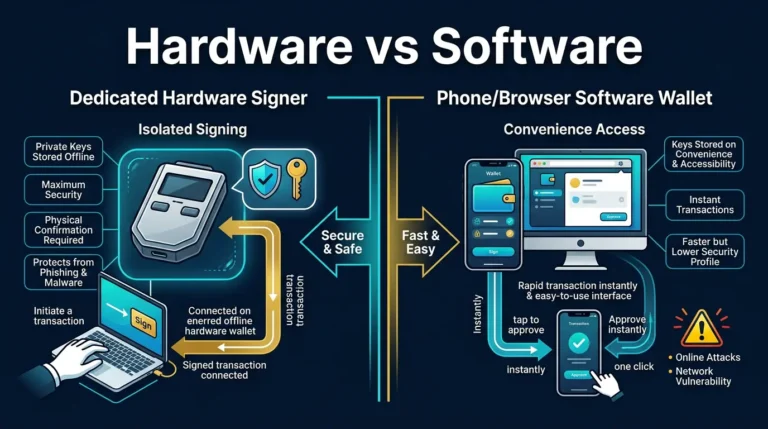
For most people, that means moving meaningful long-term balances into a colder setup or at least into a wallet whose keys are outside exchange custody. A hardware wallet is often the practical middle ground because it reduces remote attack surface while keeping recovery manageable. If you are still deciding whether that category fits, understanding what a hardware wallet is becomes a better next step than leaving strategic holdings where they happen to be easiest to trade.
A Three-Bucket Custody Model Reduces Blast Radius
Exchange bucket
The exchange bucket holds capital with a near-term purpose: active trades, incoming fiat conversions, or assets queued for withdrawal. This bucket should be the smallest amount that still lets you operate efficiently. The goal is not zero exchange use. The goal is to prevent the exchange account from becoming the default resting place for every coin you own.
Hot-wallet bucket
The hot-wallet bucket holds spending money for on-chain activity, such as swaps, staking actions, NFT transactions, or application testing. It reduces the need to move funds in and out of cold storage every time you want to sign something. It also creates a containment zone. If a browser wallet gets drained, the damage is painful but limited because the wallet was never meant to carry your full stack.
Cold-storage bucket
The cold-storage bucket is where long-horizon holdings, reserve capital, and assets with no immediate task should live. This layer moves slowly on purpose. It favors verification over speed and separation over convenience. That can mean a hardware wallet, a multi-device arrangement, or another carefully documented long-term setup. What matters is that the keys are no longer coupled to exchange account access or to the same device you use for everyday browsing.
| Custody bucket | Best use | What belongs there | Main rule |
|---|---|---|---|
| Exchange | Trading and conversion | Open-order capital, short-term stablecoin balances, near-term withdrawals | Keep only funds with an immediate task |
| Hot wallet | Daily on-chain activity | Small working balances for apps, swaps, and routine transfers | Cap the amount you can afford to expose to device or signing risk |
| Cold storage | Long-term holding | Strategic reserves, savings, large balances, assets with no short-term use | Optimize for key control and recovery, not speed |
Where Exchange Risk Actually Comes From
Platform risk is not the same as blockchain risk
Bitcoin can keep producing blocks and Ethereum can keep finalizing transactions while your exchange fails you operationally. The platform may face treasury mismanagement, legal intervention, banking friction, internal fraud, or routine maintenance that interrupts withdrawals. None of those events require the underlying blockchain to be compromised. A secure blockchain does not guarantee immediate access to coins held under someone else’s custody. If your exposure is sitting in a platform database, your real counterparty is the platform.
Account takeover is an identity problem, not a wallet problem
Exchange accounts are protected by passwords, email, mobile devices, and two-factor systems. Attackers do not need to break wallet cryptography to steal funds — they can target your email recovery flow, intercept SMS codes, or phish login pages. That is one reason crypto phishing remains so effective. If an attacker convinces you to approve a fake login or share a code, your exchange security collapses without any chain-level exploit.
Convenience creep quietly inflates exposure
The most common way people end up with too much crypto on an exchange is not a strategic decision. It is inertia. A few buys stay parked, profits sit in stablecoins, and the account becomes the default destination. A periodic sweep policy prevents this drift by forcing you to decide which balances still belong on the platform and which no longer do.
Withdrawal Planning Matters as Much as Storage
Test the exit path before you need it
Many investors wait until stress or a policy change to attempt their first serious withdrawal. That is the worst moment to discover address-book restrictions, unexpected delays, or missing identity documents. Small test withdrawals confirm the route, the receiving wallet, and the exchange’s processing rhythm while the stakes are low.
Network selection and address verification can create avoidable losses
Exchanges often offer multiple withdrawal networks for the same ticker. Sending an asset over the wrong network, forgetting a required memo, or pasting an unverified address can turn a simple withdrawal into a permanent loss. The receiving wallet should be understood and documented before you fund it, not after. Exchange withdrawal risk is not just “Can the platform send?” It is also “Am I sending to the right place, on the right rail, with the right assumptions?”
Recovery planning should not live on the same device as trading access
A common operational mistake is storing the exchange app, recovery email, backup notes, and wallet instructions all on the same device. If that device is stolen or compromised, the attacker gains both account access and the information needed to target self-custody backups next. The credentials used for exchange recovery should not be mixed with the materials that protect colder holdings.
Practical Usage for Different Types of Users
Set a maximum exchange balance by role, not by emotion. A simple routine is to review the account weekly: keep only open-order capital, near-term conversion funds, and cash-out balances with a real date attached. Anything else gets tagged as idle and moved out.
If you buy occasionally
If you mostly buy and hold, the exchange should function as a temporary bridge between bank rails and your own wallet. Keep enough to complete the purchase, confirm the receiving destination, and sweep the balance out. Occasional buyers gain very little from leaving meaningful reserves on a platform between purchase events.
If you trade actively
Active traders are the clearest case for a larger exchange bucket, but the question is “How much working capital do I actually need?” not “How much do I own?” Many traders benefit from a split where operational capital remains on platform and profits or dormant positions are swept regularly to safer storage. If a position is no longer part of the next few trades, it should stop living in the trading bucket even if you still believe in it strongly.
If you mostly hold for the long term
Long-term holders usually have the weakest case for leaving significant balances on an exchange. If your strategy does not require instant execution, the better question is how little operational float is needed before the rest moves into a wallet system designed for durability and recovery.
Risks and Common Mistakes
- Treating convenience as a security model: Fast login, fast trading, and familiar apps feel safe because they reduce friction, but convenience does not reduce custody risk.
- Leaving profits parked indefinitely: A balance that was supposed to be temporary often becomes permanent simply because nothing forces a withdrawal routine.
- Using one account for every role: Trading capital, emergency reserves, and long-term savings should not all depend on the same exchange account and recovery flow.
- Ignoring identity-layer attacks: Weak email security, reused passwords, and careless recovery practices can compromise a custodial account without any blockchain exploit at all.
- Waiting for a crisis to test withdrawals: The first large withdrawal should not happen during a market panic, a compliance review, or a rumored solvency event.
Sources
- Bitcoin Developer Documentation – Background on wallet control, transaction handling, and the difference between on-chain ownership and custodial interfaces.
- Ethereum Developer Documentation – Reference material on accounts, wallets, and how users interact with networks outside exchange custody.
- NIST Digital Identity Guidelines – Useful principles for understanding identity, authentication, and account recovery risks that affect exchange accounts.
FAQ: How Much Crypto Should You Keep on an Exchange?
How much crypto is safe to keep on an exchange?
There is no universal number. The safer approach is to keep only the amount needed for active trades, near-term conversions, or withdrawals already planned. If losing access to an exchange balance for weeks would materially hurt you, the balance is too large for that role.
Is it safer to use an exchange or a wallet?
They protect against different problems. Exchanges are convenient for trading and fiat access but introduce custodial risk because the platform controls the keys. A wallet gives you direct control but makes you responsible for backups and transaction verification. For many people, the safest setup is a deliberate split between exchange liquidity and self-custody reserves.
Should active traders keep everything on one exchange?
Usually no. Keeping your entire treasury on one exchange turns a single platform issue into a total operational failure. Many active traders are better served by leaving only working capital on platform and sweeping idle profits into self-custody on a routine schedule.
What should I move off an exchange first?
Start with assets that have no immediate trading or cash-out purpose. Long-term bitcoin holdings, reserve stablecoins, and altcoin positions you do not plan to touch soon are usually stronger candidates for withdrawal than capital already committed to near-term orders. The first priority is removing balances that are large, dormant, and unnecessary to keep under custodial control.
Do I need a hardware wallet to stop keeping too much crypto on an exchange?
Not always, but a hardware wallet is often the most practical upgrade once the amount you hold is meaningful enough that exchange custody feels uncomfortable. Small balances may be fine in a reputable software wallet. Larger or longer-term balances usually justify a setup that isolates keys from everyday devices.