

Last Updated on April 16, 2026 by Snout0x
What Self-Custody Actually Means
This content is for educational purposes only and should not be considered financial or investment advice.
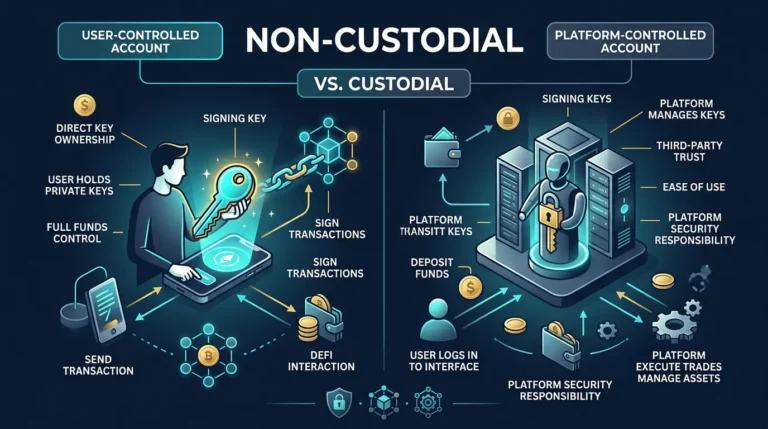
Self-custody means you control the private keys to your cryptocurrency rather than relying on an exchange or third party. If you’re new to the concept, see the full explanation in our guide: What Is Self-Custody in Crypto?
Disclaimer: This content is for educational and informational purposes only and does not constitute financial, investment, tax, or legal advice. Cryptocurrency markets are volatile and involve risk. Always conduct your own research and consult a qualified professional before making financial decisions.
Affiliate Disclosure: Some links in this article may be affiliate links. If you choose to use them, I may earn a commission at no additional cost to you.
Key Takeaways
- The “Maintenance” Excuse: When an exchange pauses withdrawals during a market crash, it is rarely a technical issue. In most historical cases, it signals a liquidity crisis. By the time an announcement goes out, the window to act has already closed.
- The $1,000 Threshold: Hot wallets are for convenience. Cold wallets are for protection. If you hold more than $1,000 in crypto, a hardware wallet that keeps your private keys offline is not optional , it is the minimum standard.
- Ledger vs. Trezor: Choose the Ledger Nano X for a seamless mobile and DeFi experience. Choose the Trezor Safe 7 for open-source, auditable security built for long-term holding.
- Never Buy From Resellers: Supply chain attacks are documented. Always buy a hardware wallet directly from the manufacturer’s official website , never from Amazon, eBay, or any third-party seller.
- Test Before You Transfer: Before moving your full balance, send $5 to the new wallet, wipe the device, and restore it using your seed phrase. If the funds appear correctly, your backup works. Only then move the rest.
What an Exchange Withdrawal Freeze Actually Means
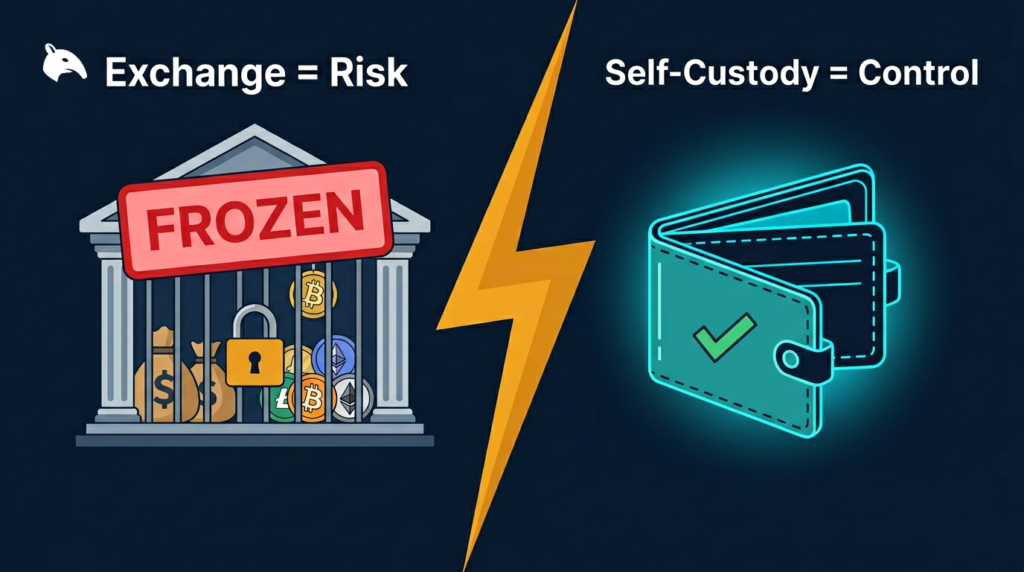
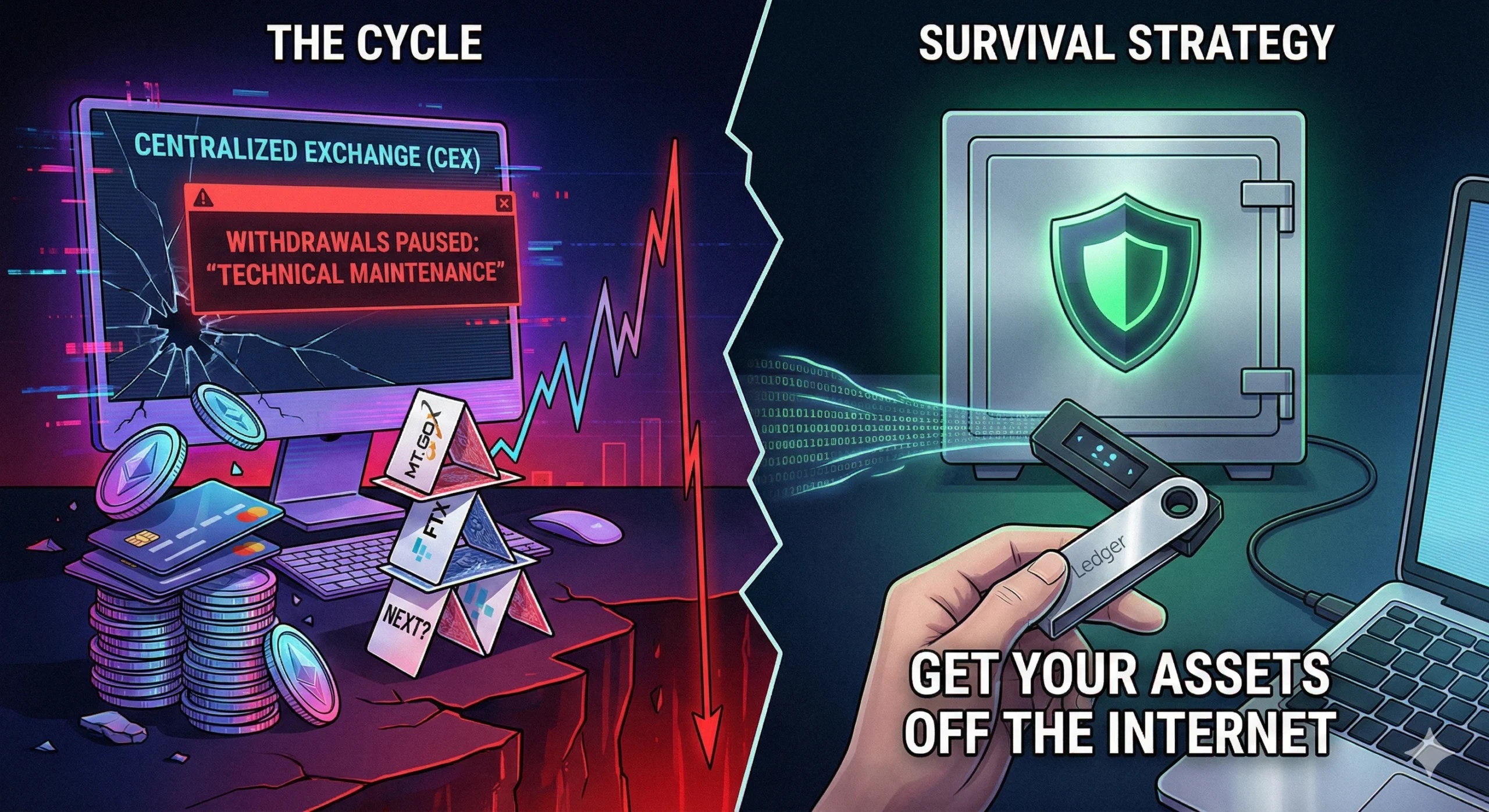
The term “exchange withdrawal freeze” has become one of the most consequential phrases in retail crypto. When a centralized exchange halts withdrawals, typically announced as a brief “technical maintenance” window, users often assume the disruption is temporary. In most documented cases, it is not.
The underlying pattern is consistent: market volatility triggers a bank-run dynamic, redemption volume exceeds available liquidity, withdrawals slow and then stop, and the exchange issues vague reassurances while attempting to stabilize or simply buy time before insolvency becomes public. By the time most retail investors understand what is happening, the window to withdraw has already closed.
Mt. Gox suspended withdrawals in February 2014 after losing an estimated 850,000 Bitcoin. Celsius paused withdrawals in June 2022, citing “extreme market conditions,” and never resumed full operations. FTX froze withdrawals in November 2022 and filed for bankruptcy within days. These were not isolated technical failures; they are the predictable result of trusting centralized platforms with funds and unverified reserves.
The solution is not to identify a “safer” exchange. The solution is to remove your funds from platforms you do not control, and to hold your private keys yourself.
Hot Wallets vs. Cold Storage: Understanding the Difference
Before choosing a device, it helps to understand what cold storage actually protects against , and what it does not.
Hot Wallets
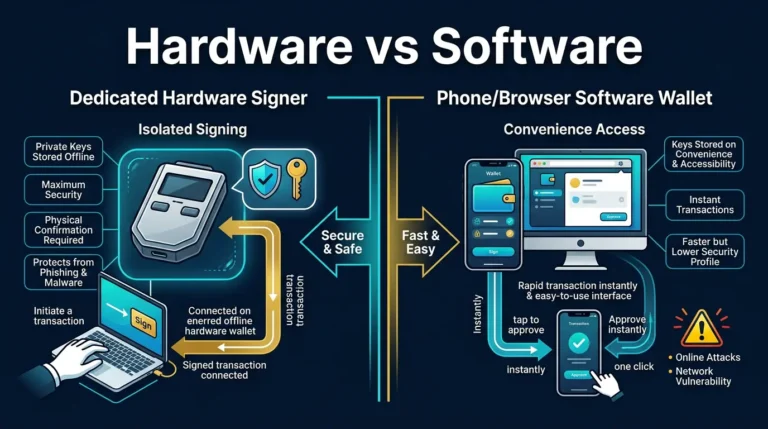
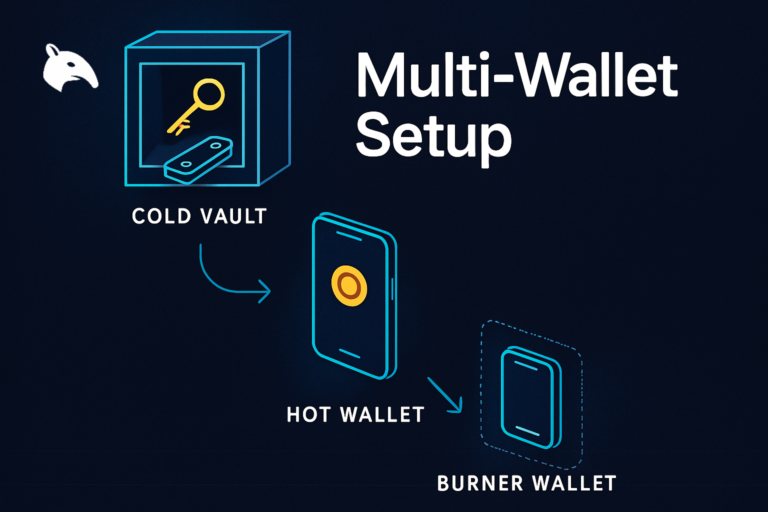
Hot wallets, including MetaMask, Phantom, and exchange-connected apps, remain connected to the internet at all times. They are practical for frequent transactions, DeFi interactions, and token swaps. The trade-off is ongoing exposure: if your device is compromised, or if you interact with a malicious smart contract or phishing site, a hot wallet can be drained within seconds.
Hot wallets serve a legitimate purpose for small, active balances. They are not suitable for securing holdings of meaningful value.
Cold Wallets (Hardware)
A cold wallet is a physical device that generates and stores your private keys in an offline environment. When you authorize a transaction, the key signs the data inside the device , it never passes to your computer or phone. Even if your PC is running malware, the key itself is never exposed.
If you hold more than $1,000 in crypto assets, cold storage is a practical necessity. For a more detailed technical breakdown: Cold Storage Paranoia: Is Your Wallet Actually Air-Gapped?
Option 1: Ledger Nano X , The Usability-First Choice
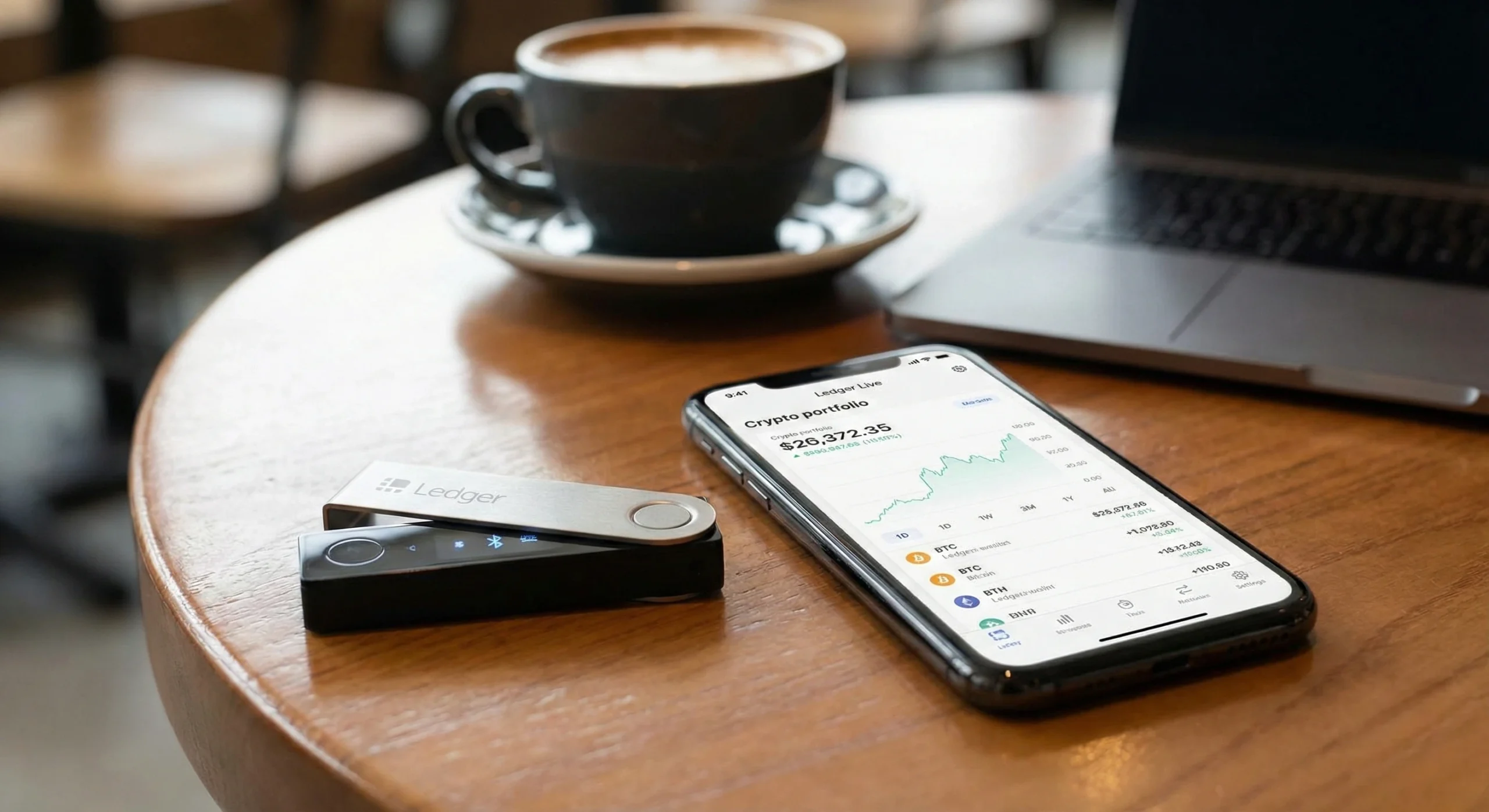
The Ledger Nano X is the most widely adopted hardware wallet in the market, and the reason is straightforward: it removes the friction that leads most people to leave funds on exchanges in the first place. If a wallet is too complicated to use consistently, it will not get used , and that defeats the entire purpose.
What It Does Well
- Bluetooth connectivity: Pairs with your phone via the Ledger Live app. You can manage your portfolio without needing a desktop machine.
- Broad asset support: Supports thousands of coins and tokens across most major blockchains, including Ethereum-compatible networks and Solana.
- Polished interface: The Ledger Live app is well-designed, readable, and approachable for first-time hardware wallet users.
- DeFi integration: Works with WalletConnect, making it practical for users who interact with decentralized applications and DeFi protocols.
Trade-offs to Know
Ledger’s firmware is not fully open-source. This has been a point of sustained criticism in the security community. The 2023 “Recover” feature announcement, which implied the seed phrase could, under certain conditions, be extracted and transmitted, caused significant reputational damage, even though Ledger maintained it was strictly opt-in and required multi-party authorization.
For most users prioritizing ease of use and DeFi accessibility, the practical advantages outweigh the philosophical concerns around closed-source firmware. For users who prioritize full auditability, the Trezor is the stronger option.
For a full security review, including the Recover controversy and data breach history: Is Ledger Nano X Safe in 2026? The Recover Truth and Data Leak Explained
Buy Ledger Nano X , Official Ledger Store
Option 2: Trezor Safe 7, The Open-Source Security Choice
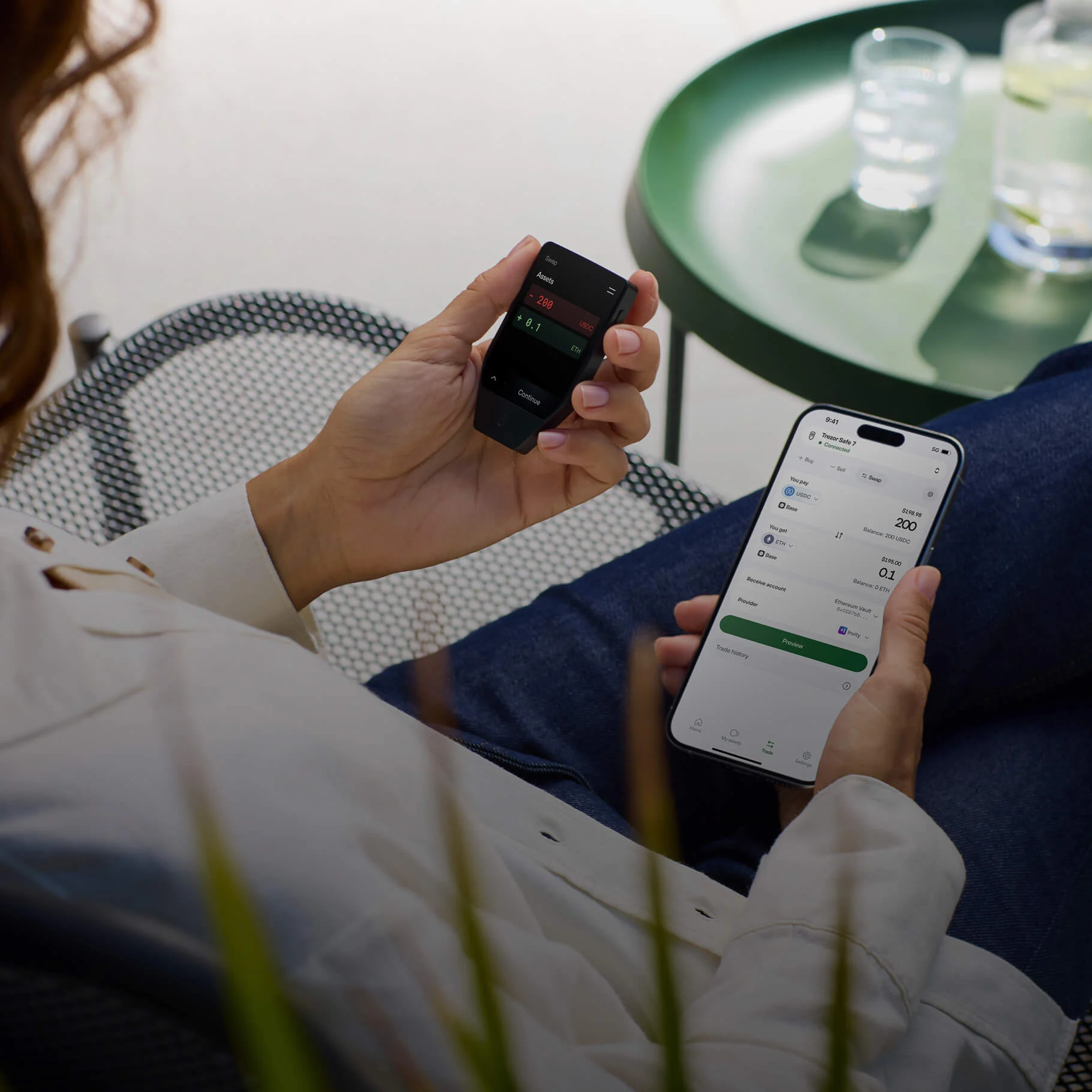
Trezor is the original hardware wallet company, founded in 2013. The Safe 7 is their current flagship device, and it is designed specifically for users who prioritize verifiable security and long-term holding over mobile convenience.
What It Does Well
- Fully open-source: Both the firmware and hardware schematics are publicly available and have been independently audited by third-party security researchers.
- Color touch screen: The Safe 7 features a high-resolution touch display that makes on-device address verification intuitive and reduces the risk of approving the wrong transaction.
- TROPIC01 secure element: The Safe 7 incorporates a dedicated secure element chip , directly addressing a hardware security gap that previously distinguished the Ledger lineup.
- Passphrase support: Supports an optional 25th-word passphrase on top of the standard 24-word seed, adding a second layer of protection against physical theft.
Trade-offs to Know
Mobile integration is limited. Trezor Suite is a desktop-first application, and Bluetooth is not supported on any current Trezor model. For users who primarily manage crypto from a smartphone, this is a real limitation in daily usability.
Trezor’s native coin support, while comprehensive for Bitcoin, Ethereum, and major assets, does not extend to every chain that Ledger covers natively. Some tokens require third-party integrations rather than direct Trezor Suite support.
Full benchmark review with security architecture analysis: Trezor Safe 7 Review 2026: The Best Crypto Hardware Wallet Tested?
Buy Trezor Safe 7 , Official Trezor Store
Head-to-Head: Ledger Nano X vs. Trezor Safe 7
The short version for users who want a direct comparison before reading further:
- Active trader or DeFi user: The Ledger Nano X is the better fit. Bluetooth, mobile-first design, and broad DeFi compatibility make consistent daily use practical.
- Long-term holder or Bitcoin-focused: The Trezor Safe 7 is the stronger choice. Open-source, independently auditable, and built for security-first users who transact infrequently.
| Feature | Ledger Nano X | Trezor Safe 7 |
|---|---|---|
| Open-source firmware | Partial | Full |
| Bluetooth | Yes | No |
| Touch screen | No | Yes (color) |
| Mobile app | Ledger Live (iOS / Android) | Trezor Suite (desktop primary) |
| Secure element | Yes | Yes (TROPIC01) |
| DeFi / WalletConnect | Yes | Limited |
| Best suited for | Active traders / DeFi users | HODLers / Bitcoin holders |
For a full spec-by-spec breakdown including price comparison and security architecture ratings: Ledger Nano X vs. Trezor Safe 7: Which Wins in 2026?
The Setup Protocol: How to Move Your Funds Without Losing Them
Purchasing the hardware wallet is the straightforward part. Most avoidable losses involving cold storage happen during setup or during a recovery attempt , not because the device failed, but because of human error in handling the seed phrase or skipping the verification step. Follow these steps in order.
Common Mistakes That Lead to Lost Funds
Hardware wallets do not protect against all forms of loss. The majority of incidents involving hardware wallet users trace back to predictable, preventable errors rather than device vulnerabilities or protocol exploits.
Storing the Seed Phrase Digitally
This is the single most common mistake. Photographing the backup card, saving seed words in a notes app, or uploading them to a cloud service eliminates the security benefit of cold storage entirely. The seed phrase is the master key. Treat it with the same physical security you would apply to the deed to your house.
Preventing these risks largely comes down to good operational habits. The Crypto Wallet Security Checklist: 15 Rules to Avoid Getting Hacked breaks down the exact security practices that reduce exposure.
Skipping the Restoration Test
A significant number of users complete setup, transfer their full balance, and never verify their seed phrase actually works , until a device failure or loss forces a recovery attempt. At that point, a single incorrectly transcribed word makes the backup useless. The $5 test takes ten minutes and eliminates this risk entirely. There is no good reason to skip it.
Buying From an Unofficial Source
A hardware wallet from an unauthorized seller may have been pre-configured with a seed phrase already known to a third party. The moment you transfer funds to a wallet initialized on a compromised device, the attacker can drain it. No legitimate hardware wallet manufacturer ships a device with a pre-written seed phrase , the seed is always generated on-device during first setup. If a device arrives with words already filled in, do not use it and report it.
Not Verifying Addresses on the Device Screen
Address-substitution malware replaces clipboard content at the moment of pasting , swapping a legitimate address for an attacker-controlled one. The only reliable defense is to verify the full recipient address on the hardware wallet’s own screen before approving any transaction, every time. The wallet screen cannot be tampered with by software running on your computer or phone.
Keeping Only One Seed Phrase Backup
A single paper backup is one disaster away from permanent loss. Two copies stored in separate secure locations is a practical minimum for any holding worth protecting. For a broader look at common self-custody errors: 5 “Safe” Crypto Habits That Will Get You Rekt
Risks to Understand Before You Move Funds
Self-custody via cold storage significantly reduces platform risk and online attack surface. It does not eliminate all risk. Understanding the remaining risks is part of using hardware wallets responsibly.
- Physical loss or damage: If the device is lost or destroyed and you cannot locate your seed phrase backup, your funds are permanently inaccessible. The device is replaceable. The seed phrase is not.
- Smart contract exposure: Using a hardware wallet with DeFi protocols does not protect you from vulnerabilities in the smart contracts you interact with. The wallet secures your signing key , it does not evaluate whether a transaction is safe or whether a protocol has been exploited.
- Setup errors: Incorrect seed phrase transcription, restoring to the wrong derivation path, or using incompatible wallet software during recovery can result in apparent loss of access. Follow manufacturer setup instructions precisely.
- Social engineering: No hardware wallet protects against you being tricked into voluntarily sending funds. Phishing interfaces that mimic legitimate wallet apps or DeFi platforms are an ongoing and effective attack vector.
- Inheritance and access planning: If you are the only person who knows where your seed backup is stored, your estate has no path to recovery if something happens to you. Consult a legal professional if your holdings are significant.
For context on staking risk specifically, including smart contract exposure when staking from hardware wallets: Best Staking Coins 2026: Low-Risk Yields That Won’t Rug You
Final Thoughts
An exchange withdrawal freeze is not a hypothetical scenario. It has occurred across multiple market cycles, on major platforms, affecting millions of users who assumed their funds were accessible. There is no regulatory guarantee that funds held on a centralized exchange are recoverable in the event of insolvency.
Self-custody via a hardware wallet is the most direct way to remove that specific risk from your portfolio. Setup takes a weekend. The $5 restoration test takes ten minutes. The protection is indefinite.
If you are new to hardware wallets and not certain where to begin, this guide covers the most widely recommended options in plain terms: Best Crypto Wallets for Beginners 2026: Safe, Easy and Verified
Follow for daily market analysis and security coverage: @Snout0x on X
FAQ: Self-Custody and Hardware Wallets
Can I use a paper wallet instead of a hardware wallet?
Technically yes, but generating a paper wallet on any device connected to the internet introduces key exposure risk at the point of creation. Hardware wallets generate keys in a secure offline environment that is purpose-built for this task. Paper wallets generated carelessly on a standard computer are not meaningfully safer than a hot wallet.
What happens if Ledger or Trezor goes out of business?
Your funds are stored on the blockchain, not inside the device. As long as you have your seed phrase, you can restore wallet access on any compatible hardware or software wallet that supports the same standard (BIP39/BIP44). The manufacturer’s continued existence has no bearing on your ability to access your funds.
Is staking from a hardware wallet safe?
It is significantly safer than staking on a centralized exchange, because your private keys remain offline throughout the process. Smart contract risk still exists for DeFi-based staking protocols, but the platform insolvency risk that accompanies exchange staking is removed entirely.
How do I verify a hardware wallet has not been tampered with?
Legitimate devices from both Ledger and Trezor ship with tamper-evident packaging. Trezor also provides a cryptographic attestation process during setup that verifies the firmware is genuine and has not been modified. Ledger devices perform an authenticity check against Ledger’s servers during initialization. If a device arrives pre-initialized, with a seed phrase already written on the included card, do not use it under any circumstances.
Should I tell anyone where my seed phrase backup is stored?
Only if it is part of a deliberate and legally structured estate or inheritance plan. Casual disclosure , even to trusted individuals , increases the risk of theft. If your holdings are significant, work with a legal professional to structure appropriate access for heirs without creating a security liability during your lifetime.
5 Articles to Read Next
- Top Crypto Myths That Cost Investors Money
- Best Crypto Wallets for Beginners 2026: Safe, Easy and Verified
- 7 Essential Crypto Tools 2026: Trading, Taxes and Security Apps
- Best Low-Risk Crypto Passive Income 2026: Regulated Staking and Yield Strategies
- Mobile Wallet Security 2026: 5 Critical Risks and How to Fix Them