

Last Updated on March 20, 2026 by Snout0x
Choosing your first crypto wallet matters more than choosing your next coin. If you leave assets on an exchange, you do not fully control them. A beginner-friendly wallet gives you stronger ownership, better security, and a safer long-term setup. Here is the short version before we go deeper.
This article is for educational purposes only and does not constitute financial or security advice. Wallet choice depends on your balance size, habits, device setup, and risk tolerance.
- Best for Active Traders: Ledger Nano X. Why: Bluetooth support makes it easier to use with iPhone and Android for regular transfers and mobile signing.
- Best for Security-Focused Beginners: Trezor Safe 7. Why: Strong physical security, touchscreen usability, and a more transparent security philosophy.
- Best for Simplicity: Tangem Wallet. Why: The card-based NFC design makes setup and daily use unusually simple for new users.
- Best Free Software Wallets: Rabby Wallet (desktop) or SafePal (mobile). Why: Both are stronger than many beginner alternatives, especially for transaction review and everyday use.
The core rule: use a hardware wallet for long-term savings and a software wallet for smaller spending balances. Keeping those roles separate reduces risk.
Affiliate Disclosure: Some links in this article are affiliate links. If you buy through them, I may earn a commission at no extra cost to you. Recommendations are still based on usability, security, and beginner fit.
5 Key Takeaways
- Hardware wallets are usually the safest choice for meaningful long-term holdings.
- Software wallets are better for smaller balances, frequent transfers, and DeFi activity.
- Exchange custody is convenient, but it does not provide the same control as self-custody.
- Seed phrase handling matters just as much as wallet choice.
- The best beginner wallet is the one that matches your actual behavior and that you can use correctly.
Why Beginners Need the Right Wallet
Most beginners buy crypto on an exchange and leave it there because it feels convenient. The problem is that convenience and control are not the same thing. When your assets stay on a custodial platform, you rely on that company to protect access, process withdrawals, and remain solvent and operational.
A personal wallet changes that. It gives you direct control over the recovery setup and, depending on the wallet type, much stronger control over the private keys tied to your funds. That is the foundation of self-custody, and it is the main reason wallet choice matters so much at the beginning.
This guide compares the best crypto wallets for beginners in 2026, separating hardware wallets for long-term storage from software wallets for everyday use. The goal is simple: help you choose a wallet you will actually use correctly.
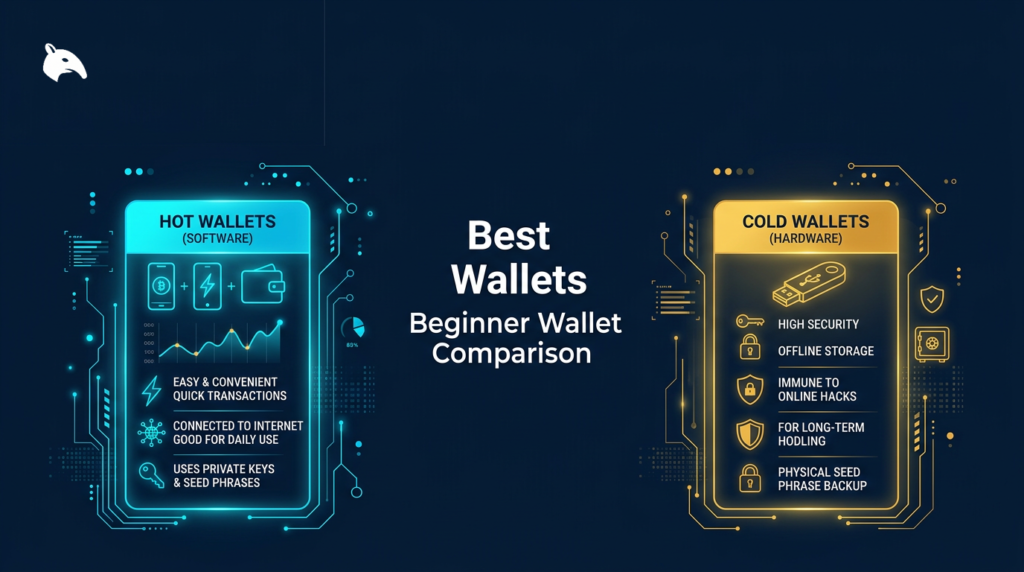
Cold Wallets vs Hot Wallets: The Difference
Before comparing brands, understand the two main wallet categories. The most important difference is internet exposure.
Cold Wallets (Hardware)
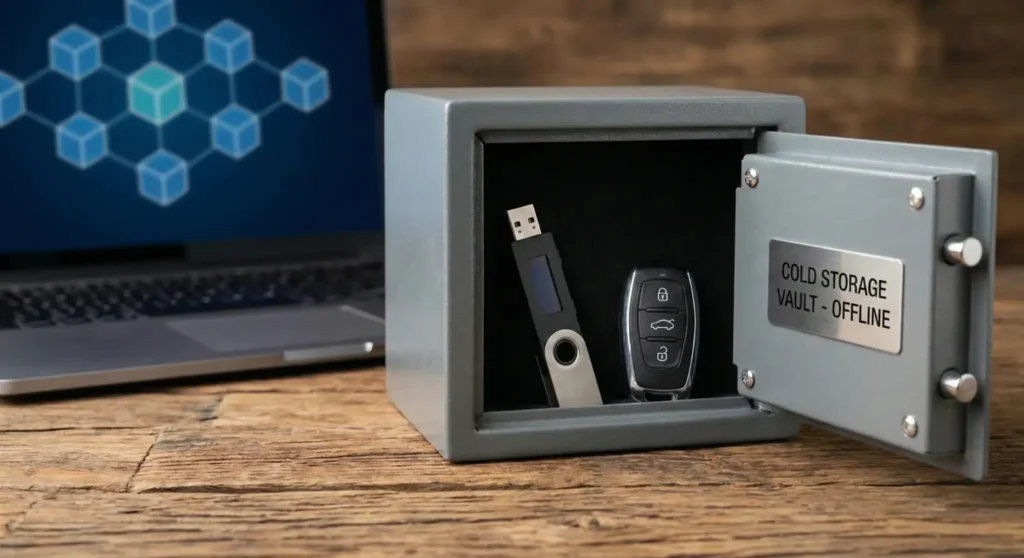
Think of a hardware wallet as your long-term vault.
- What it is: A dedicated device used to protect key material and approve transactions more safely than a general phone or laptop.
- Security profile: High. A hardware wallet reduces remote attack exposure because signing happens on a dedicated device rather than inside a normal internet-connected app.
- Best use case: Savings, long-term holdings, and funds you do not need to move daily.
Hot Wallets (Software)
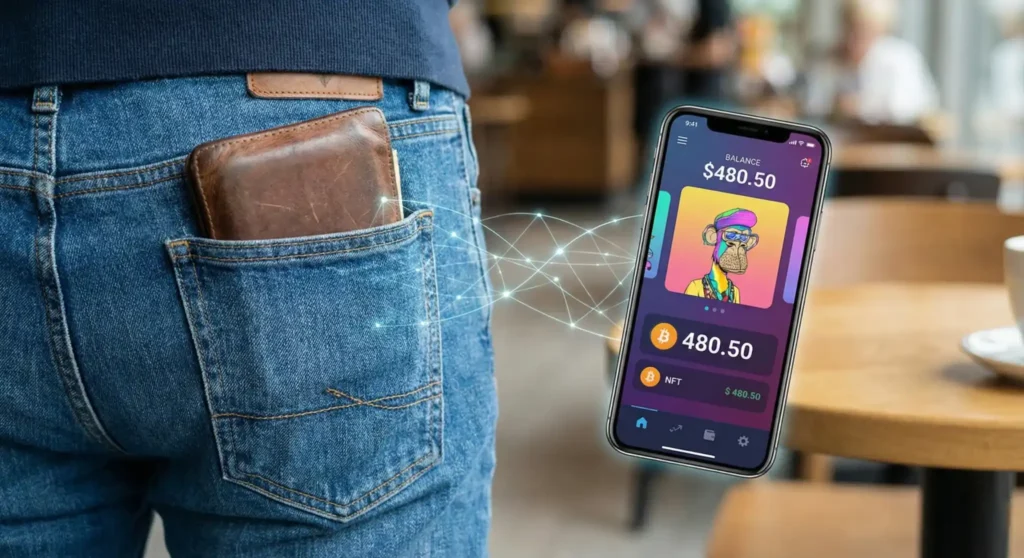
Think of a software wallet as your spending wallet.
- What it is: A mobile app or browser extension used for sending, receiving, swapping, and interacting with Web3 apps.
- Security profile: Medium. It is more convenient than hardware, but also more exposed to phishing, malware, and signing mistakes.
- Best use case: Daily use, smaller balances, DeFi activity, and test funds.
The practical rule: keep smaller working balances in a hot wallet and larger long-term holdings in cold storage or on a hardware wallet. For a deeper breakdown, read What Is Cold Storage in Crypto? and What Is a 2-Wallet Setup in Crypto?.
Best Hardware Wallets for Beginners in 2026
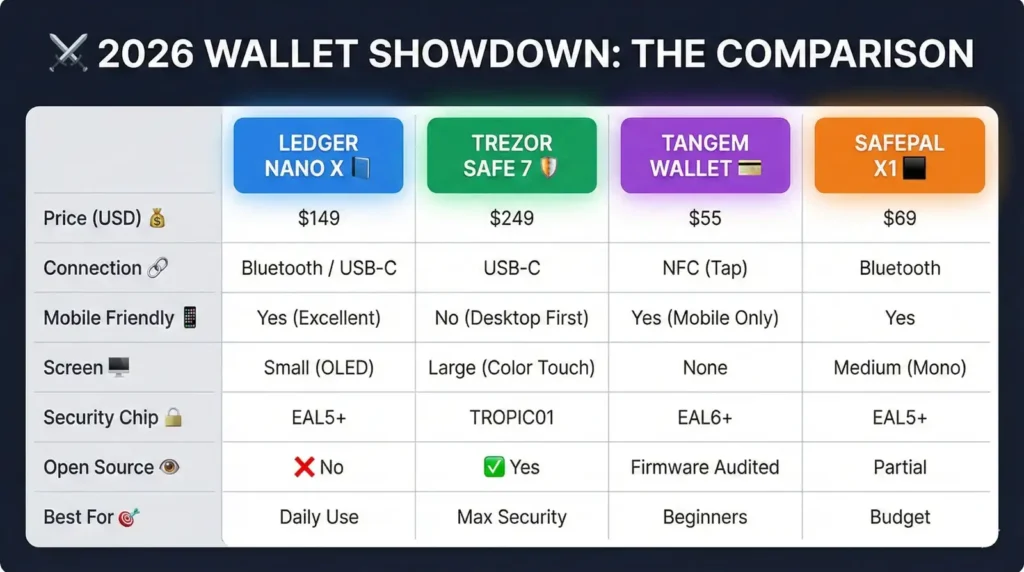
If you are holding a meaningful amount of crypto, a hardware wallet is usually the best place to start. These are the strongest beginner options in 2026 based on usability, security model, and setup simplicity.
1. Ledger Nano X
The Ledger Nano X remains one of the most practical hardware wallets for beginners who want mobile usability. It is especially appealing if you plan to manage assets from your phone rather than through a desktop-only workflow.
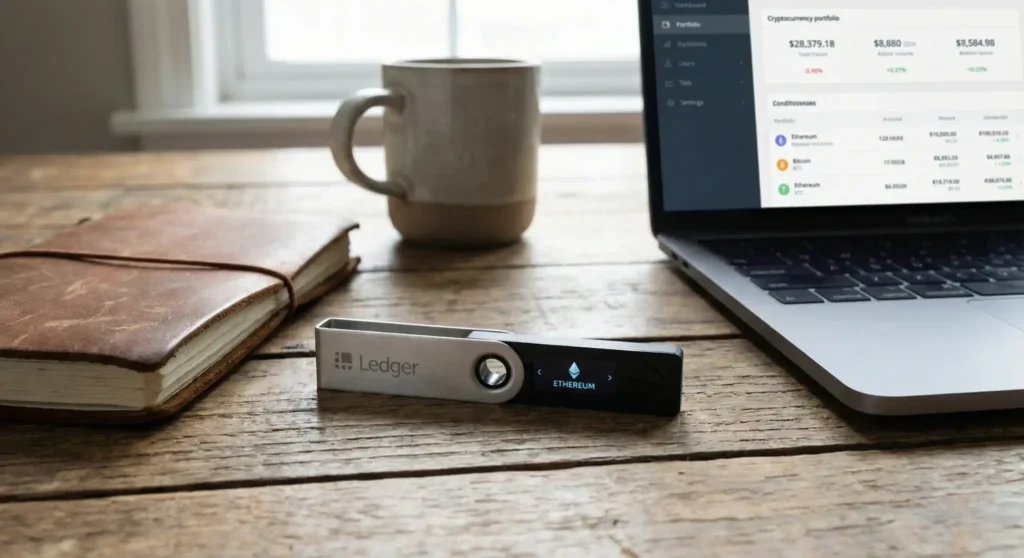
- Why it stands out: Bluetooth support makes it easy to pair with iPhone and Android for transfers and approvals without using cables every time.
- Beginner advantage: The Ledger app ecosystem is polished and easier to navigate than many competing wallet interfaces.
- Trade-off: The security model relies on a closed Secure Element architecture, which some advanced users dislike from a transparency standpoint.
- Best for: Mobile-first users, active traders, and beginners who want a smoother learning curve.
- Verdict: Excellent all-round beginner wallet with strong convenience.
- Related reading: Is Ledger Nano X Safe in 2026?
- Visit the Official Ledger Store
2. Trezor Safe 7
The Trezor Safe 7 is the premium choice for beginners who want strong security, a more transparent design philosophy, and a more comfortable on-device experience.
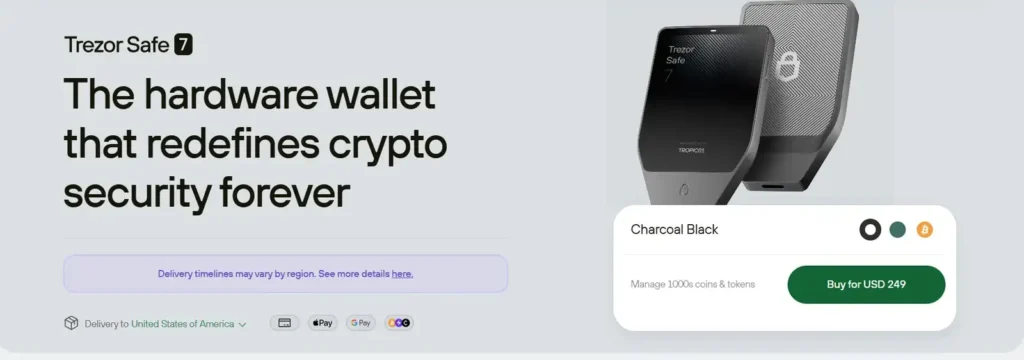
- Why it stands out: Trezor’s security approach emphasizes transparency and auditability, which appeals to users who want more visibility into how their wallet works.
- Beginner advantage: The touchscreen interface makes setup, review, and confirmation easier than on smaller button-based devices.
- Trade-off: It costs more than entry-level devices, so it makes the most sense if you are storing a meaningful amount.
- Best for: Security-conscious users, long-term holders, and beginners willing to pay more for a stronger setup.
- Verdict: One of the best premium hardware wallets for long-term self-custody.
- Related reading: Trezor Safe 7 Review and Ledger Nano X vs Trezor Safe 7
- Visit the Official Trezor Store
3. Tangem Wallet
Tangem Wallet is the simplest hardware-style option for beginners who want a familiar tap-to-phone experience instead of a traditional USB-style device.
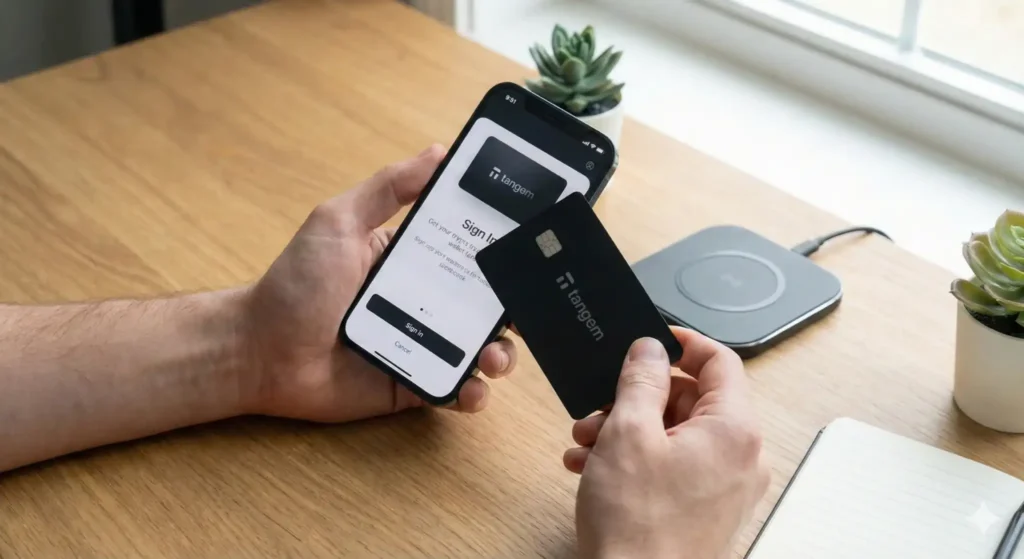
- Why it stands out: Setup is straightforward, and the NFC card format removes much of the friction beginners feel with traditional hardware wallets.
- Beginner advantage: No cables, no tiny buttons, and a fast mobile-first workflow.
- Trade-off: The lack of a built-in screen means transaction details rely more heavily on the phone app experience.
- Best for: Users who want the easiest possible move from exchange custody to self-custody.
- Verdict: Excellent for simplicity, especially for first-time wallet users.
- Security context: Devices with screens usually provide better direct transaction verification. See Why Hardware Wallet Screens Matter.
- Visit Official Tangem Store – USE CODE NFXE2F 10% Off
Best Software Wallets for Beginners in 2026
Software wallets are useful for smaller balances, regular transfers, swaps, and DeFi activity. The key is to use them for convenience, not as your main vault.
1. SafePal
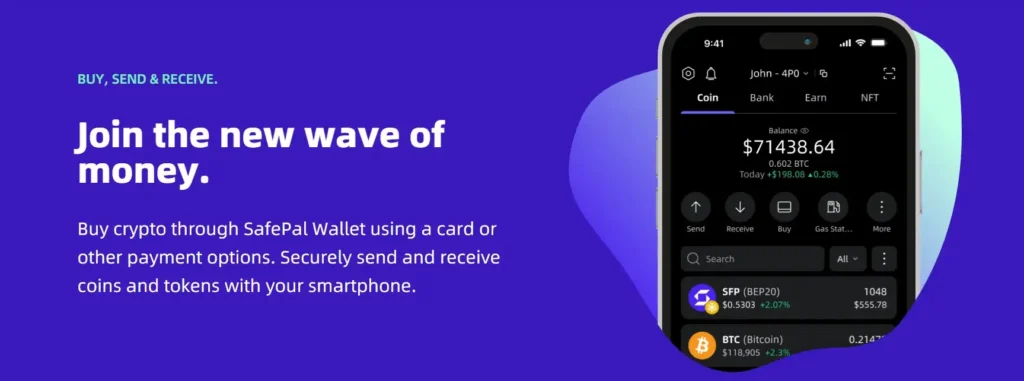
SafePal is one of the better beginner wallet ecosystems because it also gives you a cleaner upgrade path into hardware later.
- Why it stands out: The app supports many chains and is designed for users who want mobile convenience without jumping between multiple wallets.
- Beginner advantage: You can start with the free app, then move into the SafePal X1 hardware wallet later without rebuilding your workflow.
- Best for: Mobile users who want flexibility and a later hardware upgrade path.
- Related reading: SafePal S1 Review
- Visit SafePal here
2. Rabby Wallet
Rabby Wallet is one of the best choices for beginners using Ethereum and EVM chains, especially if they plan to interact with DeFi.
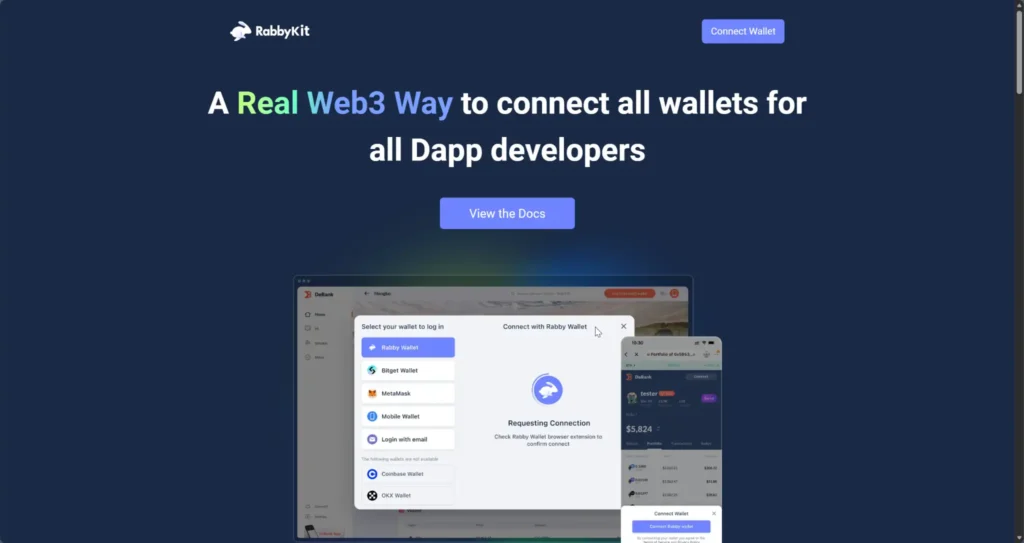
- Why it stands out: Transaction simulation helps you see what a signature is likely to do before approving it.
- Beginner advantage: It reduces the chance of blindly signing something you do not understand.
- Best for: Ethereum users, DeFi beginners, and anyone moving beyond basic holding.
- Security context: Blind signing is a real risk in DeFi. See What Is Crypto Phishing? and Crypto Wallet Hygiene Checklist: 15 Rules to Avoid Getting Hacked.
- Visit Rabby Wallet
3. Coinbase Wallet
Note: this is different from the Coinbase exchange app.
Coinbase Wallet works well for beginners who want a smoother first step into self-custody without immediately dealing with every advanced wallet concept.
- Why it stands out: The onboarding experience is familiar and less intimidating than many crypto-native wallet apps.
- Beginner advantage: It can feel more approachable for users who are not ready for a fully manual recovery-phrase-first workflow on day one.
- Best for: New users who want a simpler first wallet before moving to a stronger long-term setup.
- Visit Coinbase Wallet
How to Pick Your First Wallet
Do not choose a wallet based only on brand popularity. Start with your use case.
- Mostly buying and holding: prioritize a hardware wallet and a strong backup process.
- Mostly using mobile: choose a wallet with a smoother phone workflow.
- Planning to use DeFi: use a separate activity wallet for signing and a separate storage wallet for savings.
- Still very new: choose the wallet that you can realistically set up, back up, and use without confusion.
Final Step: Secure Your Seed Phrase
Your wallet is only as secure as its backup. When you set up a wallet, you may receive a 12-word or 24-word recovery phrase. That phrase is what allows you to restore access if your device is lost, broken, or stolen.
If you protect the device but mishandle the backup, your setup is still weak. This is why seed phrase storage matters just as much as wallet choice.
- Best long-term option: Use a metal backup solution such as Billfodl or another durable steel backup.
- Low-cost option: Create a durable offline backup using metal washers or another fire- and water-resistant method.
For more backup guidance, see Metal vs Paper Seed Storage and Best Seed Phrase Backup Devices.
Risks and Common Mistakes
- Storing your seed phrase in cloud storage: Never store recovery words in Google Drive, iCloud, email drafts, or screenshots.
- Leaving large balances on an exchange: Exchanges are useful for buying and selling, not for long-term storage. See Exchange Withdrawals Will Pause Again.
- Buying a hardware wallet from a marketplace seller: Buy directly from the manufacturer or an authorized source, not from eBay or random resellers.
- Using one wallet for everything: Keeping savings and DeFi activity in the same wallet increases the damage a single mistake can cause. See What Is a 2-Wallet Setup in Crypto?.
- Ignoring transaction review: A wallet is only safe if you verify what you are signing. See Hardware Wallet Firmware Verification Explained if you want to go deeper on device trust.
Which Wallet Should You Pick?
Do not overcomplicate your first decision. The best beginner wallet is usually the one that matches your current behavior and that you will use correctly.
- Small balance and mobile-first: Start with SafePal.
- Meaningful balance and strong mobile usability: Choose Ledger Nano X.
- Long-term holdings and stronger premium setup: Choose Trezor Safe 7 with a proper backup solution.
The key step is moving from passive exchange custody to a setup you control yourself.
Frequently Asked Questions
What happens if I lose my hardware wallet?
You do not lose your crypto just because you lose the device. Your assets remain on the blockchain. If you still have your recovery phrase, you can restore access on a new wallet.
Can I use a Ledger and a Trezor at the same time?
Yes. Some advanced users restore the same recovery phrase on more than one hardware wallet for backup redundancy. That should be done carefully, because every extra copy increases handling risk.
Is Tangem safe without a screen?
Tangem can be a reasonable option for many users, but the lack of a built-in screen means you rely more heavily on the companion app to review transaction details. Users storing larger balances often prefer devices with a screen for direct on-device verification.
Why shouldn’t I just leave crypto on Coinbase?
Because exchange custody means the platform controls the keys, not you. Self-custody reduces your dependence on a third party for access, withdrawals, and account security.
What is blind signing and why is it dangerous?
Blind signing happens when you approve a transaction without clearly understanding what it will do. Attackers use this to trick users into approving harmful smart contract actions. Wallet tools such as Rabby help reduce that risk by making transaction details easier to review.
Conclusion
The best crypto wallet for beginners is not automatically the most advanced one. It is the one that fits your balance size, your habits, and your ability to secure the backup correctly.
For most people, that means a hardware wallet for meaningful long-term holdings and a software wallet for smaller daily-use balances. Keep those roles separate, protect your recovery phrase, and avoid treating exchanges as permanent storage.
If you want the broader self-custody foundation first, start with Crypto Starter Guide 2026.