

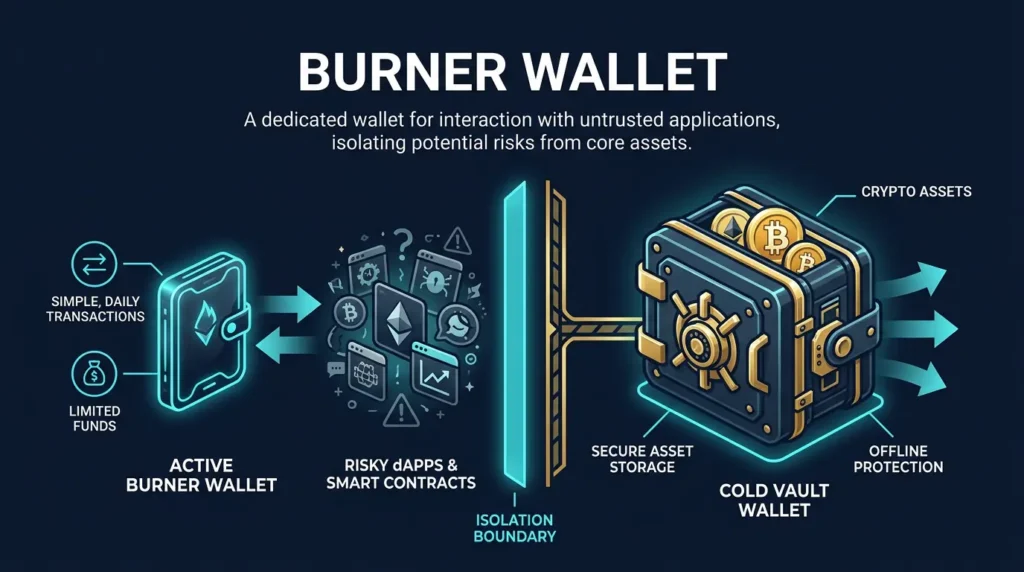
A burner wallet in crypto is a separate wallet that holds only a small amount of funds and is used for higher-risk interactions such as new dapps, NFT mints, token claims, bridges, or experimental DeFi activity. Its purpose is not better convenience. Its purpose is damage containment. If something goes wrong, the exposed balance and approval history are intentionally limited.
A simple mental model helps: a burner wallet is like carrying a small amount of cash in your pocket instead of carrying your whole savings account everywhere. You use it in places where interaction risk is higher, while keeping your main wallet and long-term holdings separate from that environment.
This content is for educational purposes only and should not be considered financial or investment advice.
Key Takeaways
- A burner wallet is a separate low-value wallet: It is designed for exposure control, not for storing important holdings.
- The goal is risk separation: It keeps experimental activity away from your main balances and cleaner wallet history.
- Burner wallets are common in Web3 and DeFi: They are often used for mints, test transactions, token claims, and unfamiliar dapps.
- They reduce blast radius, not all risk: A burner wallet can still be drained or phished if used carelessly.
- Role-based wallet design matters: The safest setup usually gives different wallets different jobs.
What a Burner Wallet Actually Does
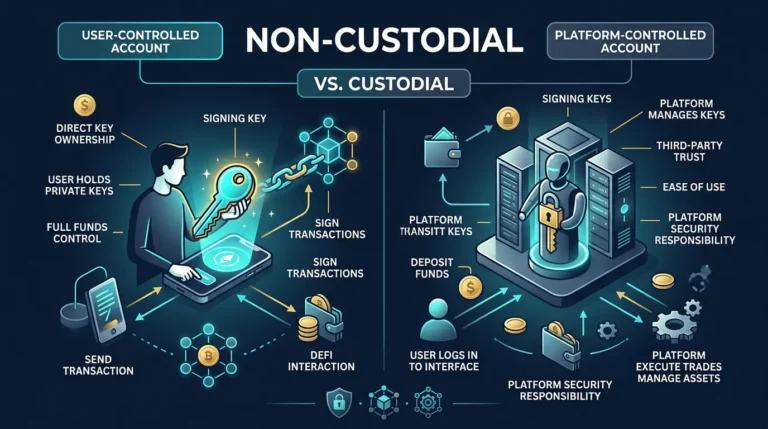
A burner wallet is a non-custodial wallet with a deliberately limited role. Instead of using one wallet for everything, the user creates a separate address or wallet instance specifically for activities that carry more signing, approval, or phishing risk. The value kept inside it is intentionally small, and it is treated as a working surface rather than as a vault.
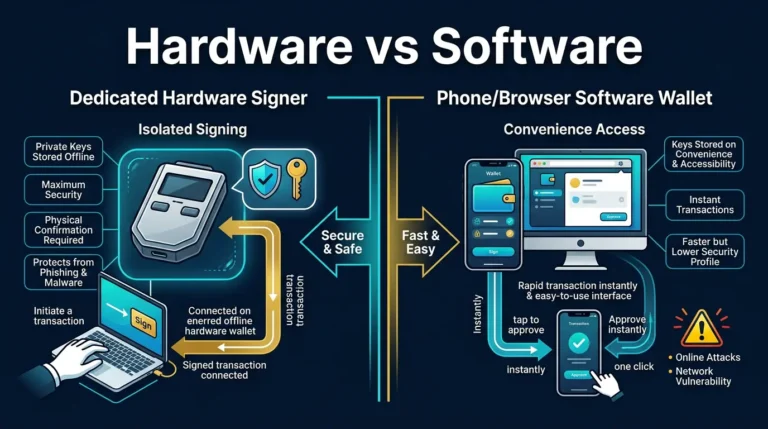
This makes the burner wallet less about wallet type and more about wallet role. The same software that serves as a main hot wallet for one person can function as a burner wallet for another if it is isolated and funded only with a controlled amount.
Why People Use Burner Wallets
Web3 activity often involves connecting wallets to interfaces, signing messages, approving token spenders, and interacting with contracts that may be new, unaudited, or simply unfamiliar to the user. A burner wallet reduces the consequences of making one bad click or trusting one unsafe interaction.
Real-world example: instead of connecting a long-used wallet that holds stablecoins, NFTs, and major tokens to a new mint page, a user funds a fresh wallet with only the gas money and assets needed for that one interaction. If the site is malicious, compromised, or requests broader permissions than expected, the damage stays closer to that small wallet rather than spreading into more important holdings.
How It Differs From Your Main Wallet
A main wallet usually accumulates more value, more transaction history, and more long-term trust relationships. A burner wallet is the opposite. It is smaller, more disposable, and often used for narrower tasks. The difference is not philosophical. It is operational.
Operator insight: many users think a burner wallet is just an “extra wallet.” That misses the point. The real idea is separating trust boundaries. If a wallet signs with unknown contracts, tests new networks, or accumulates risky approvals, it should not also be the place where you keep assets you would strongly regret exposing.
Where Burner Wallets Are Commonly Used
- NFT mints and claims: Especially when the project, site, or mint flow is new.
- New DeFi protocols: Before the user has confidence in the contracts or team.
- Bridge testing: When moving a small amount through an unfamiliar cross-chain route first.
- Airdrop or token claim interactions: Where phishing and approval abuse are common.
- General experimentation: Any time the user wants to isolate a risky or unknown transaction environment.
How Burner Wallets Reduce Risk
They reduce risk mainly through containment. If the wallet has only a modest balance, limited token inventory, and no critical long-term approvals, the damage from a bad interaction is capped more tightly. This is especially useful against approval abuse, malicious contract behavior, or wallet-drainer style workflows.
What Burner Wallets Do Not Fix
A burner wallet does not make malicious transactions safe. It does not stop phishing, cancel dangerous approvals automatically, or guarantee recovery if you send funds to the wrong network or wrong address. It only reduces the amount and history that are directly exposed if something goes wrong.
This distinction matters because some users treat the phrase “burner wallet” like a magic shield. It is not. It is a risk-management habit. Bad approvals can still drain the burner wallet. Malicious sites can still trick the user. The difference is that the wallet was designed to be expendable rather than central.
How It Connects to Approvals and Wallet Drains
One of the strongest reasons to use a burner wallet is that Web3 danger often comes from permissions and signatures, not only from obvious theft. Token approvals, malicious spenders, and drainers can all create loss without directly attacking your seed phrase. That is why the related local explainers are Token Approval Risk Explained and What Is a Crypto Drainer?.
Real-world scenario: a user connects a burner wallet to a new token site, approves a limited amount, and the site later proves unsafe. The user may still lose the amount inside that wallet, but the main wallet holding long-term assets was never part of that trust relationship in the first place.
How Burner Wallets Fit Into a Multi-Wallet Strategy
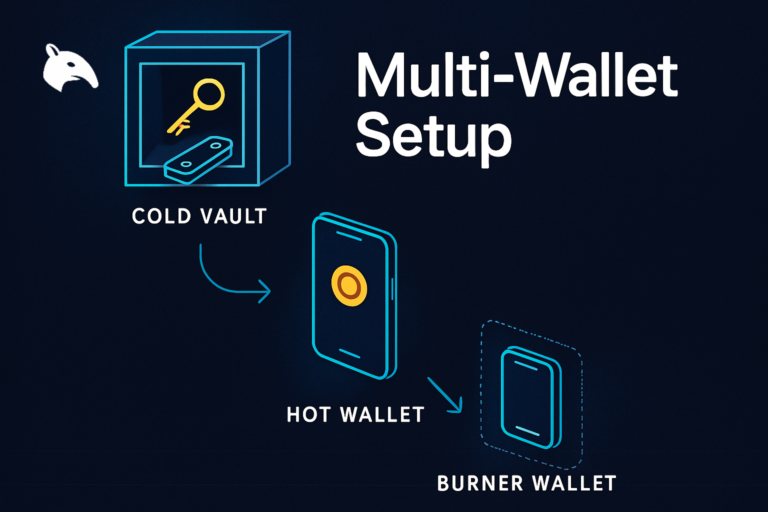
A burner wallet usually makes the most sense inside a broader multi-wallet strategy. One wallet may be for long-term storage. Another may be for regular hot-wallet activity. A third may be specifically for unknown or high-risk interactions. The point is not complexity for its own sake. The point is making sure one compromised workflow does not expose every other workflow at the same time.
This is why a burner wallet is often a sign of better wallet maturity rather than paranoia. It means the user has stopped asking “Which wallet is safest?” and started asking “Which wallet should do this specific job?”
Why Beginners Misunderstand Burner Wallets
Some beginners think burner wallets are only for experts, while others think they are only for shady behavior. Both ideas are wrong. The concept is simple: put risky activity in a smaller, more disposable environment. That logic applies to normal users too, especially in ecosystems where new apps and contracts appear constantly.
Another common mistake is funding the burner wallet too heavily or reusing it so broadly that it stops behaving like a burner wallet at all. Once it starts holding meaningful balances and a messy approval history, it is no longer a contained risk bucket.
Practical Usage: How to Think About One
- Keep the balance intentionally small: Fund only what the next activity reasonably needs.
- Use it for unknown or higher-risk interactions: New mints, claims, bridges, and unfamiliar dapps are common examples.
- Do not store important long-term assets there: The burner wallet should not quietly become a savings wallet.
- Watch approvals and permissions: Even expendable wallets can become messy or more dangerous over time.
- Replace it when it stops being clean: If the history becomes confusing, create a fresh one and move on.
A practical shortcut is this: a burner wallet is for exposure you are willing to limit, not for value you are trying to protect for years.
Risks and Common Mistakes
- Funding the burner wallet too heavily: A user may say a wallet is “just for testing,” then leave a meaningful token balance inside it, which defeats the whole purpose of using a disposable risk bucket.
- Reusing one burner for everything indefinitely: After many claims, mints, swaps, and approvals, the wallet can accumulate enough messy history that the user no longer understands which permissions are still active.
- Assuming a burner wallet makes bad signing safe: Malicious contracts, drainers, or phishing sites can still empty the wallet if the user approves or signs the wrong thing.
- Mixing high-value holdings with risky activity: The concept fails when the same wallet is both the experiment wallet and the serious holdings wallet.
Sources
Frequently Asked Questions
What is a burner wallet in crypto?
It is a separate low-value wallet used for higher-risk Web3, DeFi, or token interactions so that your main holdings stay outside that exposure path.
Why do people use burner wallets?
They use them to limit damage from risky approvals, malicious sites, wallet drainers, or unfamiliar dapps by keeping only a small controlled balance in the exposed wallet.
Is a burner wallet the same as a hot wallet?
No. A burner wallet is a role, not a technology category. Many burner wallets are hot wallets, but not every hot wallet is being used as a burner wallet.
Can a burner wallet still be drained?
Yes. A burner wallet can still be drained or phished if you approve a malicious spender or sign the wrong transaction. Its value is that the exposed balance is intentionally smaller.
Should long-term holdings ever stay in a burner wallet?
No. Long-term or meaningful holdings belong in a cleaner and more trusted wallet setup, not in the wallet you use for experimental or higher-risk interactions.