
Last Updated on April 12, 2026 by Snout0x

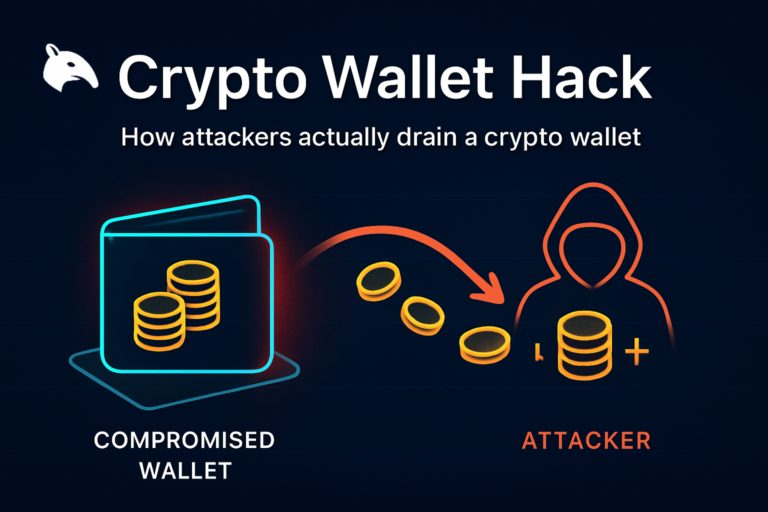
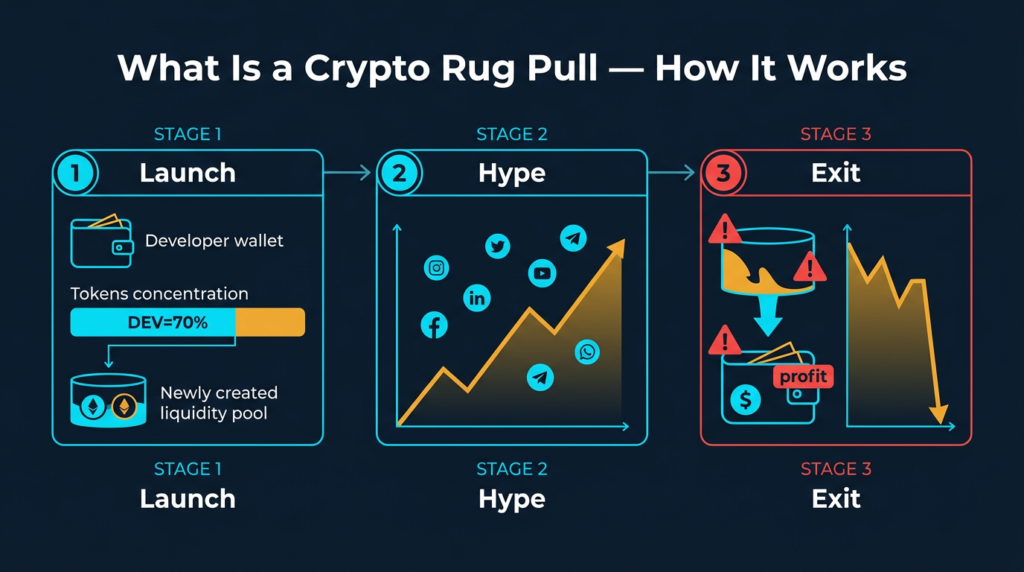
A crypto rug pull is an intentional scam in which the people behind a token, NFT collection, or DeFi project extract investor funds and then disappear or abandon the project. In practice, that usually means removing liquidity, dumping insider-held tokens, abusing hidden smart contract permissions, or walking away after raising money through hype. The result is the same: retail buyers are left holding an asset that rapidly collapses in value while insiders exit with the funds.
This content is for educational purposes only and should not be considered financial or investment advice.
5 Key Takeaways
- A rug pull is deliberate fraud, not just project failure: The defining feature is insider intent. A weak or failed project is not automatically a rug pull. A rug pull involves insiders extracting value and leaving investors trapped.
- Most rug pulls follow a few recurring patterns: The most common are liquidity removal, insider token dumping, malicious contract permissions, and NFT roadmap abandonment after the mint revenue has already been collected.
- Permissionless markets lower launch costs for both builders and scammers: Anyone can create a token and market it instantly. That speed is useful for innovation, but it also creates ideal conditions for fraud.
- Basic on-chain checks catch many obvious scams: Liquidity ownership, token concentration, contract permissions, audit claims, and unrealistic yield promises can often be checked before buying.
- No single signal proves a project is safe: Audits, public teams, liquidity locks, and token scanners all help, but none of them guarantee legitimacy. Risk is reduced through process, not one green flag.
Simple Definition
A rug pull happens when the people who created or control a crypto project intentionally extract value from investors and leave the remaining holders with a collapsing or worthless asset. In some cases they remove the liquidity backing the token. In others they dump a large insider allocation into retail buying pressure or use hidden contract functions to block sells, mint more supply, or redirect funds.
The phrase comes from “pulling the rug out from under someone.” Investors think they are buying into a legitimate project, only to discover that the economics, liquidity, governance, or code were structured so insiders could exit first.
Why Rug Pulls Are So Common in Crypto
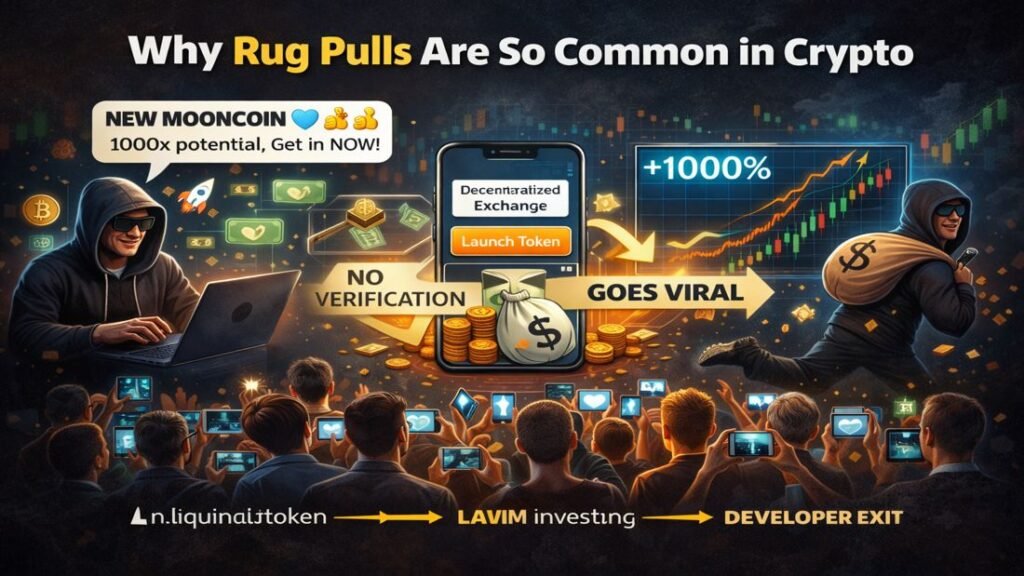
Crypto rug pulls are common because crypto markets combine four things scammers love: instant launch capability, global retail access, weak identity requirements, and fast-moving speculation. A token can be created in minutes, paired against ETH or a stablecoin, promoted through social media, and pushed into trending channels before most buyers have checked anything meaningful.
How a Crypto Rug Pull Works
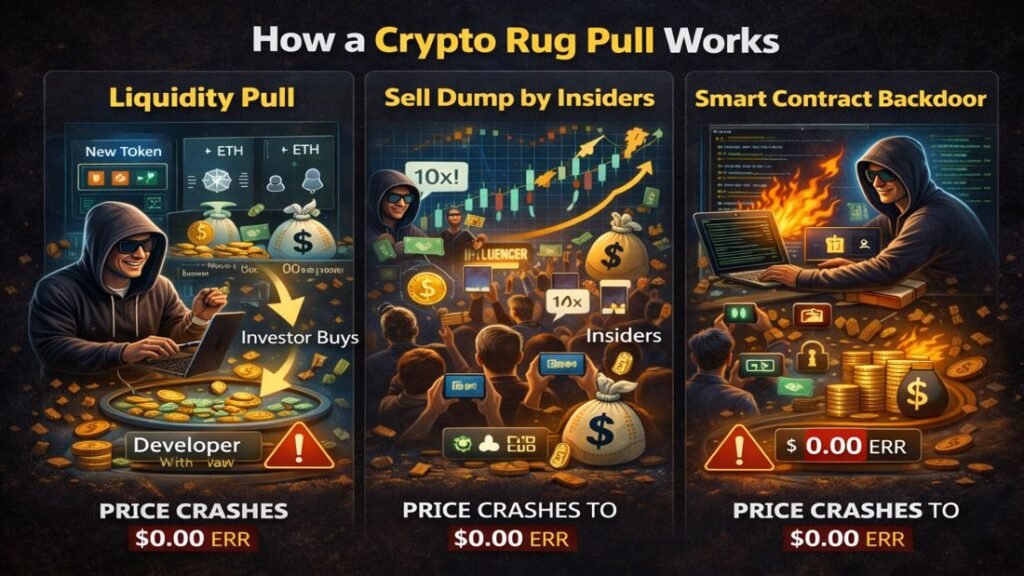
Most rug pulls are not random. They follow recognizable structures. If you understand the mechanics, the warning signs become easier to spot before money is committed.
1. Liquidity Pull
This is the classic version. A developer launches a token and pairs it with a legitimate asset such as ETH, SOL, or a stablecoin in a decentralized exchange liquidity pool. Buyers enter because they see tradable volume and assume the market is real.
If the developer still controls the liquidity tokens or pool access, they can withdraw the pooled base asset and leave behind an effectively untradeable token. Price collapses because the market depth vanishes. In practice, buyers discover the project was only liquid while insiders wanted it to be.
2. Insider Supply Dump
In this model, the scam is less about removing liquidity and more about who owns the supply. The team, insiders, or early wallets control a large percentage of the token. After enough hype builds and new buyers arrive, those insiders sell aggressively into retail demand.
The result may look like a normal market crash, but structurally it is still an extraction event if the concentration was hidden or clearly designed for exit. This is why token distribution matters. A project can look active and tradable while still being economically built for a dump.
3. Smart Contract Backdoor
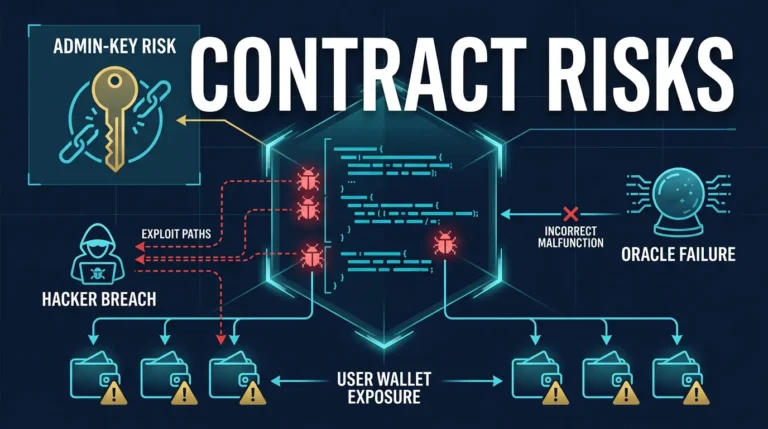
Some rug pulls are coded into the token itself. A malicious developer can leave owner-only permissions that let them mint unlimited supply, blacklist sellers, pause transfers, raise transaction taxes, redirect fees, or exempt their own wallets from restrictions applied to everyone else.
4. NFT Mint and Roadmap Abandonment
NFT rug pulls often work differently because the team is not relying on token liquidity in the same way. Instead, they raise money through a mint by promising future utility: games, token airdrops, access passes, staking features, merch, or real-world perks. Once the mint revenue is collected, delivery stalls or stops entirely.
What Makes a Rug Pull Different From a Hack or Failed Project
This distinction matters because not every collapse is fraud. A hack involves an outside attacker exploiting a vulnerability. A failed project may be poorly designed, underfunded, or badly managed but not intentionally deceptive. A pump-and-dump can involve coordinated hype and insider selling without necessarily involving the same mechanics as a liquidity rug. A rug pull is defined by insider intent: the people closest to the project set up a structure that lets them extract value from later participants.
Risks and Common Mistakes
Buying Unaudited or Poorly Understood Contracts
Smart contract audits from reputable firms such as OpenZeppelin, Trail of Bits, or CertiK can improve transparency, but they are not magic shields. Audits review code under a defined scope. They do not guarantee the economic design is fair, that insiders will behave honestly, or that the deployed contract always matches what buyers think they are reviewing.
If there is no verifiable audit from a recognized firm, risk rises sharply. But even with an audit, buyers should still ask what owner privileges exist, whether the contract is upgradeable, and whether the published audit actually matches the contract address being used.
Ignoring Token Distribution
When a small number of wallets control a large share of supply, the project is structurally vulnerable. That does not automatically prove a scam, but it means a few participants can crash the market if they exit together. Buyers who never check holder concentration are often buying into a distribution they would reject instantly if they saw it clearly.
Chasing Extreme Yields Without Understanding the Model
Promises of several hundred or several thousand percent APY are one of the oldest bait mechanisms in crypto. If the yield source is unclear, circular, or dependent mainly on new buyers entering the system, the risk is obvious even before looking at the code. Excessive returns are not proof of fraud by themselves, but they are often the marketing engine that gets fraud off the ground. For a broader filter on this specific bait, read Why 20% APY Is a Trap.
Assuming Liquidity Locks Prove Safety
Liquidity locks help against one specific scam vector: immediate liquidity withdrawal. They do not protect buyers from insider dumps, malicious tax logic, blacklist functions, upgradeable contract abuse, fake communities, or roadmap deception. A project can have locked liquidity and still be toxic.
How to Check a Project Before Buying
The goal is not to prove a project is safe. That is often impossible. The goal is to reduce obvious avoidable risk before you expose capital.
On-Chain Due Diligence
Before buying a newly launched token, check:
- Who controls the liquidity and whether the liquidity is actually locked
- How concentrated the token supply is across the top wallets
- Whether the contract is verified on-chain and whether owner privileges exist
- Whether selling is restricted, taxed unusually heavily, or disabled for normal users
- Whether the project’s audit claims are real, current, and tied to the deployed contract
Tools such as Token Sniffer, De.Fi Scanner, and Etherscan can help surface red flags without requiring you to read Solidity line by line. But they are screening tools, not truth machines. A green score does not mean a project is safe. It only means some obvious flags were not triggered.
Custody and Exposure Limits
One of the most practical defenses is limiting blast radius. Keeping your broader holdings in self-custody means one bad token or protocol is less likely to contaminate everything else. Using a dedicated wallet for higher-risk experiments is also cleaner operationally than mixing speculative positions with long-term holdings; a 2-wallet setup is a practical way to do that.
For a detailed checklist of common red flags, see rug pull warning signs.
Frequently Asked Questions
What is a crypto rug pull?
A crypto rug pull is an intentional scam where project insiders extract investor funds and leave the token, NFT project, or protocol with little or no remaining value. It usually happens through liquidity removal, insider dumping, malicious contract permissions, or roadmap abandonment after funds have already been raised.
How do you identify a rug pull before it happens?
Common warning signs include unlocked liquidity, concentrated token ownership, unaudited or unverified contracts, unrealistic APYs, anonymous teams with no credible history, and aggressive hype without corresponding substance. None of these signals alone prove fraud, but several together should raise the risk level sharply.
Can you recover funds from a rug pull?
In most cases, no. Blockchain transactions are generally irreversible, and scam teams often move funds quickly across wallets, protocols, and jurisdictions. Recovery usually requires legal enforcement or centralized counterparties freezing funds, both of which are uncommon and difficult.
Is a rug pull illegal?
Deliberately deceiving investors and extracting their money is generally illegal, but enforcement varies widely across countries and is much harder when teams operate anonymously or internationally. Whether charges are pursued depends on jurisdiction, evidence, and the scale of the fraud.
What is the difference between a rug pull and a hack?
A hack is an external attack exploiting a vulnerability. A rug pull is an insider-driven scam in which the people behind the project use their control, permissions, or hidden advantages to extract value from participants. The financial outcome can look similar, but the threat model is different.