

Last Updated on April 17, 2026 by Snout0x
Learning how to store crypto safely means matching the way you hold and use assets to the right mix of exchanges, software wallets, and hardware wallets. Instead of chasing a single “safest” option, smart investors think in terms of attack surface, convenience, and failure modes so that a stolen phone, hacked exchange, or lost device does not wipe out their entire portfolio.
For most people, that means keeping only short-term trading or spending balances on exchanges and hot wallets, while moving long-term holdings into self-custody with stronger backups and slower, more deliberate access. In simple terms, safe crypto storage is less about picking one perfect wallet and more about giving each balance the right job and the right level of protection.
This content is for educational purposes only and should not be considered financial or investment advice.
How to Store Crypto Safely: Key Takeaways
- Separate storage roles: Use exchanges mainly for trading, hot wallets for small spending balances, and cold storage or hardware wallets for long-term, higher-value holdings.
- Reduce single points of failure: Seed phrases, passwords, and devices should not be concentrated in one place where a single theft, fire, or malware infection can access everything.
- Match wallet type to behavior: The safest way to store crypto for an active trader differs from a long-term holder who rarely moves funds, so storage design should follow how you actually use assets.
- Plan for human mistakes: Safe storage includes backups, recovery plans, and simple routines so that lost devices, phishing attempts, or family emergencies do not become permanent loss events.
- Think in tiers, not perfection: A practical setup gradually moves value toward more secure layers like hardware wallets and cold storage while keeping a manageable amount in convenient wallets for daily use.
How Crypto Storage Risk Builds Up
Before choosing specific wallets, it helps to understand where storage risk comes from. Most crypto losses do not come from exotic zero-day exploits; they come from a predictable mix of exchange failures, phishing, weak device security, and poor backup habits. Safe storage starts with mapping where your keys live and who or what can act on your behalf.
Exchange custody versus holding your own keys
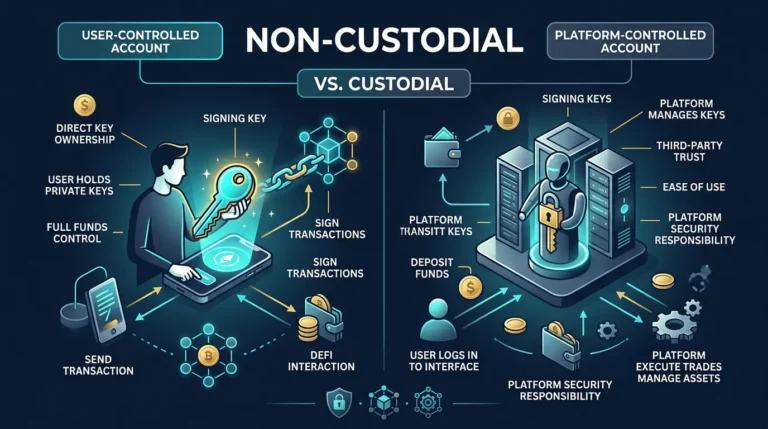
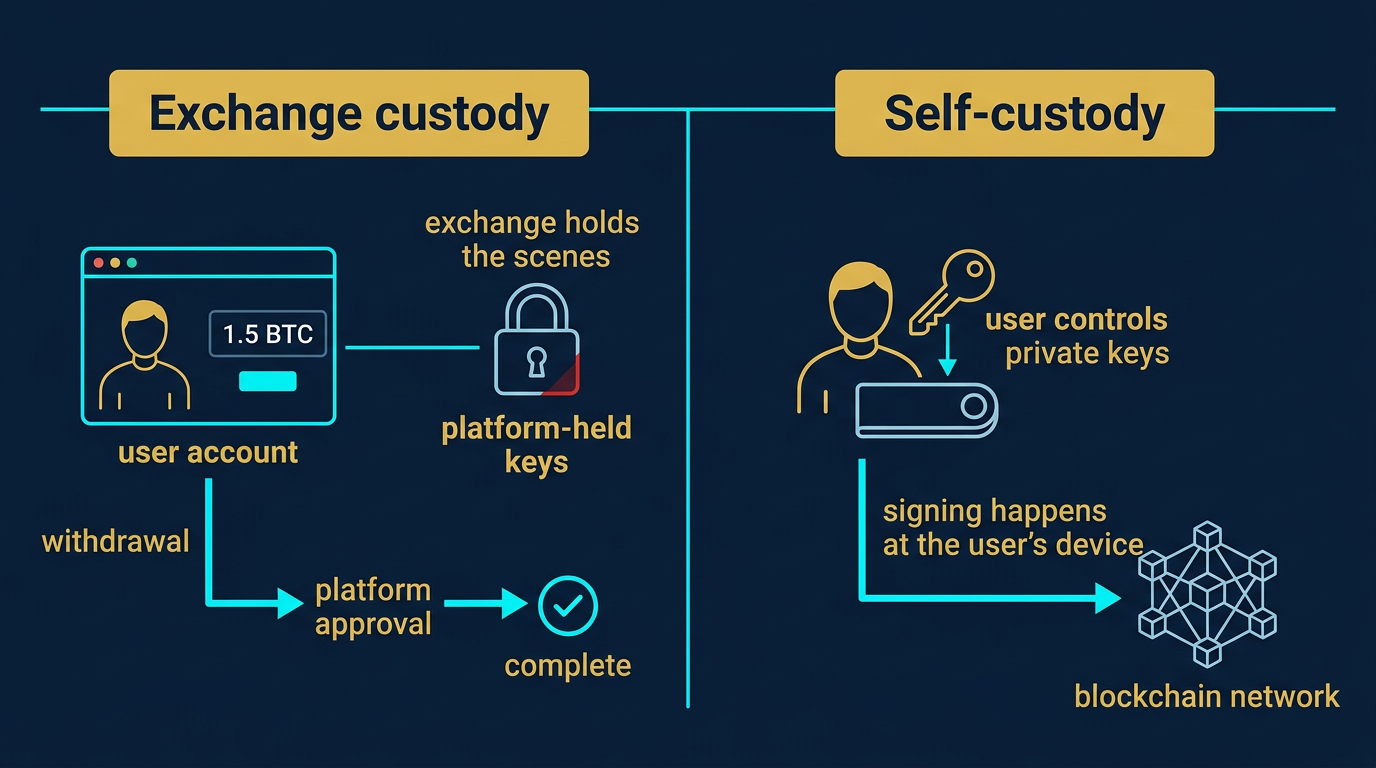
When you leave funds on a centralized exchange, you usually do not control the private keys – you hold an account entry in the exchange database. This removes the burden of seed phrase backups but exposes you to exchange-specific risks such as insolvency, withdrawal freezes, or account-level hacks. In a worst case, an exchange bankruptcy or regulatory seizure can treat you as an unsecured creditor rather than an owner of specific coins.
Self-custody flips this risk profile. When you hold the keys yourself, no exchange can lock withdrawals or lend out your assets without consent, but operational mistakes become your responsibility. Losing a seed phrase, signing a malicious transaction, or reusing insecure devices can lead to irreversible loss. A safe storage plan recognizes that neither model is perfect and uses exchanges only where they are strongest – liquidity and trading – while moving long-term holdings into self-custody.
Hot wallets, cold storage, and attack surface
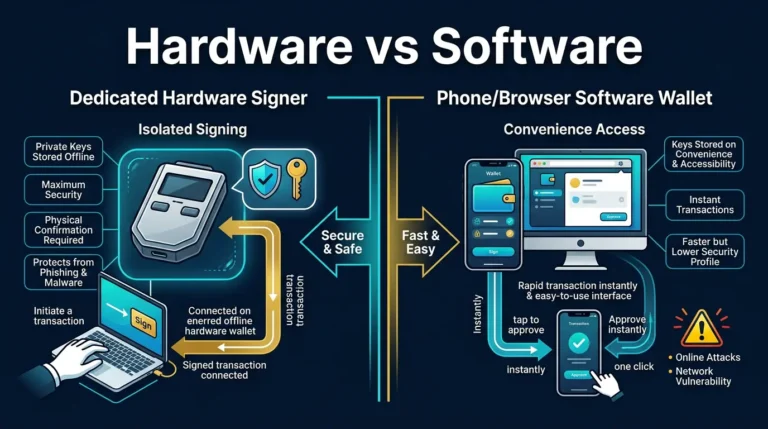
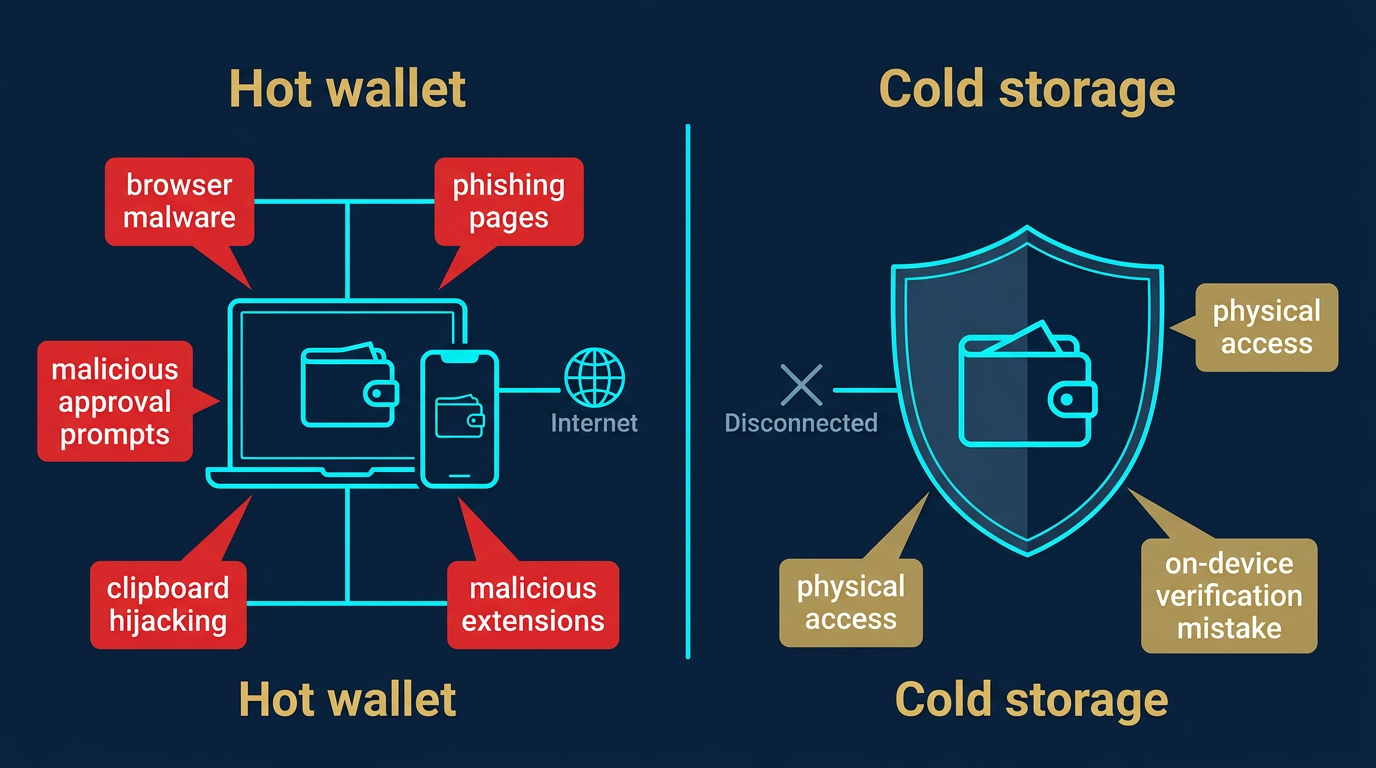
A hot wallet is any wallet where the device holding your private keys is regularly connected to the internet, such as a browser extension or mobile app. These wallets are convenient, but they share the attack surface of the underlying operating system – if your phone or laptop is compromised, malware can target wallet extensions or inject malicious approval requests. Hot wallets are best treated like digital cash in your pocket, not a vault.
Cold storage, by contrast, keeps private keys on devices or media that are not continuously connected, reducing the number of paths an attacker can use. Hardware wallets and carefully managed air-gapped setups fall into this category. They are not invincible, but they significantly narrow the scenarios where a remote attacker can steal funds, making them more suitable for larger balances or holdings you rarely move. Understanding the difference between cold storage and air-gapped wallets helps avoid assuming the more complex setup is automatically safer for your situation.
Designing a Tiered Crypto Storage Setup
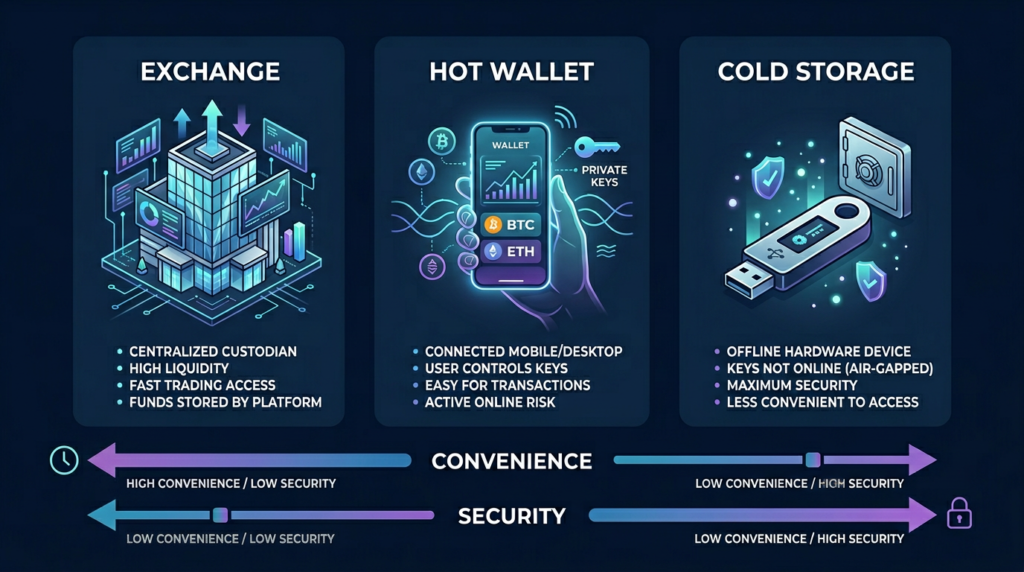
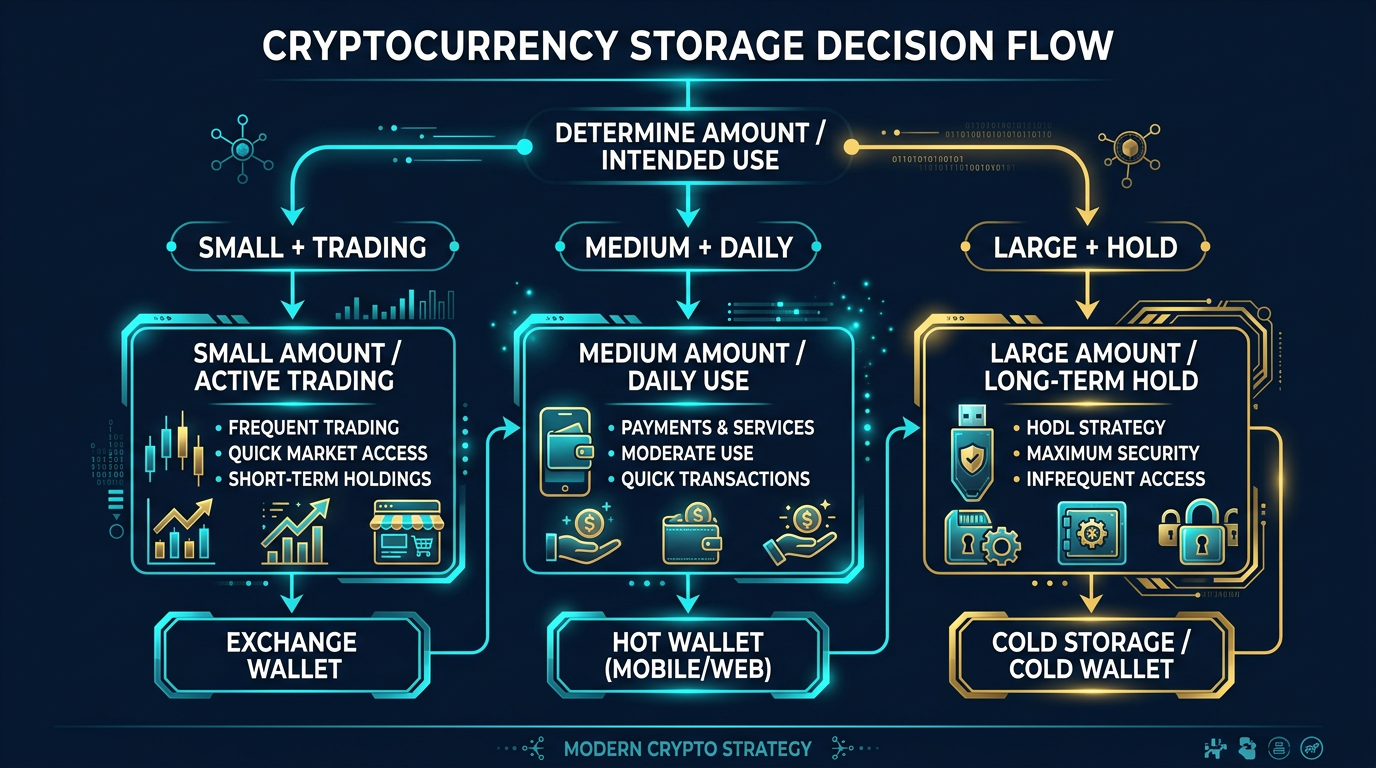
A safe storage plan usually combines multiple wallet types into tiers, each with a clear purpose. Instead of asking “Where should I keep all my crypto?” a better question is “Which wallet tier should hold this specific amount or use case?” This approach makes it easier to adjust your setup as your portfolio grows.
A useful mental model is to think in layers of physical money. The cash in your pocket is for immediate use, the money in a checking account is for near-term activity, and the cash in a safe is for protection and slower access. Crypto storage works the same way. The more often a balance needs to move, the more convenience that layer can tolerate. The less often it needs to move, the more that layer should favor isolation and recovery quality.
Exchange layer: liquidity and on-ramps
The exchange layer is where you deposit fiat, trade pairs, and occasionally leave small balances you plan to use soon. To reduce storage risk, avoid treating exchanges as long-term vaults. Diversify across reputable platforms if you are an active trader, enable strong authentication, and routinely withdraw profits or unused balances to wallets where you control the keys.
Even if a platform feels stable today, past failures show how quickly withdrawal policies can change when liquidity or regulatory pressure becomes an issue. A practical rule is to keep only what you would be comfortable losing to an unexpected freeze or outage on any single exchange. The rest should live in self-custody wallets that are not dependent on a single company’s solvency.
One operator insight is to treat the exchange layer like an in-tray, not a warehouse. If you use an exchange for paycheck conversions, recurring buys, or short trading windows, define in advance what triggers a withdrawal: a balance threshold, a calendar day, or the end of a trade. That simple rule prevents convenience balances from quietly becoming treasury-sized exposure during a bull market.
Spending layer: hot wallets for everyday use
The spending layer consists of hot wallets on your phone or browser that you use for DeFi interactions, NFTs, or day-to-day transfers. The key principle is to size this layer for convenience, not for total net worth. Many investors keep a small, replenished balance here and treat it as “transactional capital” – enough to participate in on-chain activity without exposing their entire stack to every dApp they touch.
To keep this layer safer, use distinct wallets for experimentation and for serious positions, avoid approving unlimited token allowances to unknown contracts, and regularly review active approvals using trusted tools. Linking this layer back to a more secure storage tier means that even if a hot wallet is compromised, the damage is capped to a predefined amount.
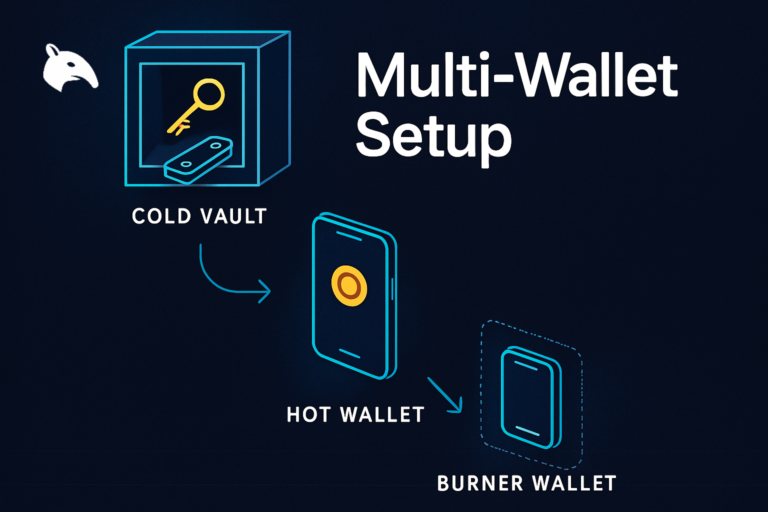
A concrete example is a three-part setup: one exchange account for funding, one hot wallet for signing and spending, and one vault wallet that almost never connects to new apps. In practice, the wallet that signs the most transactions should hold the least value. That role-based separation is often more effective than trying to make one wallet do everything safely.
Vault layer: hardware wallets and cold storage
The vault layer is where long-term holdings live. Hardware wallets are the most practical choice for most people, because they keep private keys isolated from internet-connected devices while still making transactions manageable. For larger portfolios, some investors build multi-device setups – such as separate hardware wallets for long-term bitcoin, stablecoins, and higher-risk assets – to prevent a single compromised seed phrase from exposing everything.
More advanced cold storage strategies, like multi-signature wallets or multi-tier setups, can add redundancy and make targeted attacks harder. However, they also increase operational complexity, so they work best when you are willing to document procedures carefully and test recovery steps. Whatever design you choose, the vault layer should move slowly and deliberately rather than chasing every new opportunity.
Vault deposits should be boring and repeatable. Before sending a large balance, verify the device source, firmware, and receive address on the wallet screen itself, especially if the wallet is new. Local guidance on verifying a hardware wallet before first use and checking for hardware wallet supply chain attacks is directly relevant here, because many avoidable losses happen before the storage setup is ever fully operational.
Backups, Recovery, and Human Error
Safe storage is not just about picking the right devices; it is about surviving inevitable human mistakes. Lost phones, broken laptops, and forgotten passwords happen. A robust backup and recovery plan ensures that these events are inconvenient rather than catastrophic.
Seed phrase backups and physical security
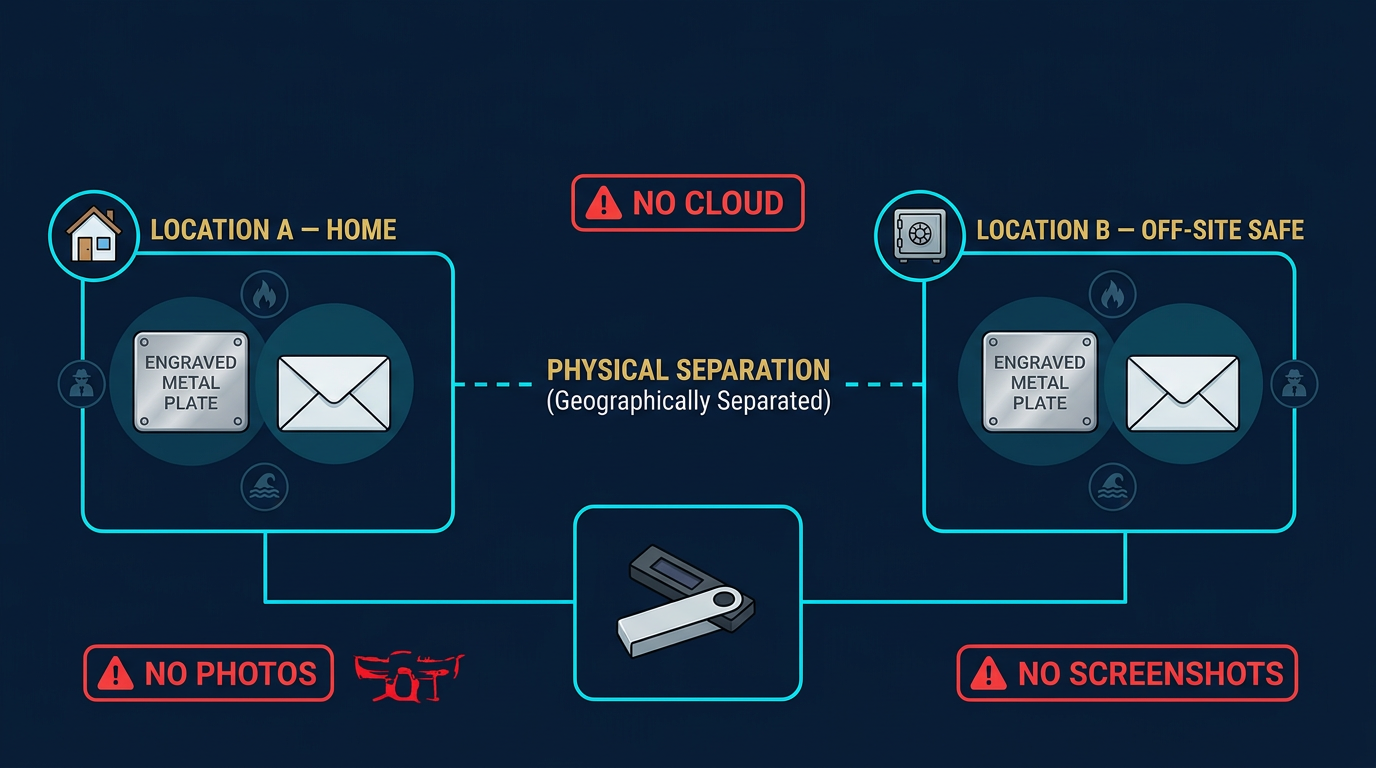
Your seed phrase is the root of most non-custodial wallets, so its storage deserves more thought than a quick photo or a scrap of paper in a desk drawer. The backup needs to survive physical threats such as fire and water, as well as targeted theft. Many investors use metal backup plates for resilience and store them in locations that are physically separated from the devices they protect.
At the same time, backups should not be so widely distributed that you cannot track or control who can eventually access them. Avoid digital photos, cloud notes, and email drafts containing seed phrases. If you use multiple seed phrases across wallets, maintain an inventory – without revealing the phrases themselves – so that you know which backup corresponds to which wallet and network. If you are choosing a backup medium, metal vs paper seed storage is the more relevant comparison than simply asking what looks “secure.”
Recoverability, heirs, and emergency access
Good storage design accounts for scenarios where you are unavailable or unable to act. A simple playbook for heirs or trusted contacts can describe where backups are stored, what kind of wallets they relate to, and who to contact for technical help without exposing secrets prematurely. Some people combine this with basic legal documentation or sealed instructions stored in a safe deposit box.
It is also important to periodically test recovery. Restoring a small balance from a backup seed into a new device confirms that your written words, ordering, and storage process are correct. This reduces the risk of discovering, years later, that a minor transcription error made a carefully guarded backup unusable.
Common Mistakes When Storing Crypto
Many storage failures come from a handful of recurring mistakes that are easy to avoid once you recognize them. Treating convenience accounts as long-term vaults, mixing personal and trading capital, and underestimating phishing risk all create avoidable single points of failure.
Leaving too much on exchanges and hot wallets
One of the most common errors is leaving a large share of holdings on exchanges or in browser wallets because moving them feels inconvenient. Over time, small trading balances quietly grow into significant exposure. When an exchange incident or wallet compromise eventually happens, the loss feels sudden even though the risk accumulated slowly.
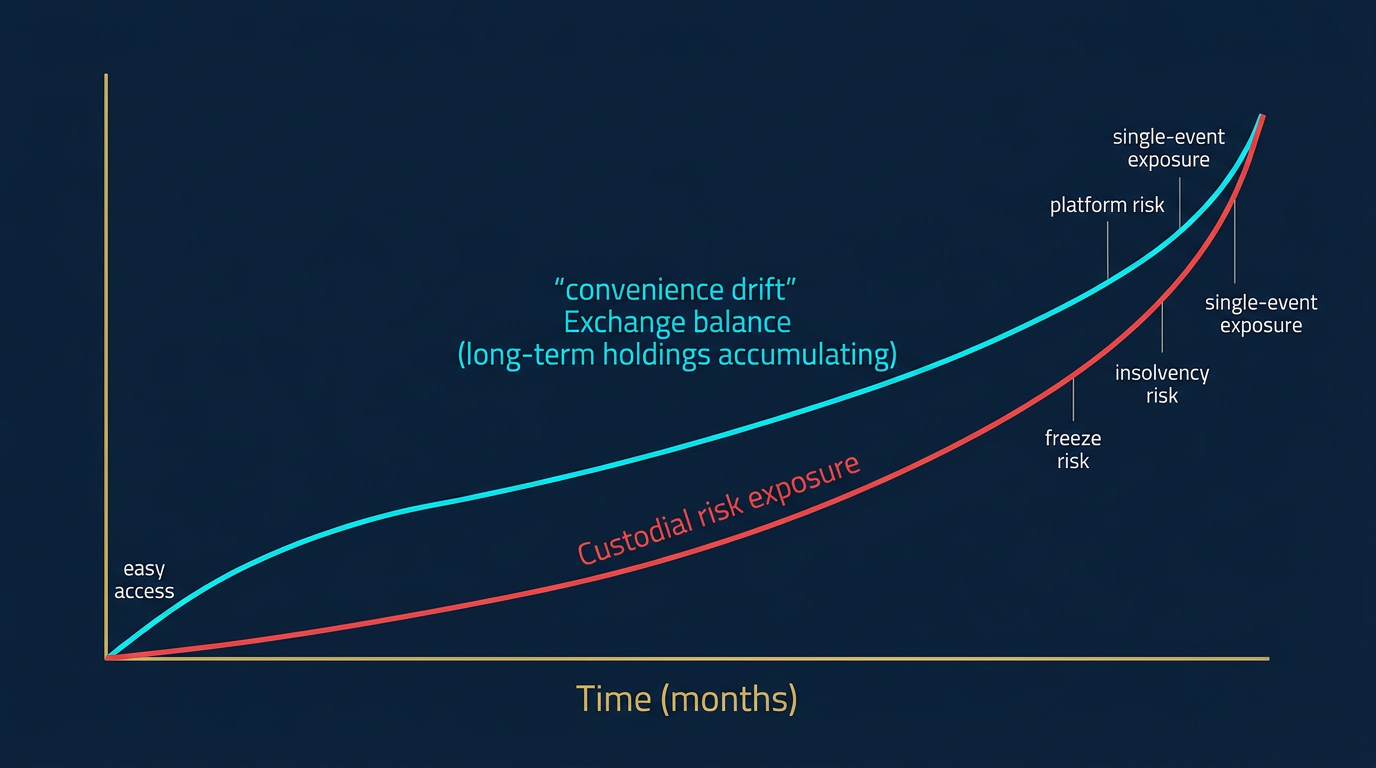
A simple antidote is to set thresholds that trigger withdrawals to safer layers. For example, you might decide that any balance above a fixed amount is swept weekly to a hardware wallet. This habit-based approach keeps risk aligned with your intentions instead of creeping upward with market movements.
Even strong technical setups can fail if you sign the wrong transaction or share information with the wrong person. Phishing pages that mimic exchange logins, fake wallet support chats, and malicious token approval prompts are now responsible for a large share of real-world losses. These attacks do not break cryptography; they convince you to hand over the keys.
Building habits like typing URLs manually, verifying domains before connecting wallets, and treating unsolicited support messages as suspicious goes a long way. Educational content on crypto wallet phishing attacks and other scam patterns can help you recognize red flags before you click. Safe storage is inseparable from safe decision-making.
Practical Usage: Build a Safe Storage Plan
A practical storage plan does not need to be perfect on day one, but it should answer three concrete questions: what balance must stay liquid, what balance can tolerate a slower withdrawal path, and where recovery material lives if a device fails. That turns storage from a vague security goal into an operating system for your funds. A simple threshold-and-routine framework works well here: cap exchange balances, sweep excess funds on a fixed schedule, and test recovery before you need it. If you have not already separated those roles, the next useful step is to decide how much crypto should remain on an exchange and which wallet type should hold the rest.
Stepwise improvements to your storage setup
Many investors find it helpful to improve storage in stages. First, audit where your assets live today and write down the approximate value in each layer: exchange, hot wallet, hardware wallet, and any legacy wallets you rarely open. Next, define thresholds that trigger action, such as sweeping any exchange balance above a fixed amount each Friday or moving profits out after a trade closes. Finally, schedule periodic reviews to test a backup, verify saved addresses, and confirm the storage plan still matches how you actually use your coins.
A second operator insight is that recovery testing should happen before the system is under stress, not after. Restore a small wallet from backup, verify that the derived addresses match, and document what worked. Then reinforce the live setup with a clearer wallet-role framework. The goal is a system where one compromised account or device becomes an inconvenience, not a portfolio-ending event.
For a typical retail user, that might mean keeping one month of active trading capital on an exchange, one small mobile or browser wallet for weekly transactions, and the rest on a hardware wallet that only comes out when you intentionally rebalance. For a long-term holder who rarely transacts, it may mean almost no exchange exposure at all beyond the time needed to buy and withdraw. The best storage plan is the one whose routines you will actually follow when markets get busy.
Sources
- Bitcoin Developer Documentation – Background on key management and wallet models used in Bitcoin.
- Ethereum Developer Documentation – Details on accounts, keys, and wallet implementations in Ethereum.
- NIST Digital Identity Guidelines – General principles for secure credential and authentication management.
FAQ: Storing Crypto Safely
What is the safest way to store a large crypto balance?
For most individuals, the safest way to store a large crypto balance is a well-documented hardware wallet or cold storage setup with strong physical backups and minimal exposure to internet-connected devices. This usually means keeping the bulk of funds in a hardware wallet whose seed phrase is backed up on durable media and stored separately from the device, with only small amounts left on exchanges or hot wallets for short-term use.
How much crypto is safe to leave on an exchange?
There is no universal number, but a common approach is to keep only the amount you actively plan to trade or need for short-term liquidity on any single exchange. Anything beyond that threshold is typically safer in self-custody wallets where you control the keys. If the idea of losing a given exchange balance in a worst-case scenario feels unacceptable, it is a signal that too much value is parked there.
Do I need more than one crypto wallet?
Using more than one wallet is often safer because it lets you separate roles and limit blast radius. For example, you might keep a hardware wallet for long-term holdings, a mobile wallet for small everyday transactions, and a separate browser wallet for interacting with new DeFi protocols. If one wallet is compromised, the impact is contained instead of affecting your entire portfolio.
Is a hardware wallet always safer than a software wallet?
Hardware wallets generally offer better protection against remote attacks because private keys never leave the device, but they are not magic shields. If you mishandle the seed phrase, fall for a phishing site, or buy from an untrusted source, a hardware wallet cannot compensate for those mistakes. Think of hardware as one layer in a broader safety plan that also includes good purchasing practices, backups, and transaction hygiene.
How often should I review my crypto storage setup?
Reviewing your storage setup at least a few times per year is a good baseline, and more frequently if your holdings, exchanges, or life circumstances change significantly. During a review, verify balances in each tier, check that backups are intact and accessible, and confirm that no single device or account now holds more value than you originally intended. Regular check-ins keep your storage design aligned with your real risk profile instead of drifting over time.