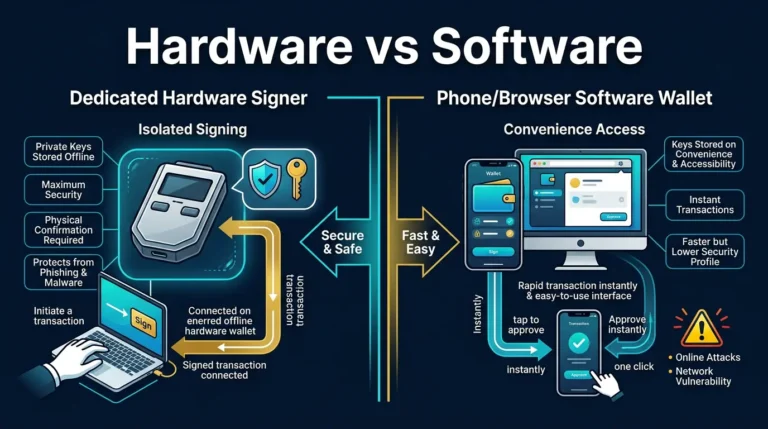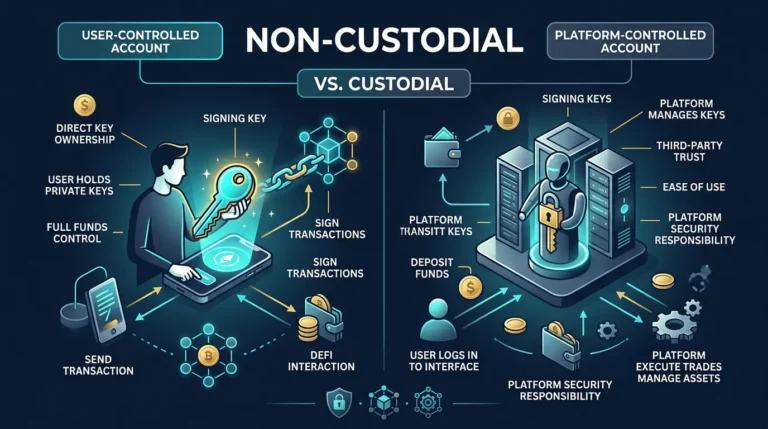


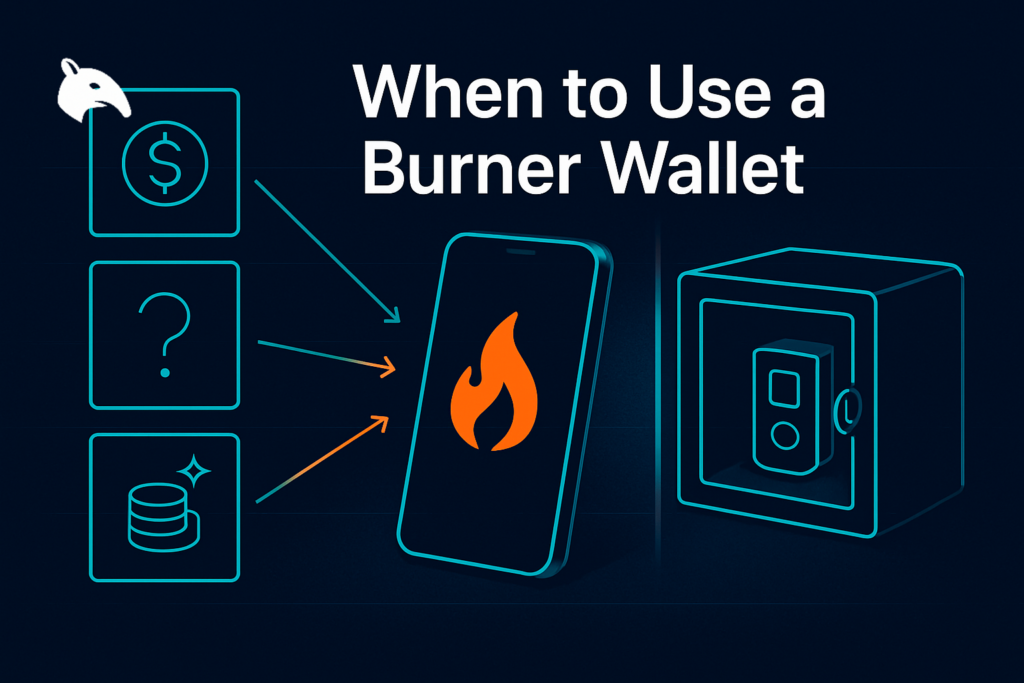
You should use a burner wallet when the interaction risk is meaningfully higher than the value you need to expose. That usually means new dapps, token claims, NFT mints, bridge tests, unfamiliar contracts, or any workflow where you do not want your main wallet sitting inside the same trust boundary. A burner wallet is not for every transaction. It is for situations where limiting blast radius matters more than convenience.
A practical way to think about it is simple: if you would feel uncomfortable connecting your main wallet to the app, site, or contract, that is often the moment to ask whether the activity belongs in a burner wallet instead.
This content is for educational purposes only and should not be considered financial or investment advice.
Key Takeaways
- Use a burner wallet for higher-risk interactions: It is most useful when the signing or approval environment is unfamiliar.
- Do not use it for every routine action: Extra wallets only help if the risk separation is deliberate and practical.
- Keep the balance small on purpose: The amount inside should match the task, not your total confidence.
- Burner use is about role clarity: Main holdings and risky workflows should not share the same wallet history.
- A burner wallet is one layer, not the whole defense: Good approval hygiene and cautious signing still matter.
Quick Answer: When a Burner Wallet Makes Sense
- Use one when the site, contract, or workflow is new, experimental, or not fully trusted.
- Use one when the activity needs only a small amount of gas or tokens.
- Use one when token approvals or repeat signatures may remain active afterward.
- Skip it when the action is low-risk, the wallet is already dedicated to that role, or the added complexity would make you sloppier.
- Always skip it for long-term storage: A burner wallet is for controlled exposure, not savings.
Use a Burner Wallet for Unfamiliar Dapps
The clearest use case is a new or unproven dapp. If you are testing a new swap interface, yield tool, mint page, bridge, or token dashboard, the main risk is not only theft in the obvious sense. The risk is that you may be entering a signing or approval environment that you do not fully understand yet.
Real-world example: a user wants to try a new token launch site that has social buzz but limited track record. Instead of connecting a long-used wallet with stablecoins and high-value assets, the user funds a burner wallet with only the gas and limited tokens needed for the task. That changes a potentially portfolio-wide mistake into a much smaller contained event if the site turns out to be unsafe.
Use a Burner Wallet When Approvals May Linger
Burner wallets are especially useful when an interaction requires token approvals, delegated permissions, or repeated contract access. That is because the risk can outlive the first transaction. A spender you approved today can remain relevant later if the contract, frontend, or trust assumptions change.
The best local companion here is Token Approval Risk Explained. If the activity depends on approvals you may not review carefully afterward, a burner wallet is usually a better fit than a wallet that also protects meaningful holdings.
Use a Burner Wallet for Claims, Mints, and One-Off Experiments
Claims, mints, and promotional interactions are common places where users lower their guard because the amount involved feels small. That is exactly why burner-wallet logic works well there. These are often isolated actions with unclear future value, uncertain contract quality, and high social pressure to act quickly.
Real-world scenario: a user sees a free mint or an airdrop claim and rushes to connect. Even if the direct cost looks minimal, the permission risk may not be. A burner wallet keeps the test environment small so that curiosity does not automatically expose the user’s primary wallet history and balances.
Use a Burner Wallet When Testing a Bridge or New Network
Bridges and new-chain workflows create a mix of technical and operational uncertainty. You may be testing compatibility, route quality, token format, or destination support all at once. A burner wallet is a sensible place for that first small test because it keeps both the value and the trust surface limited.
This is especially helpful when the process involves multiple signatures, approvals, or destination checks. If the first route works cleanly, you can still decide whether the workflow deserves more trust later.
Do Not Use a Burner Wallet as a Substitute for a Main Strategy
A burner wallet is useful only when it has a narrow role. If you keep adding funds to it, store meaningful assets there, and reuse it across months of unrelated experiments, it stops behaving like a burner wallet and starts becoming a messy main wallet with a riskier history.
Operator insight: the most common burner-wallet failure is not forgetting to create one. It is failing to keep it small and disposable. Once it becomes a semi-permanent general-purpose wallet, the protection model degrades quickly.
When a Burner Wallet Is Probably Unnecessary
Not every wallet interaction deserves a separate burner. If you are using a wallet that is already dedicated to a specific spending role, the dapp is well understood, the permissions are limited, and the balance is already intentionally small, adding another layer may just create more complexity without meaningfully reducing risk.
For example, a routine low-value action from a well-managed hot wallet may not need a second burner wallet if that hot wallet is already isolated from your long-term holdings. The goal is not maximum wallet count. The goal is appropriate separation.
How Much Should a Burner Wallet Hold?
The answer is not a fixed number. It is the smallest amount that still lets you complete the intended task. That usually means enough for gas, the exact transaction amount, and a small margin for retries or minor price movement, but not enough to make a compromise materially painful.
Real-world example: if a mint needs only gas plus a modest mint amount, do not preload a large stablecoin balance “just in case.” Overfunding is one of the easiest ways to turn a good burner-wallet idea into a bad risk outcome.
How It Fits Into a Better Multi-Wallet Habit
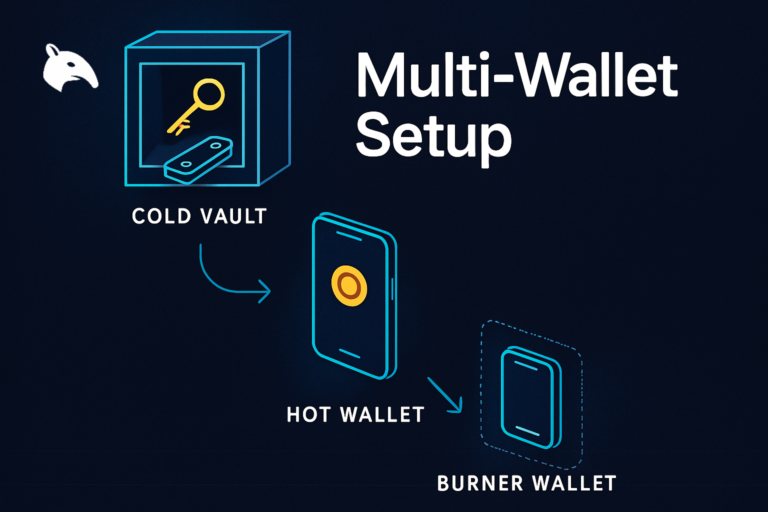
A burner wallet works best inside a broader role-based setup. One wallet is for long-term storage. One may be for normal hot-wallet activity. Another may be for higher-risk experiments. If you want the definition layer first, the right local explainer is What Is a Burner Wallet in Crypto?. If you want the broader separation model, the next practical step is a simple 2-wallet setup in crypto.
This logic also fits the bigger storage framework in How to Store Crypto Safely. Wallet safety gets stronger when each wallet has one clear job instead of trying to be both experiment surface and secure store at the same time.
What Burner Wallet Use Does Not Protect You From
Using a burner wallet does not make malicious signatures harmless. It does not stop phishing pages from tricking you, and it does not protect you from sending funds to the wrong chain or address. It only makes the consequences smaller if you used the wallet correctly and kept the value limited.
That is why related scam context still matters. If you are not clear on the difference between malicious approvals and direct wallet theft, the most relevant local follow-up is What Is a Crypto Drainer?.
Practical Usage: A Simple Decision Filter
- Ask whether the site or contract is unfamiliar: If yes, a burner wallet becomes more justified.
- Ask whether approvals or repeat permissions are involved: If yes, extra separation usually helps.
- Ask whether the task truly needs more than a small balance: If no, fund the wallet minimally.
- Ask whether your existing hot wallet is already acting as a burner: If yes, another wallet may not improve much.
- Ask whether you would regret losing everything in that wallet: If yes, the balance is probably too large for a burner role.
A practical shortcut is this: use a burner wallet when you want to limit trust, not when you just want another wallet for the sake of it.
Risks and Common Mistakes
- Using the burner wallet only in name: A user may call it a burner wallet but keep enough value inside that a compromise still hurts meaningfully, which means the balance was never really sized for containment.
- Creating too much complexity: Some users add extra wallets without clear roles, then start mixing funds and workflows until they lose track of which wallet is supposed to do what.
- Skipping it in exactly the riskiest moments: People often connect the main wallet during hurried claims, mints, or new launches because they want speed, even though those are the moments where separation matters most.
- Forgetting that approvals and history accumulate: A once-clean burner wallet can become messy after repeated use, and continuing to trust it blindly can recreate the same exposure problem it was meant to avoid.
Sources
Frequently Asked Questions
When should I use a burner wallet?
You should use one when interacting with unfamiliar dapps, risky claims, mint pages, bridges, or workflows that could leave behind approvals or unexpected signing exposure.
How much should a burner wallet hold?
It should hold only the amount needed for the task, plus a small margin for gas or retries, not a meaningful long-term balance.
Do I need a burner wallet for every DeFi transaction?
No. It is most useful for unfamiliar or higher-risk interactions, not as automatic extra complexity for every routine action.
Can my regular hot wallet already act like a burner wallet?
Yes, if it is already isolated from long-term holdings, funded modestly, and used only for higher-risk activity. The key is role separation, not the label alone.
Does a burner wallet protect me from drainers?
Not completely. It does not stop a drainer from taking the burner wallet’s exposed assets, but it can stop the same incident from reaching your more important wallets.