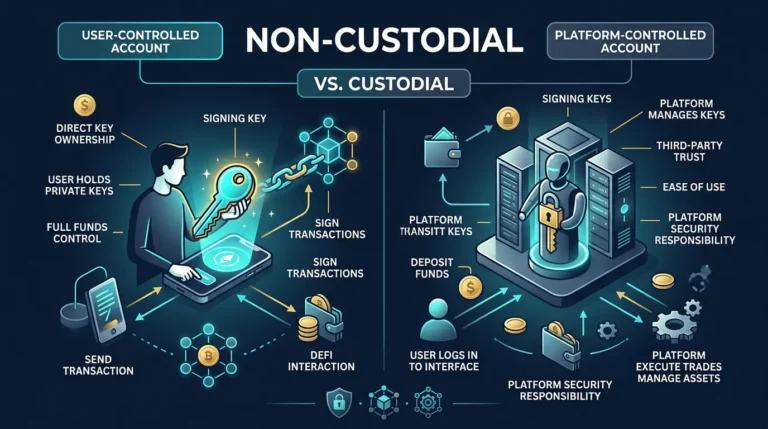


A multi-wallet strategy in crypto is the practice of using more than one wallet on purpose so different balances and activities do not share the same risk surface. Instead of keeping everything in one wallet, users separate roles such as long-term storage, daily spending, higher-risk Web3 interactions, or read-only monitoring. The goal is not complexity for its own sake. The goal is reducing single points of failure.
A simple mental model helps: a multi-wallet setup is like not keeping your checking account, travel cash, safe deposit box, and daily spending card all in the same place. Each bucket has a different job, different convenience level, and different acceptable risk.
This content is for educational purposes only and should not be considered financial or investment advice.
Key Takeaways
- A multi-wallet strategy is role-based separation: Different wallets handle different jobs instead of one wallet doing everything.
- It reduces single-point failure risk: One bad approval, compromised device, or operational mistake is less likely to expose all funds at once.
- Wallet count is not the point: Clear role boundaries matter more than owning many wallets.
- Common roles include vault, hot wallet, and burner wallet: Some users also add watch-only monitoring or multisig layers.
- Good strategy balances security with usability: More separation helps only if the setup remains understandable and maintainable.
What a Multi-Wallet Strategy Actually Means
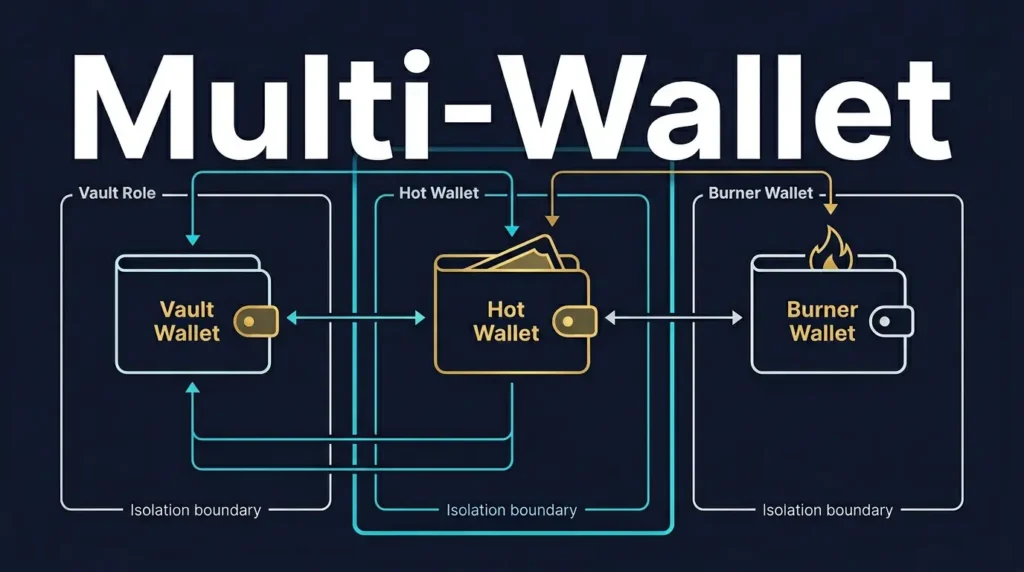
A multi-wallet strategy means designing wallets around functions rather than treating one wallet as a universal answer. One wallet may hold long-term assets and almost never connect to new apps. Another may be a normal hot wallet for routine movement. Another may be dedicated to risky experiments or Web3 approvals. Each wallet is defined by the job it performs and the exposure it is allowed to carry.
This is why the concept matters more than any one product choice. The strategy is about operational structure, not about whether a specific app or device is popular.
Why People Split Wallets Instead of Using One
One-wallet setups are simple, but they concentrate too much risk in one place. If the same wallet stores meaningful savings, signs DeFi approvals, tests new dapps, and lives on a frequently used device, a single mistake can affect everything tied to that wallet.
Real-world example: a user keeps long-term holdings, stablecoins, and experimental tokens in one browser wallet, then connects it to a new app that requests broad permissions. Even if the user only meant to test one feature, the trust boundary now includes assets far beyond that single experiment. A multi-wallet strategy exists to stop that kind of stacking from happening by default.
Common Wallet Roles in a Multi-Wallet Setup
The exact design varies, but most role-based setups include familiar buckets:
For a closely related follow-up, see How to Choose a Crypto Wallet: A Practical Security Framework.
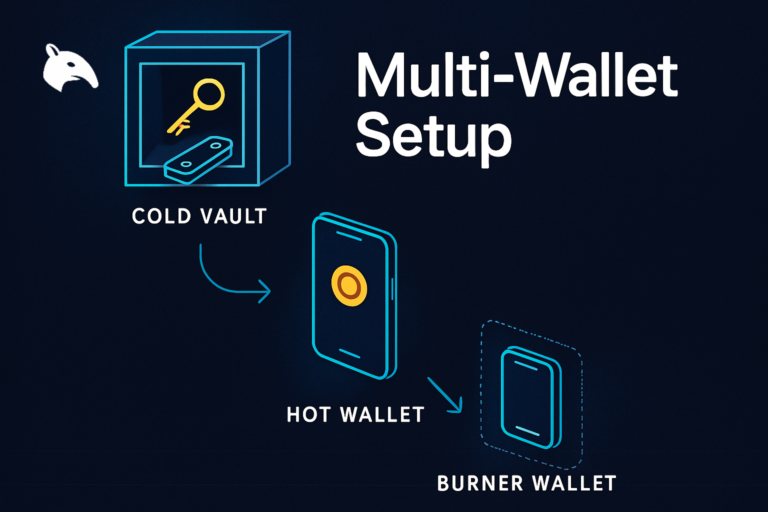
- Vault wallet: For long-term holdings, high-value assets, and slower access. Often paired with a hardware wallet or stronger backup routines.
- Hot wallet: For normal transfers, smaller balances, and everyday activity that needs convenience.
- Burner wallet: For new dapps, claims, mints, bridges, or higher-risk approvals where value should stay intentionally limited.
- Watch-only wallet: For visibility and monitoring without carrying spend authority on the same device.
Not everyone needs all of these roles, but the categories show why “one wallet” and “many wallets” are not the real comparison. The real question is whether your setup reflects how you actually use your funds.
How Multiple Wallets Reduce Single Points of Failure
They reduce failure concentration. If one wallet is compromised, phished, drained, or simply used incorrectly, the damage can stay closer to that wallet’s limited role instead of reaching every balance you control. This is especially valuable in crypto because mistakes are often irreversible.
Operator insight: multi-wallet design is not mostly about stopping every attack. It is about preventing one mistake from becoming a total-loss event. In practice, that is often the more realistic goal.
How It Connects to Burner Wallets and Watch-Only Wallets
A burner wallet is one specific role inside a broader multi-wallet structure. If you want the narrower definition first, the right local explainer is What Is a Burner Wallet in Crypto?. If you want the practical decision layer, see When to Use a Burner Wallet.
Watch-only wallets fit the same logic from a different angle. They separate monitoring from signing authority. The clean local explainer there is What Is a Watch-Only Wallet? How It Works. Together, these roles show that separation can apply to both spending risk and visibility risk.
Why More Wallets Do Not Automatically Mean Better Security
More wallets can help, but only if the roles are clear. If the user creates several wallets without documenting their purpose, starts mixing funds between them, or forgets which one is supposed to stay clean, the extra structure can turn into confusion rather than protection.
Real-world scenario: a user creates multiple wallets with good intentions, then gradually sends funds back and forth until a burner wallet becomes a savings wallet, a hot wallet becomes a long-term store, and a watch-only workflow is no longer separated from signing. The wallet count increased, but the strategic clarity decreased.
What a Good Strategy Usually Starts With
Most people do not need an elaborate architecture to begin. A simple role split is often enough to capture most of the benefit. The most practical starting point is usually a secure long-term wallet plus a smaller activity wallet. That is why the best live bridge from this definition article is 2-wallet setup in crypto.
From there, users can add more roles only when a real need exists. The broader storage framework behind that logic is How to Store Crypto Safely.
How Hardware and Cold Storage Fit In
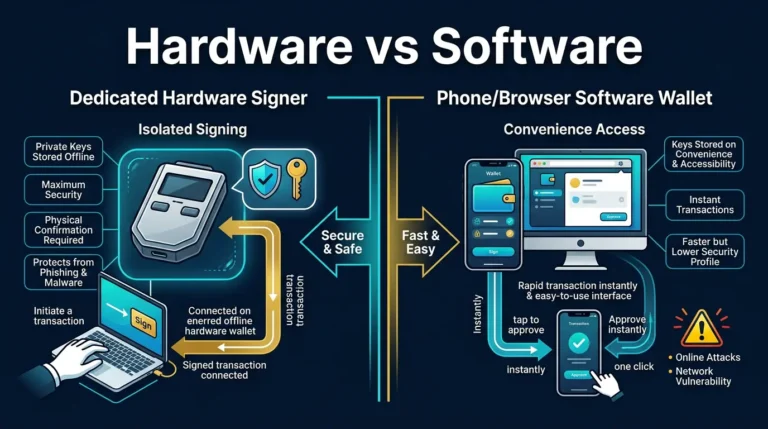
A multi-wallet strategy is not limited to software wallets. In many setups, the long-term layer is a hardware wallet or colder storage model, while the hot and burner layers live on more convenient devices. That split matters because different balances deserve different exposure profiles.
This is why multi-wallet strategy is usually stronger when paired with slower vault habits, not just more apps. The high-value wallet should usually be the least exposed and least frequently connected part of the structure.
Why Beginners Misunderstand the Strategy
Some beginners hear “use multiple wallets” and imagine a highly technical setup meant only for advanced users. Others think the strategy is unnecessary because they have never had a problem yet. Both views miss the point. The core idea is simple: do not let one wallet hold every role and every risk at once.
Another common misunderstanding is assuming that “my second wallet” automatically creates safety. It does not. Safety comes from clear separation of duties, limited balances in higher-risk wallets, and habits that keep those roles intact over time.
Practical Usage: How to Think About the Roles
- Keep long-term holdings in the most isolated wallet: The wallet protecting serious value should be the least exposed one.
- Keep routine activity in a smaller hot wallet: Convenience is useful, but it should not carry the same value as the vault layer.
- Use a burner wallet for unknown or riskier interactions: New dapps, token claims, and experimental workflows belong in the smallest exposure bucket.
- Use watch-only views when visibility matters: Monitoring does not always need spend authority on the same device.
- Add complexity only when it solves a real problem: A clean two- or three-role structure is often better than many poorly defined wallets.
A practical shortcut is this: each wallet should have one clear job, one reasonable balance range, and one trust level you can explain without hesitation.
Risks and Common Mistakes
- Keeping multiple wallets without distinct roles: A user may create several wallets but still mix the same assets and activities across them, which preserves most of the original single-wallet risk.
- Letting the hot or burner wallet grow unchecked: A wallet that began as a convenience or test bucket can quietly become a meaningful exposure if balances are never swept back to safer storage.
- Assuming strategy replaces discipline: Separate wallets still require good signing habits, approval review, backups, and device hygiene.
- Adding too much structure too early: Overcomplicated setups can create their own mistakes if the user does not fully understand recovery paths, wallet purposes, or where each asset is supposed to live.
Sources
Frequently Asked Questions
What is a multi-wallet strategy in crypto?
It is the practice of using different wallets for different roles, such as long-term storage, daily activity, higher-risk interactions, or monitoring.
Why use more than one crypto wallet?
Using more than one wallet can reduce single-point failure risk by stopping one bad approval, compromised device, or workflow mistake from exposing every asset at once.
Is a burner wallet part of a multi-wallet strategy?
Yes. A burner wallet is one possible role inside a broader multi-wallet setup, usually reserved for higher-risk or unfamiliar interactions.
Do I need many wallets to be secure?
No. You need clear role separation more than high wallet count. Many users benefit from a simple two-wallet or three-wallet structure.
Can a watch-only wallet be part of the strategy?
Yes. A watch-only wallet can separate monitoring from spend authority, which fits the same broader logic of reducing unnecessary exposure.