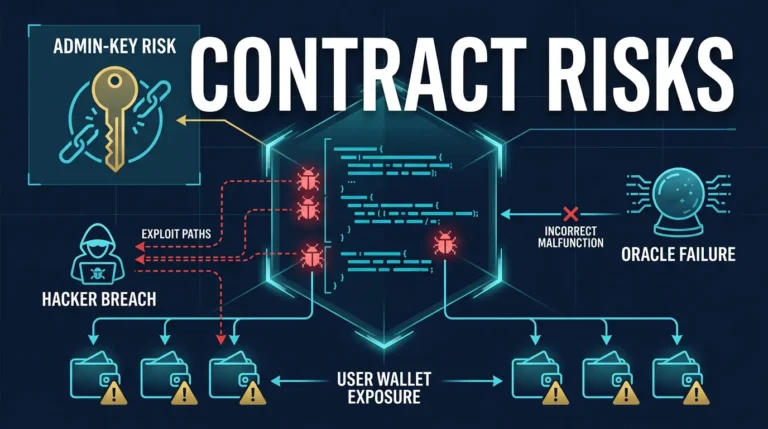


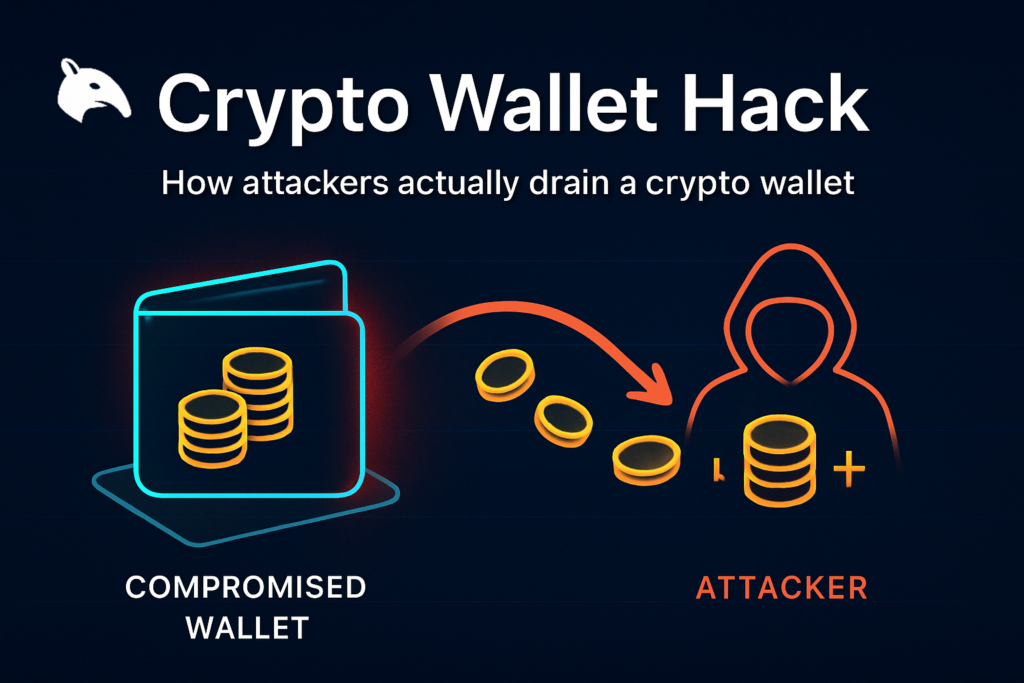
A hacked wallet is a broad way of describing any attack that leads to loss of wallet control, wallet permissions, or wallet-connected funds. In practice, that usually does not mean someone “hacked the blockchain.” It means an attacker found a route into the wallet’s security model: stealing recovery information, tricking the user into signing something harmful, compromising the device, or abusing the account systems around the wallet.
The useful mindset is that a wallet is not compromised in only one way. Some attacks steal secrets such as seed phrases or private keys. Some abuse valid permissions the user signs willingly. Others hijack the environment around the wallet, such as the browser, phone, or account-recovery path. “Wallet hack” is the umbrella term people use for all of those outcomes, even when the mechanics are very different.
This content is for educational purposes only and should not be considered financial or investment advice.
Quick Answer
This kind of wallet compromise is any attack that gives an attacker control over your wallet, your wallet permissions, or the systems that can move funds from it. Common paths include seed phrase theft, malicious approvals, phishing, malware, and account takeover around connected services.
Key Takeaways
- A wallet hack usually means the user layer was compromised: Attackers more often target secrets, permissions, devices, and recovery flows than blockchain code.
- Not every wallet attack steals the seed phrase: Some attacks abuse signed approvals or wallet-connected sessions instead.
- Different hack paths produce the same outcome: Phishing, malware, social engineering, and drainers can all end with lost funds.
- Hot wallets and active-use wallets carry different risk than cold storage: More connection and signing activity creates more attack surface.
- Understanding the attack path matters: Good defenses depend on knowing whether the risk is phrase theft, bad signing, malware, or account takeover.
What People Usually Mean by “Wallet Hack”
When people say their wallet was hacked, they often mean one of several very different things. They may have entered a recovery phrase into a fake site, signed a malicious approval, installed malware that changed a destination address, or lost access through a connected account path. The wording is loose, but the practical meaning is the same: funds moved in a way the owner did not intend.
The broader route-map version of this topic is How Crypto Gets Stolen. This page narrows that down to the wallet-specific side of the problem: how attackers reach assets through wallets and wallet-linked behavior.
Main Ways Wallets Get Compromised
Seed phrase or private key theft
This is the most direct form of wallet compromise. If an attacker gets your recovery phrase or exported private key, they can usually restore the wallet elsewhere and control the funds fully. The theft often happens through fake wallet recovery pages, fake support chats, fake apps, or other phishing flows that ask for words or keys no legitimate service should need.
If you want the foundational definition behind this concept, read What Is Blind Signing in Crypto? Why It Is Risky.
If you want the foundational definition behind this concept, read What Is a Hardware Wallet? Key Storage Explained.
For that exact path, the best local reference is Crypto Wallet Phishing Attacks.
Malicious approvals and wallet drainers
Some wallet hacks do not steal your secret at all. Instead, they trick you into signing a permission that lets a malicious contract spend tokens from the wallet later. This is the mechanism behind many drainer attacks. The wallet still “belongs” to you in a technical sense, but the signed permission gives the attacker practical control over certain assets.
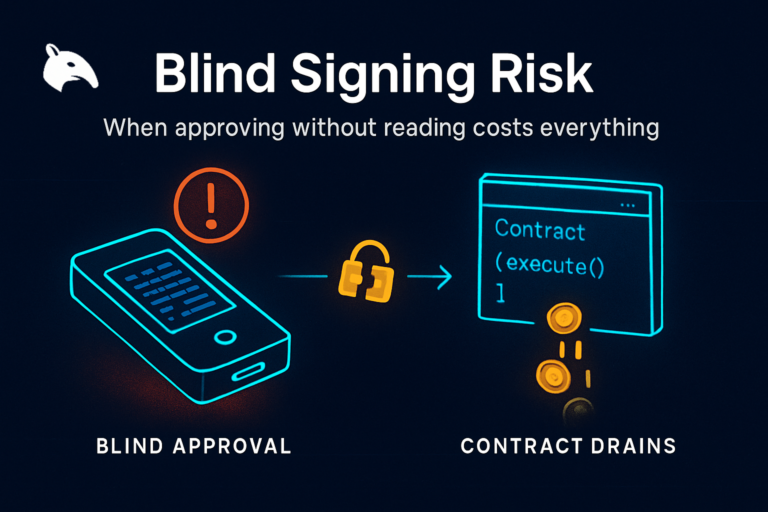
The cleanest follow-up here is What Is a Crypto Drainer?. If the approval itself was unreadable, Blind Signing Risk in Crypto is the next page to read.
Malware and browser compromise
Malware can target the environment around the wallet rather than the wallet software itself. It may swap pasted addresses, search local files for backups, steal browser sessions, record keystrokes, or interfere with what the user sees before signing. In those cases, the compromise happens in the device layer, but the visible loss still shows up as a wallet problem.
Social engineering and fake support
Many wallet hacks begin with persuasion rather than technical exploitation. Attackers impersonate support staff, recovery teams, project admins, recruiters, or urgent security alerts to push the victim into revealing wallet secrets, installing software, or signing harmful transactions. The social trick is often the delivery layer for the real theft mechanism.
Connected account takeover
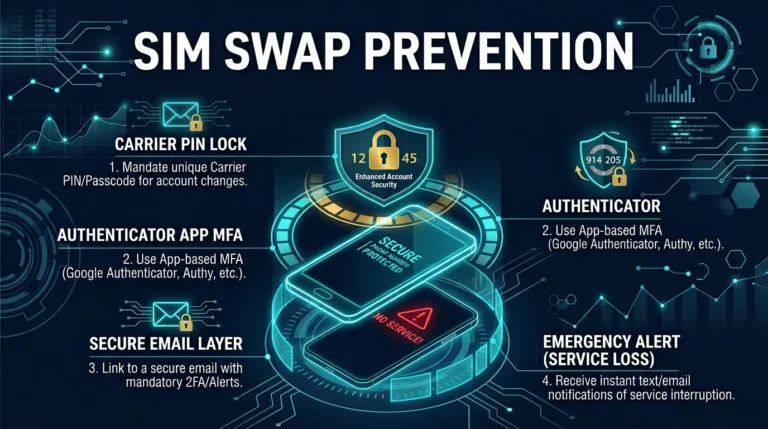
Some losses described as wallet hacks are really account-access problems around the wallet ecosystem. A compromised email account, weak exchange recovery setup, or SIM-swap-driven takeover can become the route into wallet-linked funds or into platforms that can withdraw on your behalf. The wallet may not be broken directly, but it is still where the loss becomes visible.
Hot Wallet vs Cold Wallet Risk
A hot wallet used for browsing, DeFi, mints, and frequent signing has a different risk profile from a cold wallet used mainly for storage. The more often a wallet connects to websites, signs approvals, or lives on a mixed-use device, the more chances attackers get to exploit the user, the browser, or the prompt flow. That does not mean hot wallets are useless. It means they should carry less value and more skepticism.
Operator insight: many users ask whether their wallet was “hacked” when the better question is “What exact job did this wallet perform?” A wallet built for experiments and daily interaction should not hold the same balance as one built for storage.
What a Wallet Hack Usually Looks Like in Practice
- A fake site asks for wallet recovery words: The attacker restores the wallet elsewhere and empties it.
- A wallet prompt looks routine: The user signs an approval and funds disappear later through a malicious spender.
- A copied address is silently replaced: Malware changes the destination before the transfer is confirmed.
- A user trusts fake support: Remote-access software or phrase-entry instructions lead to theft.
- An account linked to the wallet is taken over: Email or exchange recovery becomes the attack path around the wallet.
These all feel like “wallet hacks” to the victim, but they require different defenses. That is why naming the exact path matters more than using one generic label.
Practical Usage: How to Reduce Wallet-Hack Risk
- Protect recovery information absolutely: Never type seed phrases or private keys into websites, chats, or support forms.
- Use role-based wallet separation: Keep storage, active DeFi use, and experimentation in different wallets.
- Read every signing prompt carefully: Spender, amount, destination, and contract purpose all matter.
- Reduce device exposure: Avoid random extensions, fake apps, and mixed-use environments for high-value activity.
- Harden connected accounts too: Email, exchange access, and recovery flows are part of the risk model.
A concrete example: keep long-term holdings in a hardware wallet that rarely connects to unknown sites, use a separate hot wallet for active DeFi, and keep a smaller burner-style wallet for experiments or links you have not deeply verified. That structure turns one bad click into a small problem instead of a full portfolio problem.
Risks and Common Mistakes
- Thinking every wallet hack means “the wallet software was broken”: Most losses come from user-layer compromise, permissions, or device issues instead.
- Using one wallet for everything: Storage, DeFi, mints, and experiments should not share the same blast radius.
- Trusting familiar-looking interfaces too quickly: Polished sites and urgent messages are common attack delivery layers.
- Ignoring non-wallet dependencies: Email, exchanges, and phone-number recovery can still affect wallet-linked loss.
- Focusing on the final theft step instead of the first failure: Good prevention starts by identifying where the attack entered the workflow.
Sources
- FBI: Operation Level Up
- Chainalysis: Understanding Crypto Drainers
- FBI IC3: Crypto Social Engineering Threats
Frequently Asked Questions
What is a hacked wallet in simple terms?
It is any attack that gives someone unintended control over your wallet, your wallet permissions, or the systems that can move funds from it.
Can a wallet be hacked without stealing the seed phrase?
Yes. Malicious approvals, malware, fake support flows, browser compromise, and account takeover can all lead to loss without directly stealing the recovery phrase first.
Is a crypto drainer a kind of wallet hack?
Yes. It is one form of wallet compromise where the attacker abuses signed permissions rather than stealing the wallet secret itself.
Do hardware wallets stop every wallet hack?
No. They are very useful against remote key theft, but they do not eliminate malicious signing, fake support, device hygiene problems, or account-takeover issues around connected services.
What is the best first defense against wallet hacks?
The best first defense is separating wallet roles and refusing to reveal or approve anything you do not fully understand.