

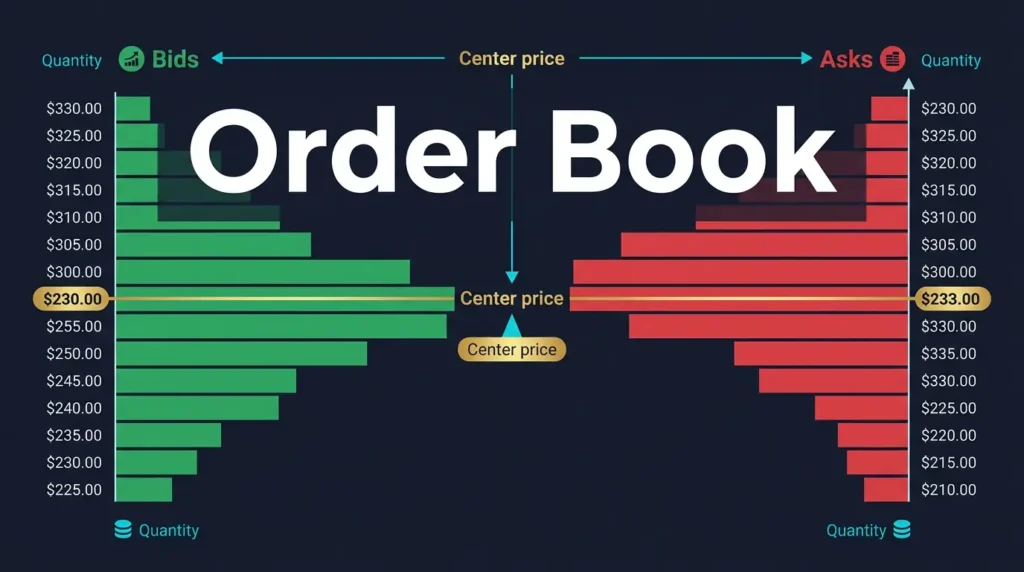
An order book in crypto is the live list of buy and sell orders waiting to be matched in a market. It shows the prices where buyers are willing to bid, the prices where sellers are willing to ask, and the amount of the asset available at each level. In simple terms, it is the exchange’s running map of current trading interest for a pair like BTC/USDT or ETH/BTC.
A useful mental model is to think of the order book as a queue on both sides of the market. Buyers line up below the current price with bids. Sellers line up above it with asks. When those two sides meet, trades happen.
This content is for educational purposes only and should not be considered financial or investment advice.
Key Takeaways
- An order book is a list of unmatched orders: It shows where buyers and sellers are waiting to trade.
- Bids and asks are the two sides of the market: Bids represent buy interest, and asks represent sell interest.
- The best bid and best ask matter most: They define the closest available buy and sell prices in the market.
- Price moves when orders get matched or removed: The market shifts as available liquidity changes.
- Order books matter because they reveal market structure: They help explain spread, depth, and execution quality.
What the Order Book Actually Shows
The order book shows open orders that have not yet been filled. On the buy side, traders post bids saying what price they are willing to pay. On the sell side, traders post asks saying what price they are willing to accept. Each price level may include different amounts of liquidity depending on how many traders want to buy or sell there.
This is why the order book matters more than a single last-traded price. The last trade tells you what just happened. The book tells you what is currently waiting to happen if new market orders arrive.
How Bids and Asks Work
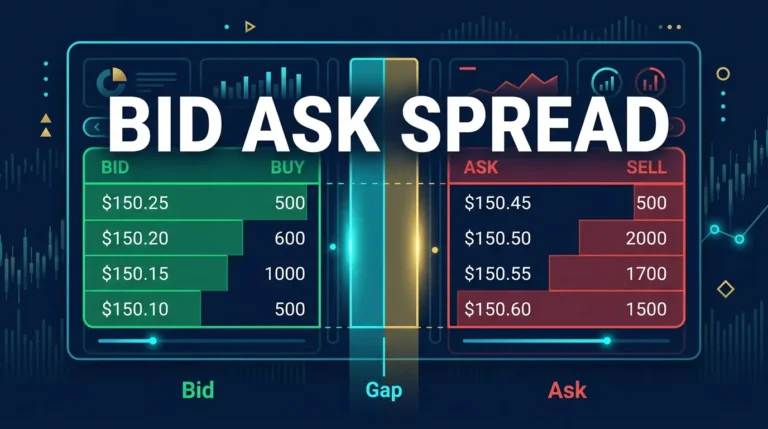
A bid is an order to buy at a specified price or better. An ask is an order to sell at a specified price or better. If the highest bid is below the lowest ask, the two sides remain unmatched and the spread stays open. If a new order crosses that gap, trades execute.
Real-world example: if the highest bid for BTC is 69,950 USDT and the lowest ask is 70,000 USDT, the order book currently has a 50 USDT gap between the two best available prices. If a buyer sends a market order, it may fill against the lowest ask first. If a seller sends a market order, it may fill against the highest bid first.
Best Bid, Best Ask, and Spread
The best bid is the highest current buy order. The best ask is the lowest current sell order. The difference between them is called the spread. A tighter spread often suggests a more active and liquid market. A wider spread often suggests thinner trading conditions or more uncertainty.
Operator insight: beginners often focus only on the price chart, but execution quality starts with the spread and the depth around it. Two markets can show the same rough price while offering very different trading conditions underneath.
How Orders Get Matched
Exchanges match buyers and sellers by comparing incoming orders with what is already resting in the book. If a new order can be matched immediately at available prices, the trade executes. If not, it may sit in the order book waiting for someone on the other side to meet it later.
This is the difference between an order resting in the market and an order consuming what is already there. A limit order often adds liquidity to the book. A market order usually removes liquidity from it.
Why Depth Matters
Depth refers to how much buy or sell interest exists at and around current prices. A deep order book has a lot of size available near the top of the book. A thin order book has much less. Depth matters because large orders can move price more aggressively in thin markets than in deep ones.
Real-world example: in a deep BTC/USDT market, a modest market order may barely move the price. In a small altcoin pair with weak depth, the same style of order can push through multiple price levels and create noticeable slippage.
How It Connects to Trading Pairs
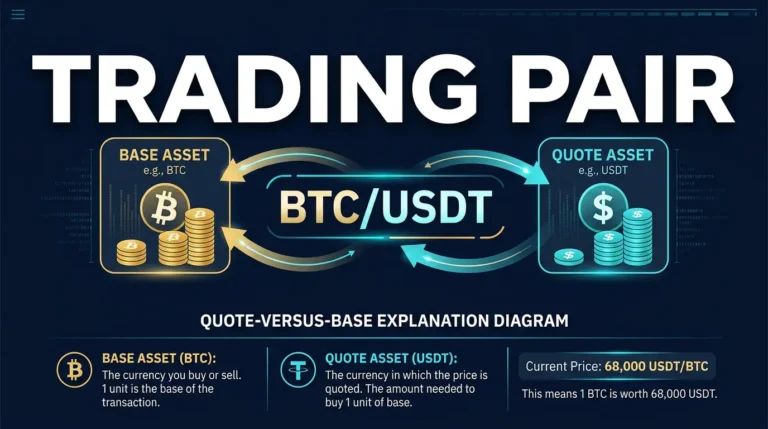
An order book always belongs to a specific pair. The BTC/USDT book is separate from the ETH/USDT book, and both are separate from ETH/BTC. That means each pair has its own bids, asks, spread, and liquidity profile.
If you need the pricing-side foundation before this structure makes sense, the right local explainer is What Is a Crypto Trading Pair?. The pair tells you what is being traded. The order book shows how that market is currently lined up.
What the Order Book Does Not Tell You Perfectly
The book is useful, but it is not a crystal ball. Orders can be canceled, large participants can reposition quickly, and visible depth does not guarantee that liquidity will remain there when the market gets stressed. Some traders also use strategies that place and remove orders rapidly, a tactic common in pump-and-dump schemes, which can make the book look deeper or more active than it really is moment to moment.
This is why reading the book is about market structure awareness, not certainty. It helps you understand the trading environment, but it does not eliminate execution risk.
Why Beginners Misread Order Books
Many beginners assume the order book is just a complicated visual and ignore it entirely, while others overread it as if every wall or cluster guarantees future direction, driven by FOMO or pattern bias. Both mistakes miss the point. The order book is most useful as a structural tool: it shows where interest is currently stacked, how tight the spread is, and how much depth is waiting near the current market.
Another common confusion is mixing up price and liquidity. A coin can have a quoted market price and still be hard to trade efficiently if the order book is thin around that price.
Practical Usage: How to Read One Quickly
- Check the best bid and best ask first: This tells you the nearest current buying and selling prices.
- Look at the spread: A tight spread usually signals a smoother market than a wide one.
- Scan nearby depth: The size close to the top of the book matters more than distant orders.
- Match the book to your order type: A market order behaves differently in a thin book than a limit order does.
- Remember the book belongs to one pair only: Market quality can differ sharply across different quoted markets for the same asset.
A practical shortcut is this: the order book is the live map of where buyers and sellers are waiting right now, not a guarantee of where price must go next.
Risks and Common Mistakes
- Ignoring the spread: A trader may focus on the last price and miss that a wide gap between best bid and best ask already signals worse entry conditions.
- Assuming visible liquidity is guaranteed: Orders can be canceled or moved quickly, especially during volatile periods, so apparent depth can disappear when needed most.
- Using market orders carelessly in thin books: A modest buy or sell can sweep through several levels and create far worse execution than expected.
- Reading one large wall as certainty: A visible cluster of orders may influence behavior, but it does not guarantee the market must reverse or hold there.
Sources
Frequently Asked Questions
What is an order book in crypto?
It is the live list of open buy and sell orders waiting to be matched in a crypto market.
What are bids and asks in an order book?
Bids are buy orders and asks are sell orders. Together they show the two-sided market around the current price.
What does the spread mean?
The spread is the difference between the best current bid and the best current ask in the market.
Why does order-book depth matter?
Depth matters because it affects how easily orders can be filled near the current price without causing noticeable slippage.
Does the order book predict price direction?
Not reliably. It shows current market interest and structure, but orders can move, disappear, or be overwhelmed by new activity.