

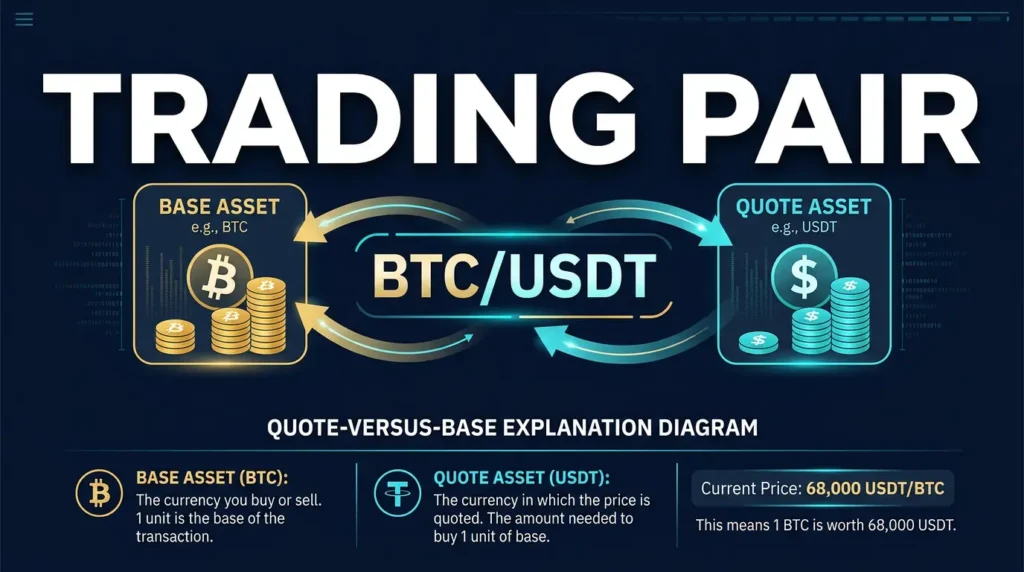
A trading pair in crypto is the market relationship between two assets that can be exchanged against each other on an exchange. It tells you what asset you are buying, what asset you are paying with, and how the market price is being quoted. In a pair like BTC/USDT, bitcoin is being priced in USDT, so the chart shows how many units of USDT the market is willing to exchange for one bitcoin.
A simple mental model helps: a trading pair is like a translation rule between two assets. Instead of asking “What is bitcoin worth?” in the abstract, the market asks “What is bitcoin worth in USDT?” or “What is ETH worth in BTC?” The answer changes depending on which asset is doing the pricing.
This content is for educational purposes only and should not be considered financial or investment advice.
Key Takeaways
- A trading pair is a pricing relationship: It shows how one asset is quoted against another on an exchange.
- The left asset is the base asset: In BTC/USDT, bitcoin is the asset being priced.
- The right asset is the quote asset: In BTC/USDT, USDT is the asset used to express the price.
- The same coin can have multiple pairs: BTC/USDT, BTC/USD, and BTC/ETH are different markets with different liquidity and behavior.
- Pairs matter because pricing is never purely standalone: A crypto asset is always being valued in terms of something else.
How a Trading Pair Works
Every pair has two sides. The base asset is the asset being bought or sold. The quote asset is the asset used to measure its price. If BTC/USDT trades at 70,000, that means one BTC is currently priced at 70,000 USDT in that market.
This structure matters because exchanges do not price coins in isolation. They price one asset against another. That is why the same asset can look different depending on which market you are viewing.
BTC/USDT Meaning Explained
BTC/USDT is one of the most common examples because it is easy for beginners to read. BTC is the base asset. USDT is the quote asset. If the pair price rises from 68,000 to 70,000, that means bitcoin has become more expensive in USDT terms. If it falls, bitcoin has become cheaper in USDT terms.
Real-world example: if you hold USDT and buy BTC in the BTC/USDT market, you are exchanging quote currency for base currency. If you later sell BTC back into the same market, you are exchanging the base asset back into the quote asset.
Why the Same Coin Can Have Different Pairs
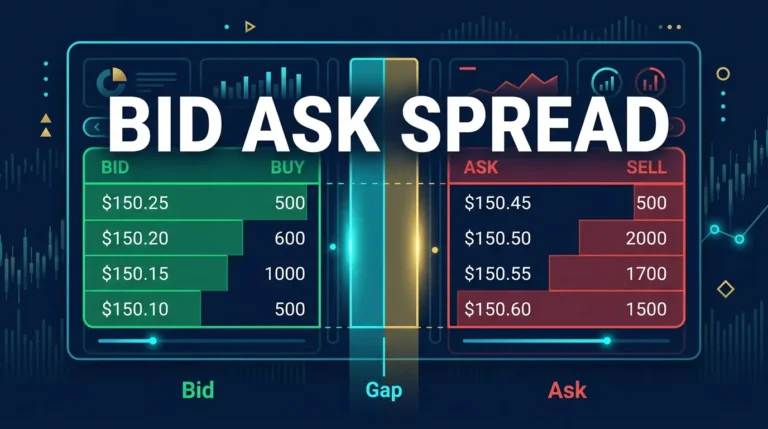
One asset can trade against many different quote assets. Bitcoin may trade against USDT, USD, EUR, ETH, or other assets depending on the exchange. Those are not just cosmetic variations. They are separate markets with their own order flow, liquidity, bid-ask spread, and sometimes slightly different prices.
Operator insight: beginners often think “bitcoin price” is one universal number. In practice, it is an average idea built from many pair-specific markets across many venues. The price you see depends on what it is being quoted against and where that trading is happening.
Why Quote Asset Choice Matters
The quote asset changes how traders interpret the market. A BTC/USDT chart shows bitcoin in stablecoin terms, which feels intuitive because USDT is designed to track the dollar. But an ETH/BTC chart answers a different question entirely: how much ether is worth relative to bitcoin, not relative to cash-like value.
That is why relative-performance traders often watch crypto-to-crypto pairs, while many retail users focus on stablecoin or fiat pairs. The pair determines the frame of reference.
What a Pair Does Not Tell You by Itself
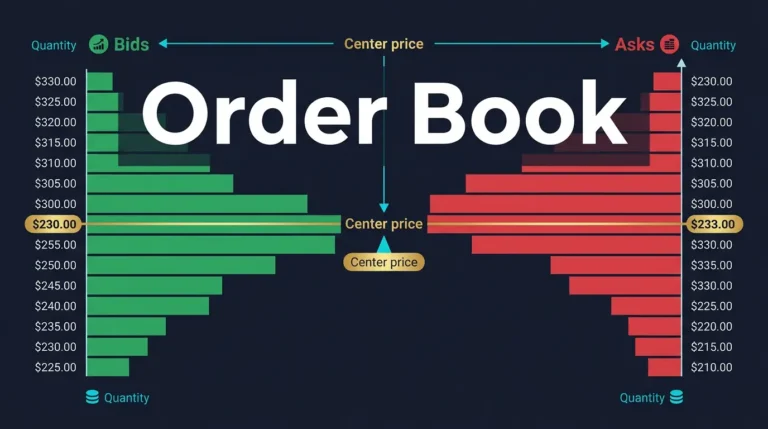
A pair name tells you the assets involved, but it does not explain liquidity, spread, order-book depth, slippage, or whether the market is easy to enter and exit at size. Two pairs can represent the same asset while behaving very differently in practice if one is deeper and more active than the other.
This is why market structure matters. A pair is the label for the market, but the quality of the trading experience depends on what sits behind that label.
How Pairs Connect to Exchange Structure
Both centralized and decentralized exchanges organize markets through pairs because they need a standard way to match buyers and sellers. If you want to buy BTC with USDT, you trade the BTC/USDT pair. If you want to buy ETH with BTC, you trade the ETH/BTC pair. The pair tells the exchange which asset is leaving your balance and which asset is arriving.
Real-world scenario: a user wants to move from BTC into SOL. On some exchanges, that might happen directly through a BTC/SOL pair. On others, the user may first need to sell BTC into USDT and then use the SOL/USDT pair. The available pair structure changes the route the trade takes.
Why Beginners Misread Pairs
Most confusion comes from not knowing which side of the pair is being priced. New traders may look at ETH/BTC and think it is telling them ether’s dollar price, when it is really showing ether relative to bitcoin. Others assume every pair is interchangeable, even though stablecoin pairs, fiat pairs, and crypto-to-crypto pairs answer different questions.
A second common mistake is confusing ownership flow. In BTC/USDT, buying BTC means spending USDT. Selling BTC means receiving USDT. The pair is not just a chart label. It describes the exchange relationship itself.
Practical Usage: How to Read Any Pair Quickly
- Read the left side first: This is the base asset being priced.
- Read the right side second: This is the quote asset expressing the price.
- Ask what question the pair answers: Is the asset being priced in dollars, stablecoins, bitcoin, or something else?
- Check whether the pair is the most useful route: Some markets are deeper, tighter, or simpler to use than others.
- Do not assume one pair explains the whole market: The same asset can behave differently across different quoted markets.
A practical shortcut is this: `BASE/QUOTE` means “How much `QUOTE` does one unit of `BASE` cost?” Once that clicks, most pair labels become easy to interpret.
Risks and Common Mistakes
- Confusing the quote asset with the asset being bought: A beginner may see BTC/USDT and assume USDT is the thing being purchased, when the market is actually pricing BTC in USDT terms.
- Assuming every pair answers the same question: ETH/BTC and ETH/USDT can both rise or fall for completely different reasons, because one measures ether against bitcoin while the other measures ether against a stablecoin quote.
- Ignoring route differences: On one exchange you may move from BTC into SOL directly, while on another you must sell BTC into USDT first and then buy SOL, which changes fees and execution path.
- Treating the pair name as the whole market structure: A small-cap pair can show a price on screen but still have poor depth, wider spreads, and worse execution than a more active market for the same asset.
Sources
Frequently Asked Questions
What is a trading pair in crypto?
It is the market relationship between two assets on an exchange, showing how one asset is priced in terms of the other.
What does BTC/USDT mean?
It means bitcoin is being priced in USDT. The pair shows how many units of USDT the market will exchange for one BTC.
What is the difference between base and quote asset?
The base asset is the asset being priced, and the quote asset is the asset used to express that price.
Can one coin have multiple trading pairs?
Yes. The same asset can trade against fiat, stablecoins, bitcoin, or other crypto assets on different markets or exchanges.
Does a pair tell me everything about a market?
No. The pair tells you the pricing relationship, but not the full market quality, liquidity, spread, or execution depth behind it.