

Last Updated on April 14, 2026 by Snout0x
The pig butchering crypto scam is one of the most dangerous long-term fraud models targeting crypto investors in 2026.
Key Takeaways
- “Pig Butchering” is a long-term psychological crypto scam, not a quick phishing attack.
- Scammers use “wrong number” messages to start scripted conversations.
- Fake trading platforms simulate profits to build trust.
- Real-time AI deepfakes make video calls unreliable in 2026.
- “Recovery agents” are often the second scam.
Disclosure & Disclaimer
Some links on this website may be affiliate links, which means we may earn a commission at no additional cost to you. We only recommend products and services we believe provide genuine value, and compensation does not influence our opinions or reviews.
All content on this website is provided for informational and educational purposes only. Nothing here constitutes financial, investment, legal, or tax advice. Cryptocurrency involves risk and volatility, and you are solely responsible for your financial decisions. Always conduct your own research before making any investment.
What Is the Pig Butchering Crypto Scam and How Does It Work?
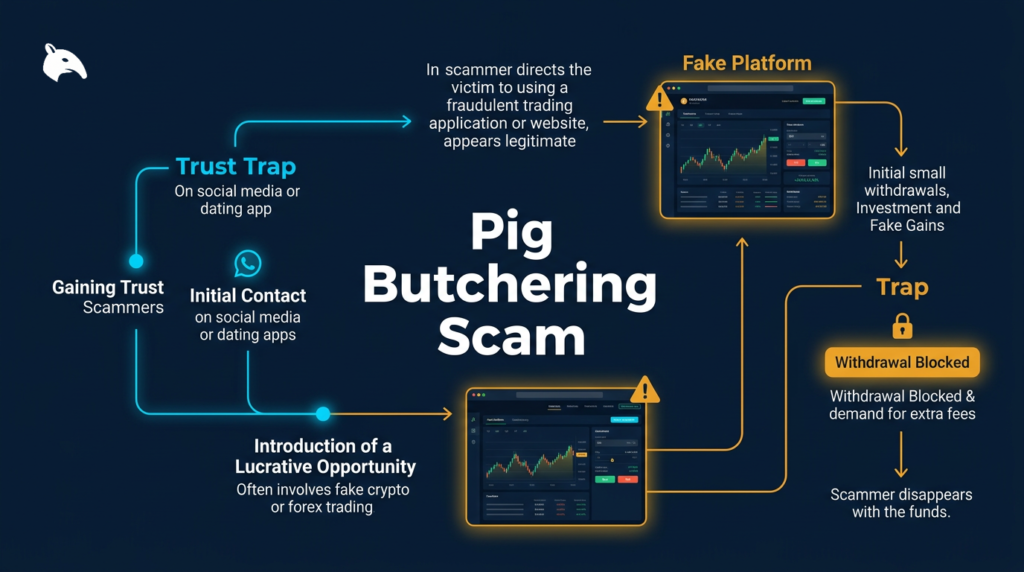
The pig butchering crypto scam (Sha Zhu Pan) is a long-term fraud operation designed to emotionally manipulate victims before stealing significant sums of money.
Unlike basic phishing attacks, this scam unfolds slowly. It can take weeks or even months.
The goal is not your spare cash.
It is your savings.
It often begins with a simple message:
“Hey, are we still meeting tomorrow?”
You reply: “Wrong number.”
That single reply opens the door.
Phase 1: The “Wrong Number” Hook
Scammers use scripted conversation openers designed to trigger politeness and curiosity.
Common variations include:
- The assistant booking mistake
- The golf / yoga lesson confusion
- The “destiny connected us” angle
Once you respond, they begin profiling you.
They adapt.
Lonely? They become romantic.
Ambitious? They become a crypto mentor.
Curious? They become your “insider source.”
This stage builds emotional trust before money is ever mentioned.
If you want to understand the psychology behind these traps, read:
👉 Social Engineering in Crypto
The same greed triggers are used here.
Phase 2: The Fake Crypto Platform
Eventually, crypto enters the conversation. The pig butchering crypto scam works because it blends emotional manipulation with technical deception.
They casually show screenshots of profits.
They mention a “private platform” or “VIP institutional portal.”
You receive a link.
The website looks legitimate:
- Live charts
- Support chat
- Deposit dashboard
- Withdrawal system
But it is fully controlled by the scammer.
This is similar to how liquidity is faked in rug pulls. If you want to understand the technical mechanics behind smart contract manipulation, read:
👉 The Rug Pull Autopsy: How Crypto Projects Steal Liquidity
The pig butchering scam just applies that manipulation to individuals instead of tokens.
The 3 Technical Red Flags
1. Domain Age
Check domain registration via Whois.
- Legit exchanges: registered years ago
- Scam domains: registered weeks ago
If the platform is newer than your milk, it’s not institutional — it’s industrial fraud.
2. Wallet Connect Requests
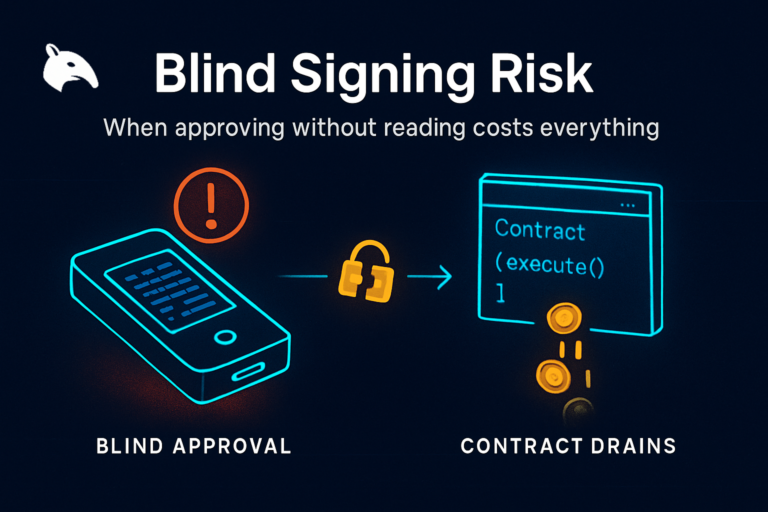
Many fake sites ask you to “connect wallet.”
This may trigger wallet-drainer permissions.
Before ever connecting a wallet, read:
👉 Mobile Wallet Security 2026: 5 Critical Risks
👉 Crypto Approval Scams Explained
Your phone wallet is the weakest link in most scams.
3. Fake Broker Servers (MetaTrader Trap)
Scammers sometimes use legitimate apps like MetaTrader but provide their own custom broker server.
They control the price feed inside your dashboard.
The profits you see are simulated.
The same illusion effect used in Ponzi dashboards.
The “Trust Withdrawal” Trick
You deposit $500.
You make $100.
You withdraw $600.
It works.
That withdrawal is not proof of legitimacy.
It is bait.
The small “profit” conditions your brain to scale up.
When you deposit $50,000 or more, your funds are immediately laundered on-chain.
What you see on screen is just database numbers.
If you don’t understand how irreversible blockchain transactions work, start here:
👉 What Is Blockchain?
Immutability is a feature — and scammers exploit it.
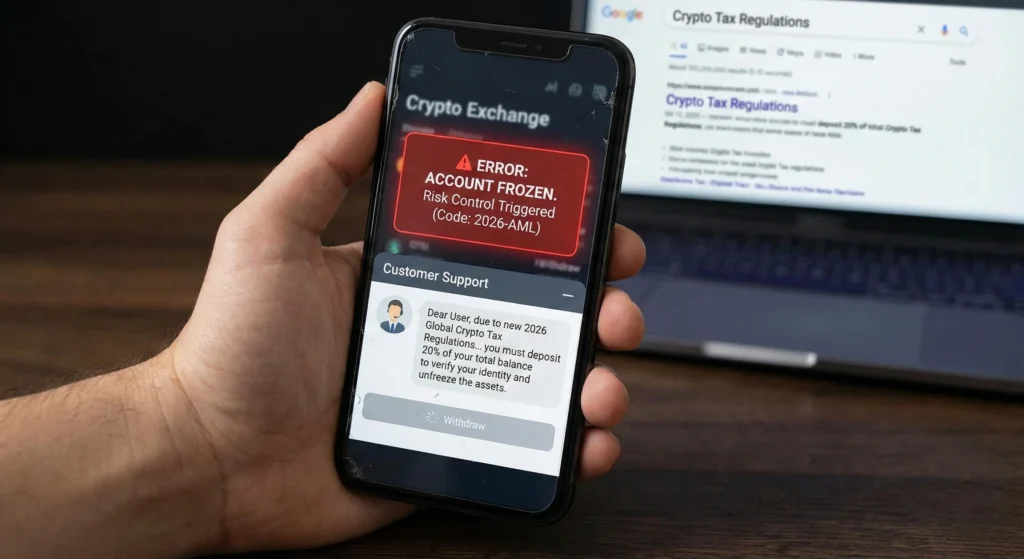
Phase 3: Account Frozen
When you attempt a large withdrawal:
“Account frozen due to AML verification.”
You are told to deposit 20% for tax, verification, or compliance.
This is the final extraction stage.
If you pay, more fees follow:
- Legal fees
- Gas fees
- Risk control deposits
Eventually, the website disappears.
The Recovery Scam (Second Extraction)
Victims of the pig butchering crypto scam are often targeted again by so-called recovery agents.
After victims post online, they are contacted by:
- “Blockchain Integrity Units”
- “Ethical hackers”
- “Crypto recovery agencies”
They claim to reverse blockchain transactions for a fee.
This is false.
Blockchain transactions are irreversible.
Anyone requesting upfront recovery fees is running a second scam.
If you want to understand why self-custody matters, read:
👉 Exchange Withdrawals Will Pause Again: 2026 Self-Custody Survival Guide
👉 Hardware Wallet Setup: How to Do It Safely from the Start
Control of keys is your only real protection.
You can file a complaint with the FBI IC3 here: https://www.ic3.gov/
Can You Get Your Money Back?
In most cases: no.
You can:
- Report to local cybercrime authorities
- Contact your bank if fiat was involved
- Document the scam for evidence
But crypto sent to scam wallets is rarely recoverable.
Do not compound the loss by paying “recovery agents.”
How to Protect Yourself (Practical Protocol)
The best defense against the pig butchering crypto scam is strict zero-trust behavior online.
1. Adopt Zero-Trust in DMs
Real investors do not recruit through Telegram or WhatsApp.
Block unsolicited crypto conversations immediately.
2. Audit Every Domain
Before logging in or connecting a wallet:
- Check domain age
- Verify official URLs
- Search “[platform name] scam”
3. Separate Cold Storage From Active Wallets
Never use your long-term storage wallet for experiments.
Use a hardware wallet for serious holdings:
Self-custody isn’t paranoia.
It’s defense.
Final Thought
Pig butchering scams are not about intelligence.
They are about psychology.
They weaponize loneliness, greed, and trust.
Crypto gives you financial sovereignty — but it also removes transaction reversals.
If a stranger DMs you about crypto:
Block first.
Ask questions never.
Frequently Asked Questions
Why did they let me withdraw money at first?
To build trust before asking for larger deposits.
Are video calls proof they’re real?
No. AI face-swapping tools now allow convincing deepfakes.
Is sharing my wallet address dangerous?
Public address is safe to share. Private key and seed phrase are never safe.
What should I do if I already sent funds?
Stop sending money immediately. Report the scam. Do not pay recovery agents.