


Last Updated on April 19, 2026 by Snout0x
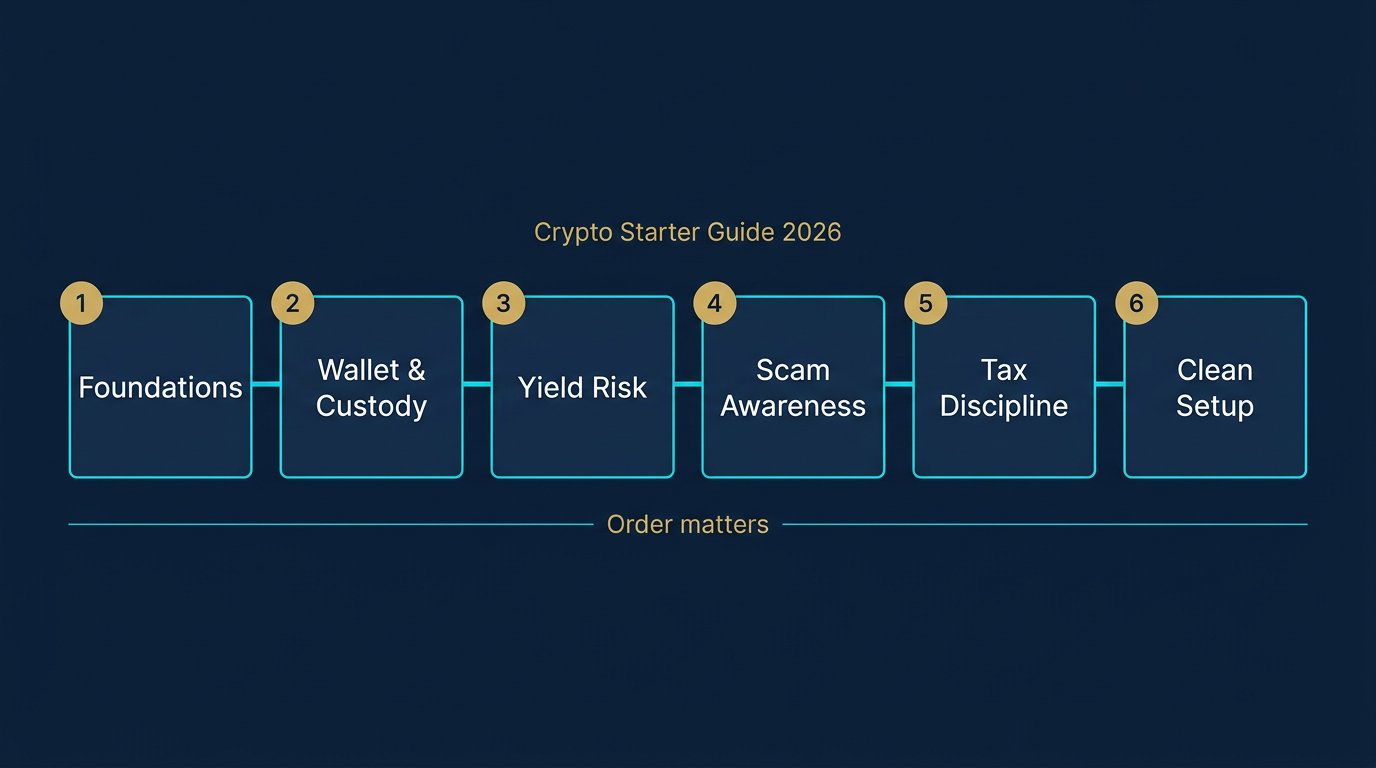
Crypto in 2026 is no longer experimental. It is regulated, surveilled, taxed, attacked, and aggressively marketed. That makes it powerful, and dangerous. This crypto starter guide 2026 is not about hype. It walks you through security, wallets, staking, scams, and taxes in the correct order, with every section linking deeper into detailed breakdowns. If you are new or rebuilding after mistakes, start here.
This content is for educational purposes only and should not be considered financial or investment advice.
This article may contain affiliate links. Snout0x may earn a commission at no additional cost to you.
Security failures destroy more portfolios than market crashes.
Key Takeaways
- Control your private keys before chasing yield or returns.
- Use a hardware wallet for any holdings above approximately €1,000.
- Every yield percentage compensates for a specific risk you are accepting.
- Track transactions from day one to avoid tax surprises later.
- Scams exploit human behavior, not blockchain vulnerabilities.
1. What Crypto Actually Is (Without the Hype)
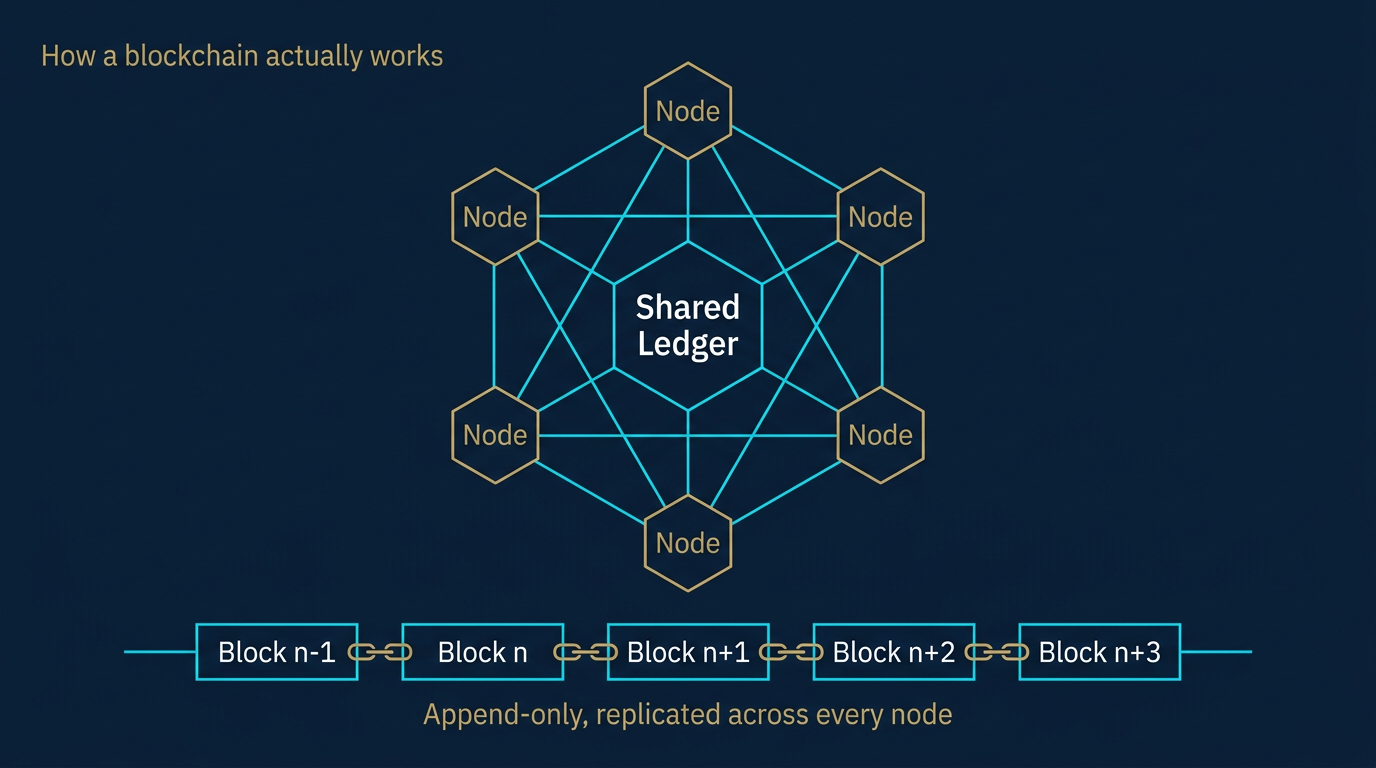
Most people still don’t understand blockchain.
They understand price charts.
If you need a clean explanation of the foundation, start here:
👉 What Is Blockchain? How It Works Explained Simply
Blockchain is not magic.
It is distributed record-keeping.
Understanding this changes how you think about:
- Custody
- Trust
- Exchanges
- Self-storage
- Regulation
Once you understand blockchain, you stop treating crypto like a stock.
2. Wallets: The Most Important Decision You Will Make
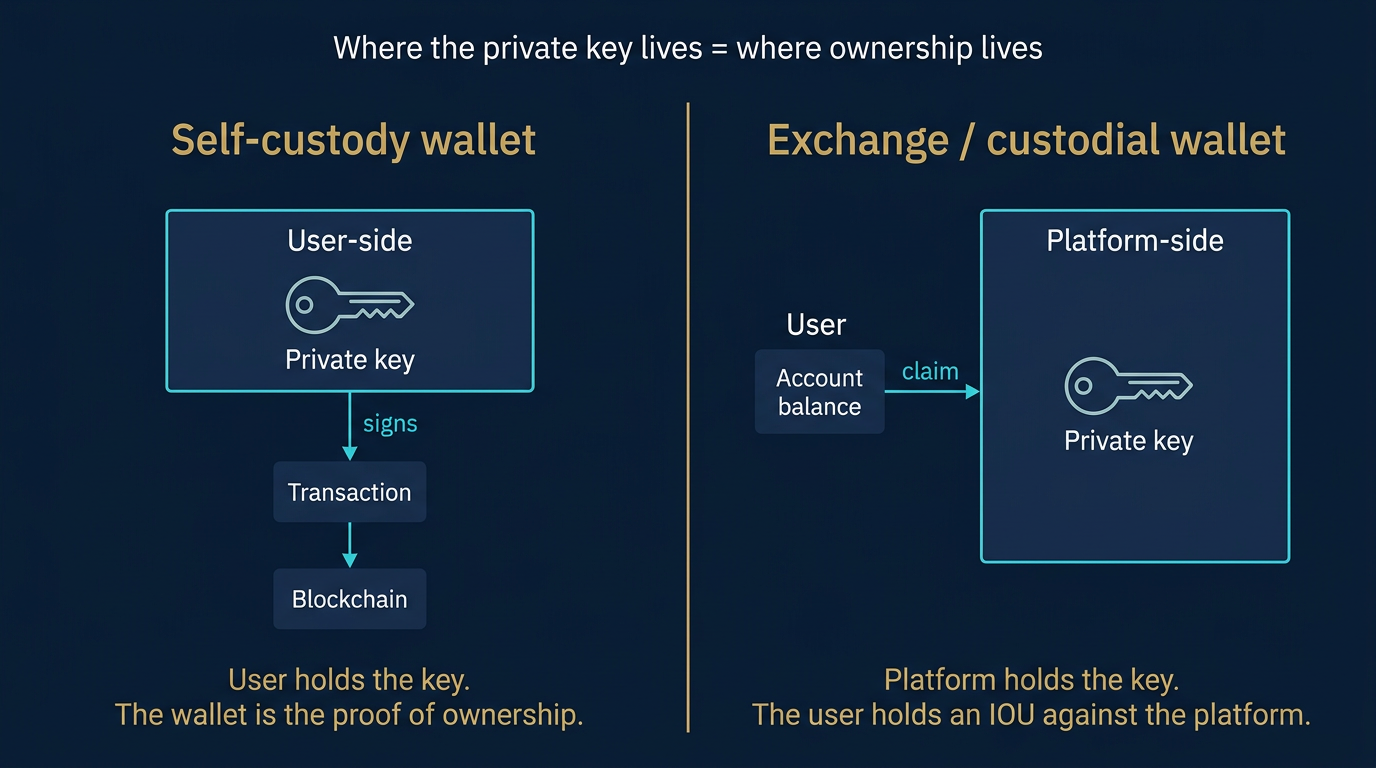
In crypto, ownership is not defined by your account.
Your private keys define it.
If you do not control your keys, you do not control your assets.
Crypto security starts with custody. Before you think about staking, yield, trading, or passive income, you must decide how you will store your assets.
There are two primary wallet categories:
Hot Wallets
Connected to the internet.
Examples include mobile wallets, browser extensions, and exchange wallets.
They are optimized for:
- Speed
- Accessibility
- Daily transactions
- DeFi interaction
But they exist in an environment constantly exposed to:
- Phishing
- Malware
- Smart contract exploits
- SIM swap attacks
- Device compromise
Convenience increases exposure.
Cold Wallets
Offline, hardware-based devices that store private keys in isolated environments.
They are optimized for:
- Long-term storage
- Larger balances
- Reduced attack surface
- Physical transaction confirmation
Cold wallets do not eliminate risk, but they significantly reduce remote attack vectors by isolating the signing process from internet-connected devices.
Why This Decision Matters
Most catastrophic crypto losses are not market losses.
They are custody failures.
- Exchange freezes
- Hacks
- Compromised mobile wallets
- Phishing approvals
- Lost seed phrases
Your wallet structure determines your survivability.
If you are storing long-term holdings in a hot wallet, you are unnecessarily increasing risk.
If you are leaving funds on exchanges indefinitely, you are accepting counterparty risk.
Security is not about paranoia.
It is about containment.
If you want to understand what cold storage actually means and how air-gapped wallets differ, start here:
👉 Cold Storage vs Air-Gapped Wallets: What’s the Difference?
Hardware Wallet Reviews
Once you decide to move to cold storage, the next question becomes practical:
Which device should you trust with your keys?
Not all hardware wallets are built the same. Differences matter in:
- Secure element architecture
- Open-source transparency
- Firmware update models
- Passphrase implementation
- Backup and recovery design
- Physical attack resistance
- Ease of use for beginners
Some devices prioritize maximum transparency.
Some prioritize secure chip architecture.
Some optimize for mobile integration.
Some aim for simplicity.
The right choice depends on your:
- Portfolio size
- Technical comfort level
- Travel habits
- Threat model
- Long-term holding strategy
What does not change is this:
If you are holding meaningful value, you should not rely solely on a hot wallet.
Here are in-depth breakdowns to help you choose correctly:
These reviews go beyond marketing claims and examine real-world use cases, trade-offs, and limitations.
The rule:
If you store more than €1,000 long term, use hardware.
Understanding Your Threat Model
Security is not one-size-fits-all.
Your wallet choice should reflect your threat model, meaning the realistic risks you are exposed to.
Ask yourself:
- Are you storing €500 or €50,000?
- Do you travel frequently?
- Do you hold assets long term without touching them?
- Do you interact with DeFi contracts regularly?
- Could you be targeted due to online visibility?
- Is physical theft a realistic concern?
There are three common threat levels for retail investors:
Low Threat Model
- Small portfolio
- Minimal public exposure
- Infrequent transactions
- A basic hardware wallet is sufficient
Moderate Threat Model
- Meaningful long-term holdings
- Active DeFi usage
- Travel with devices
- Strong passphrase usage is recommended
- Segregated wallets (vault + spending)
Elevated Threat Model
- Large holdings
- Public online presence
- Regular transactions
- Multi-device setup
- Passphrase + hidden wallets
- Possibly multi-signature configuration
Most people overestimate market risk and underestimate operational risk.
Market volatility does not destroy portfolios.
Security failures do.
Your hardware wallet is not just a device.
It is the physical boundary between your assets and the internet.
Choose accordingly.
3. CeFi vs DeFi: Where You Earn Matters
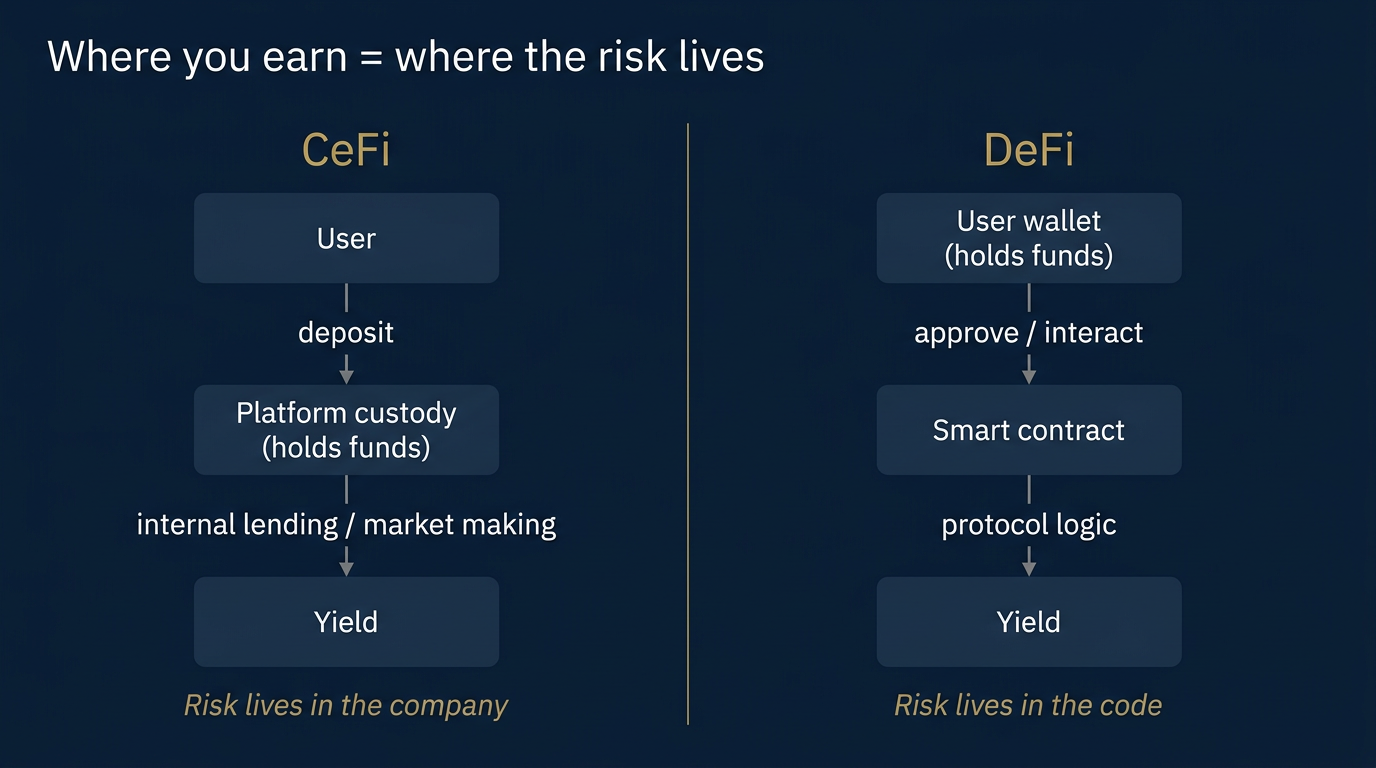
After wallets, the next major decision beginners make is where to earn yield.
This is where most losses happen.
Many investors jump straight into “earning passive income” without understanding what they are actually participating in.
There are two primary environments where yield exists:
CeFi (Centralized Finance)
Platforms such as exchanges or regulated lending services hold your assets and generate yield on your behalf.
You are trusting:
- The company’s solvency
- Their risk management
- Their internal lending practices
- Their regulatory compliance
If the platform fails, freezes withdrawals, or mismanages funds, you are exposed.
You do not control the keys.
DeFi (Decentralized Finance)
Smart contracts handle lending, liquidity provision, and staking.
You retain custody through your wallet.
However, you are exposed to:
- Smart contract bugs
- Oracle manipulation
- Liquidity pool imbalance
- Protocol governance risk
- Exploit events
There is no customer support desk.
There is no refund mechanism.
The Real Risk: Counterparty vs Contract
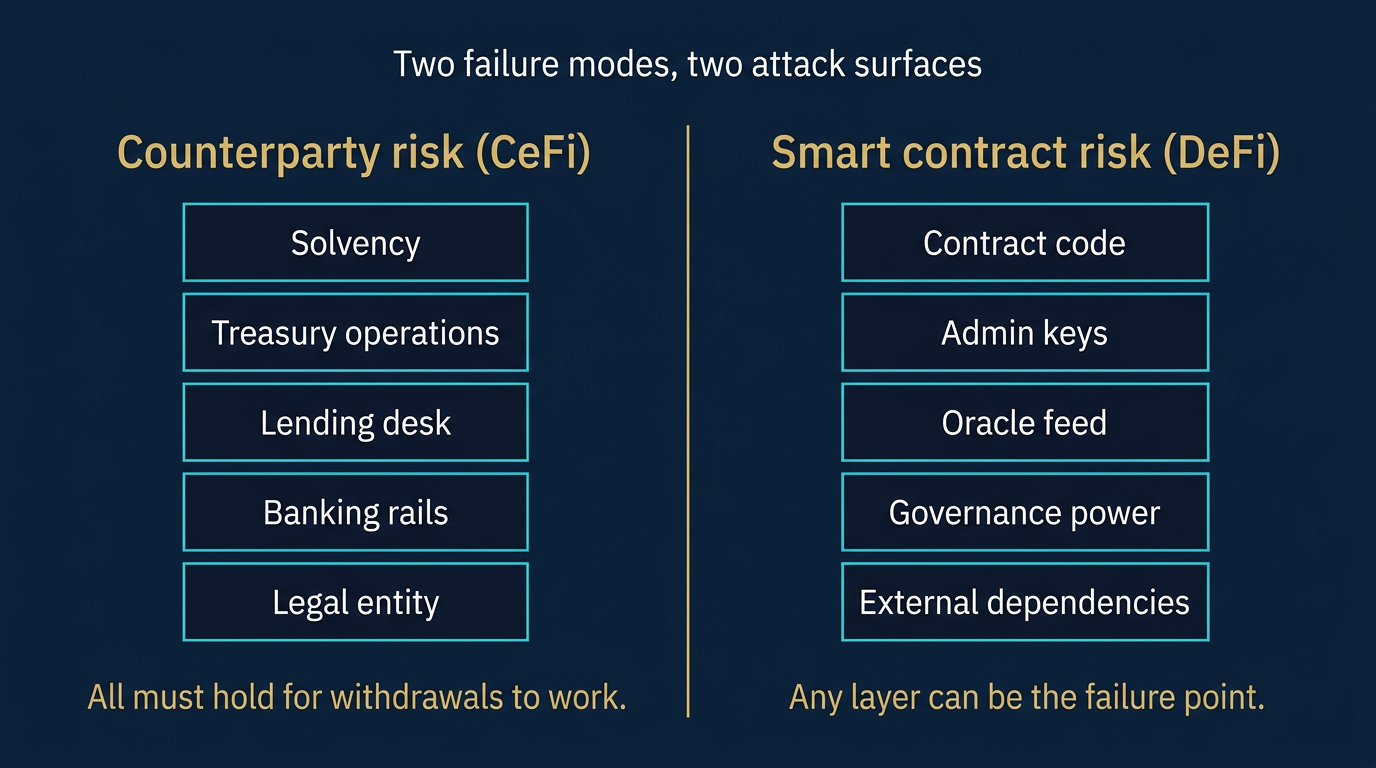
CeFi risk is counterparty risk.
DeFi risk is protocol risk.
Both can fail.
The difference is transparency and control.
In CeFi, you rely on disclosures and audits.
In DeFi, you rely on code and on-chain behavior.
Understanding this distinction is foundational before you chase any percentage yield.
Because yield is never free.
It is always compensation for risk.
If you don’t fully understand the structural difference between centralized and decentralized yield, start here:
👉 CeFi vs DeFi: Risks, Benefits, and Strategy in 2026
For a comprehensive breakdown of realistic yield strategies, see:
👉 Best Crypto Passive Income (2026): 5 Low-Risk Strategies (No Ponzis)
Before chasing yield, read:
Because yield without context is bait.
4. Passive Income Reality Check
Passive income in crypto exists.
But it is rarely passive.
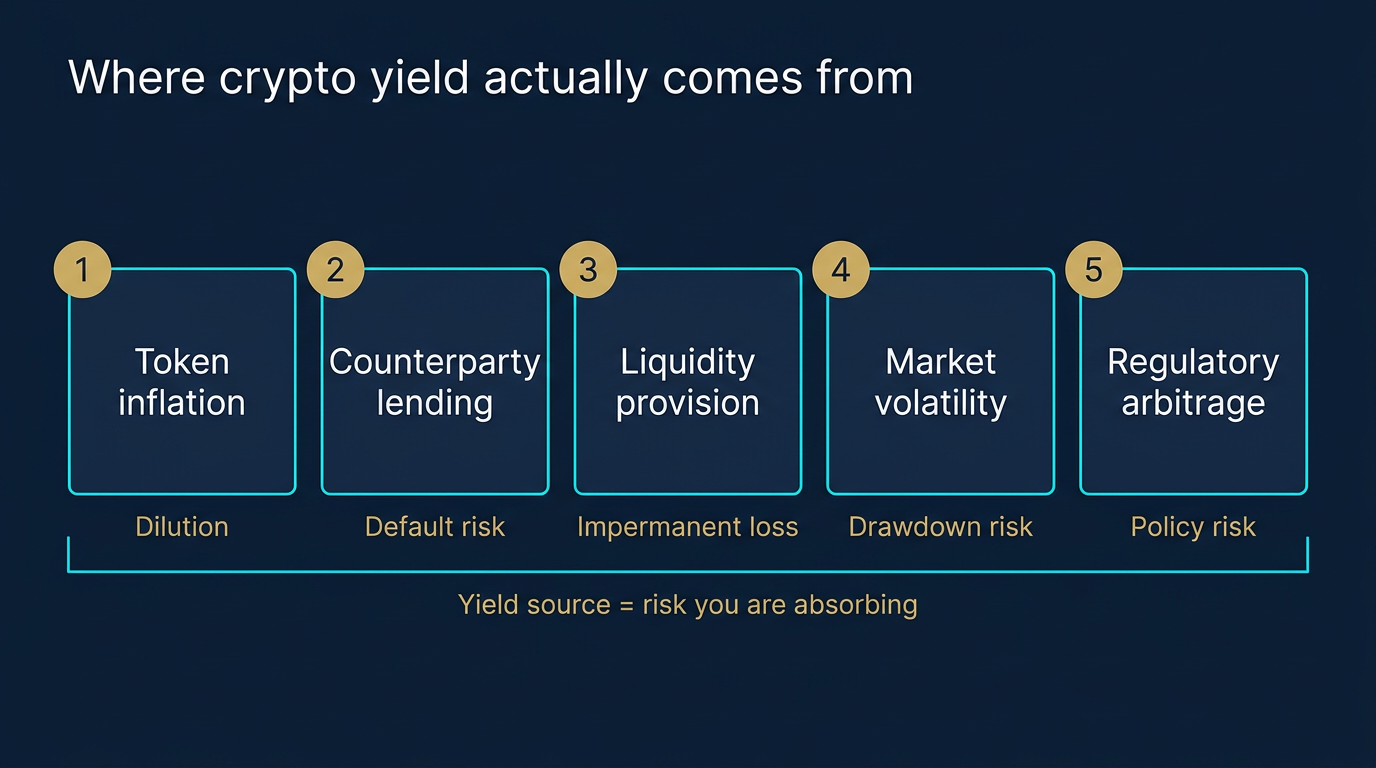
Yield in crypto is not interest in the traditional banking sense. It is compensation for risk. Every percentage point comes from somewhere, and that “somewhere” determines your exposure.
There are only a few structural sources of crypto yield:
1. Token Inflation
Many staking rewards are paid through newly issued tokens. Your yield may be offset by dilution if demand does not increase proportionally.
2. Counterparty Lending
Centralized platforms generate yield by lending your assets to traders, institutions, or market makers. If borrowers default or platforms mismanage collateral, lenders absorb the damage.
3. Liquidity Provision Risk
Providing liquidity to decentralized exchanges exposes you to impermanent loss, price divergence, and smart contract vulnerabilities.
4. Market Volatility
High APY often correlates with high volatility. A 15% annual yield means little if the underlying asset drops 40%.
5. Regulatory Arbitrage
Some yields exist only because a jurisdiction temporarily allows it. When regulations change, those opportunities disappear overnight.
Yield is not free money.
It is structured risk.
Why “Passive” Is Misleading
True passive income implies:
- Low maintenance
- Low monitoring
- Low structural risk
Crypto yield typically requires:
- Active monitoring
- Understanding protocol mechanics
- Tracking governance changes
- Watching regulatory developments
- Monitoring platform solvency
If you are not willing to monitor it, you should not be allocating meaningful capital to it.
The Automation Trap
Trading bots, automated yield optimizers, and “set and forget” strategies appeal to beginners because they promise efficiency.
But automation does not remove risk.
It scales it.
This is where beginners usually lose money.
Not from Bitcoin.
From yield fantasies.
5. Surviving Scams (This Is Mandatory Reading)
Most crypto losses are not market losses.
They are operational losses.
They are trust mistakes.
They are urgent mistakes.
They are social engineering mistakes.
Bitcoin volatility does not usually wipe out portfolios.
Scams do.
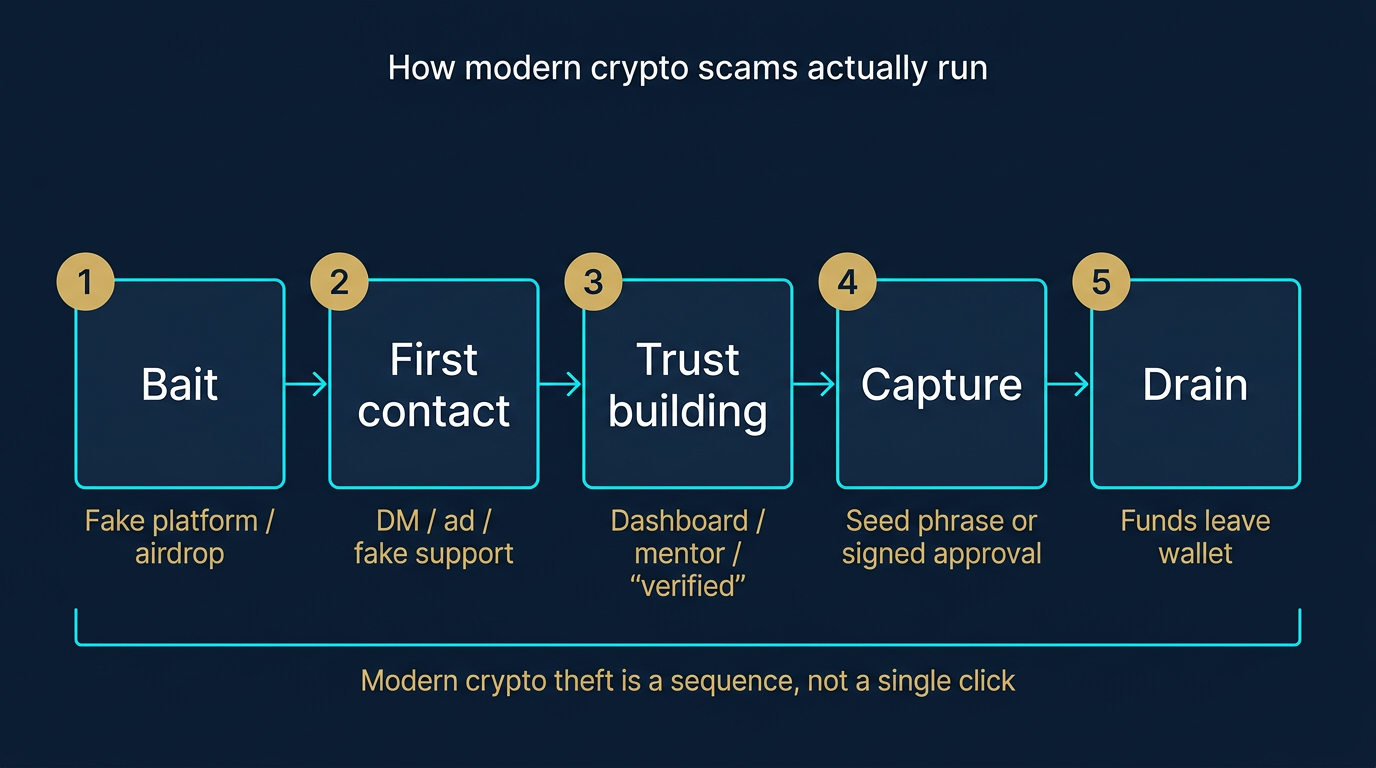
In 2026, attackers no longer rely on obvious phishing emails. They use:
- Fake investment platforms with real-looking dashboards
- Deepfake videos and impersonation accounts
- Romance and long-term grooming tactics
- Fake recovery services
- Malicious browser extensions
- Approval-based wallet drainers
- Airdrop traps and signature exploits
These attacks do not break blockchain security.
They manipulate human behavior.
The Core Rule
If someone is promising:
- Guaranteed returns
- Exclusive access
- Limited-time yield
- Insider opportunity
- Recovery help after a hack
You are the target.
There is no “customer support” in decentralization.
There is no chargeback.
There is no fraud department.
Once you sign a malicious transaction, it is final.
You must understand how modern crypto scams actually work:
👉 The Biggest Crypto Rug Pulls of 2025
👉 The Pig Butchering Scam
Security > strategy.
Always.
6. Taxes & Regulation (The Part Everyone Ignores)
Crypto is no longer invisible.
In 2026, blockchain activity is traceable, exchanges are reporting, and governments are building structured compliance frameworks.
The era of “no one will notice” is over.
Regulators are not banning crypto.
They are standardizing it.
That means:
- Exchange reporting requirements
- Cross-border data sharing
- Stablecoin oversight
- DeFi monitoring discussions
- Mandatory transaction reporting in many jurisdictions
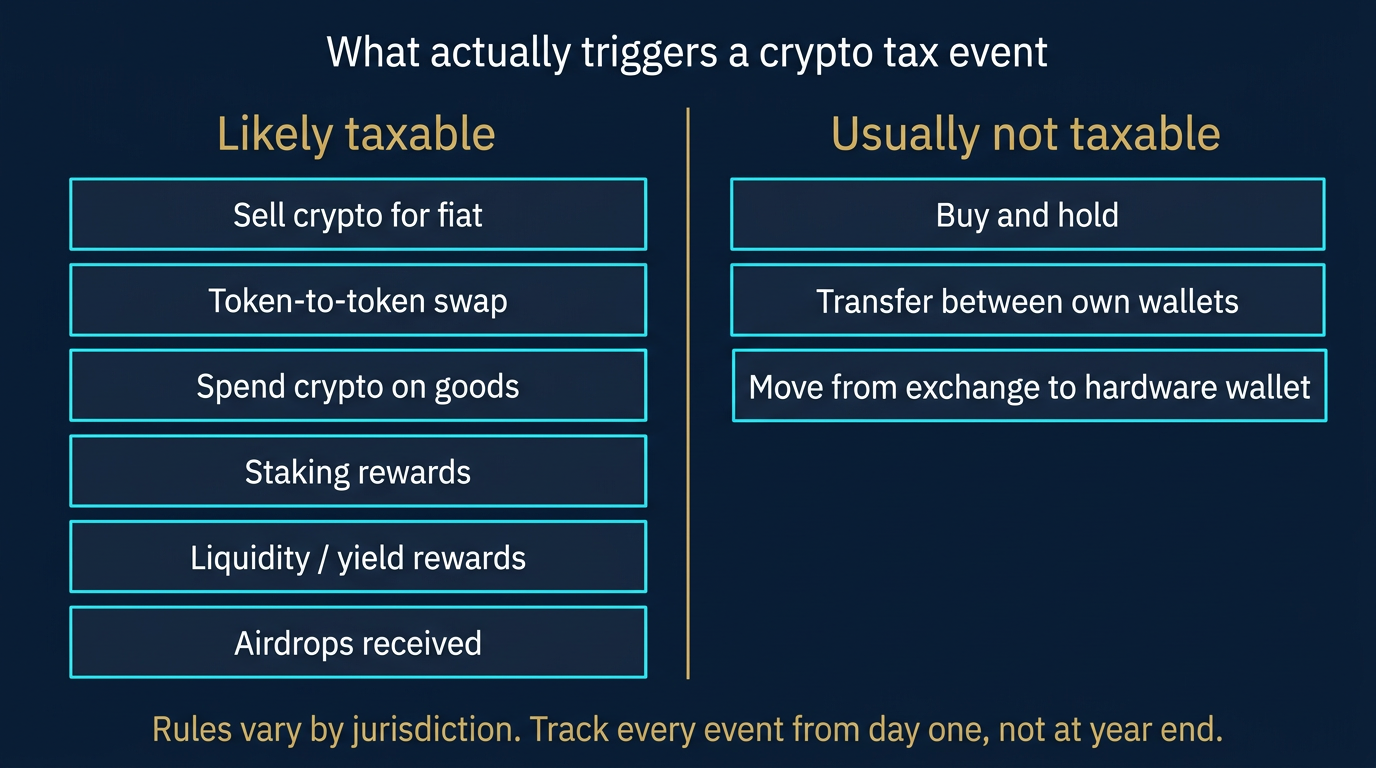
If you earn yield, you likely owe tax.
If you trade, you likely owe tax.
If you stake, you may owe tax at both reward issuance and sale.
Ignoring tax obligations does not make you decentralized.
It makes you exposed.
The Hidden Risk
Many investors focus heavily on wallet security and scam protection, but neglect tax tracking.
Poor record-keeping can lead to:
- Misreported gains
- Overpaying tax
- Underreporting income
- Compliance penalties
- Stress during audits
Crypto creates complex events:
- Token swaps
- Wrapped assets
- Bridging
- Airdrops
- Liquidity rewards
- Governance tokens
Each may carry tax implications depending on jurisdiction.
Structure protects you not only from hackers, but from future regulatory surprises.
If you need clarity on tools and current regulation trends, start here:
👉 Best Crypto Tax Software 2026: CoinLedger, Koinly & CoinTracking Ranked
👉 The CLARITY Act 2026
If you earn yield, you owe tax.
If you trade, you owe tax.
Ignoring this is not decentralization.
It’s negligence.
Crypto Starter Guide 2026: Tax Discipline
You do not need a complex accounting system on day one.
You need consistency.
Most crypto tax problems happen because people try to reconstruct years of activity retroactively.
Instead, build simple discipline from the start:
1. Separate Activity by Purpose
Use different wallets for:
- Long-term storage
- DeFi interaction
- Experimental trades
Clean separation makes tracking dramatically easier.
2. Track Every On-Ramp and Off-Ramp
Document:
- Fiat deposits
- Fiat withdrawals
- Exchange transfers
These are anchor points for tax reporting.
3. Assume Every Swap Is a Taxable Event
In many jurisdictions, token-to-token swaps trigger capital gains calculations.
Do not assume “it’s just crypto moving around.”
4. Track Yield as Income
Staking rewards, lending interest, and liquidity incentives may be treated as income at the time received.
That means:
- You may owe tax even if you did not convert to fiat.
- You may owe tax even if the asset later drops in value.
Understanding this early prevents surprises.
5. Use Software Early, Not Later
The longer you wait, the harder reconciliation becomes.
Start using tracking software from your first meaningful transaction.
It costs less than retroactive panic.
6. Think Long-Term Compliance
Regulation is increasing transparency.
Build your system as if future reporting standards will tighten, because they likely will.
Compliance is not anti-crypto.
It is operational maturity.
Security protects your assets.
Tax discipline protects your future.
Both matter.
7. Crypto Starter Guide 2026: Tools You Actually Need
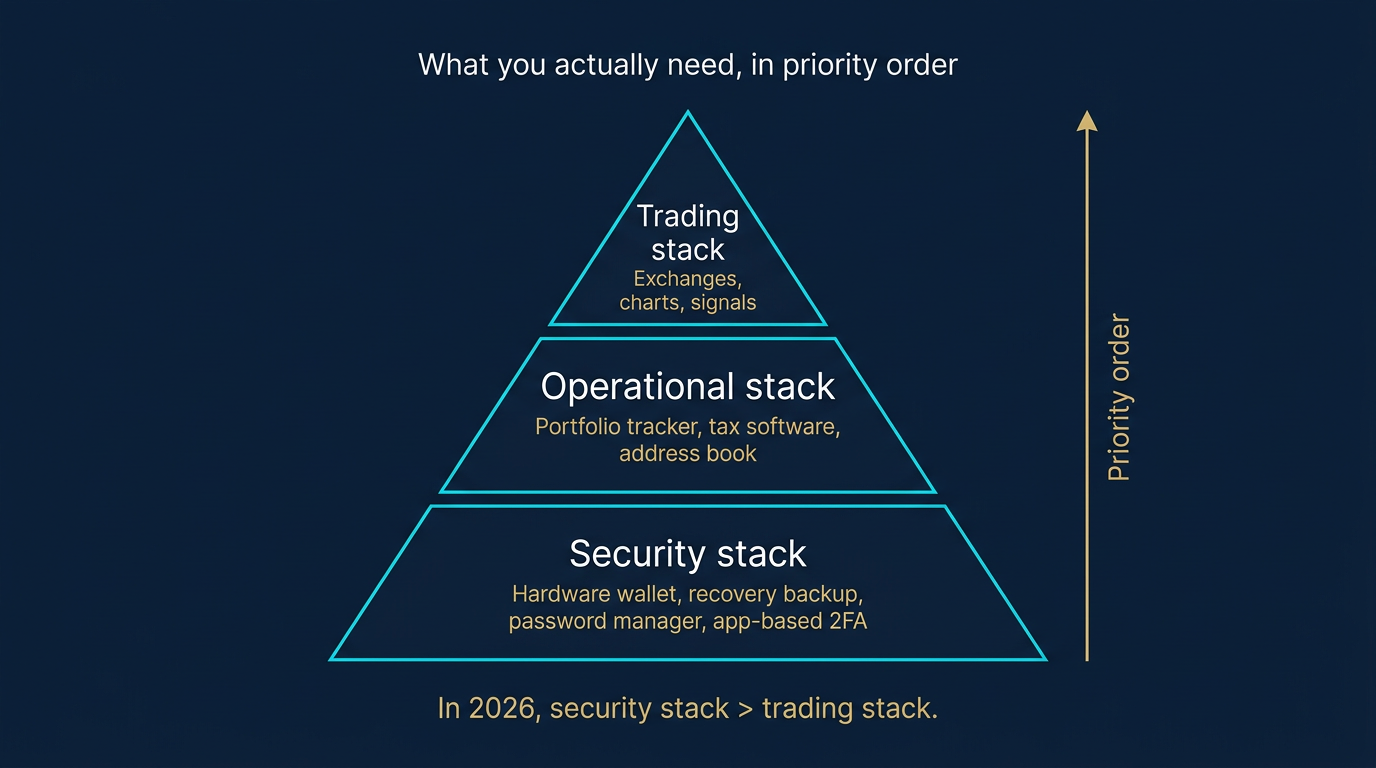
Every crypto starter guide 2026 comes down to the same principle: structure over apps.
You don’t need 25 apps.
You need structure.
Start with:
Then build from there.
In 2026, security stack > trading stack.
8. A Beginner’s Clean Setup (Step-by-Step)
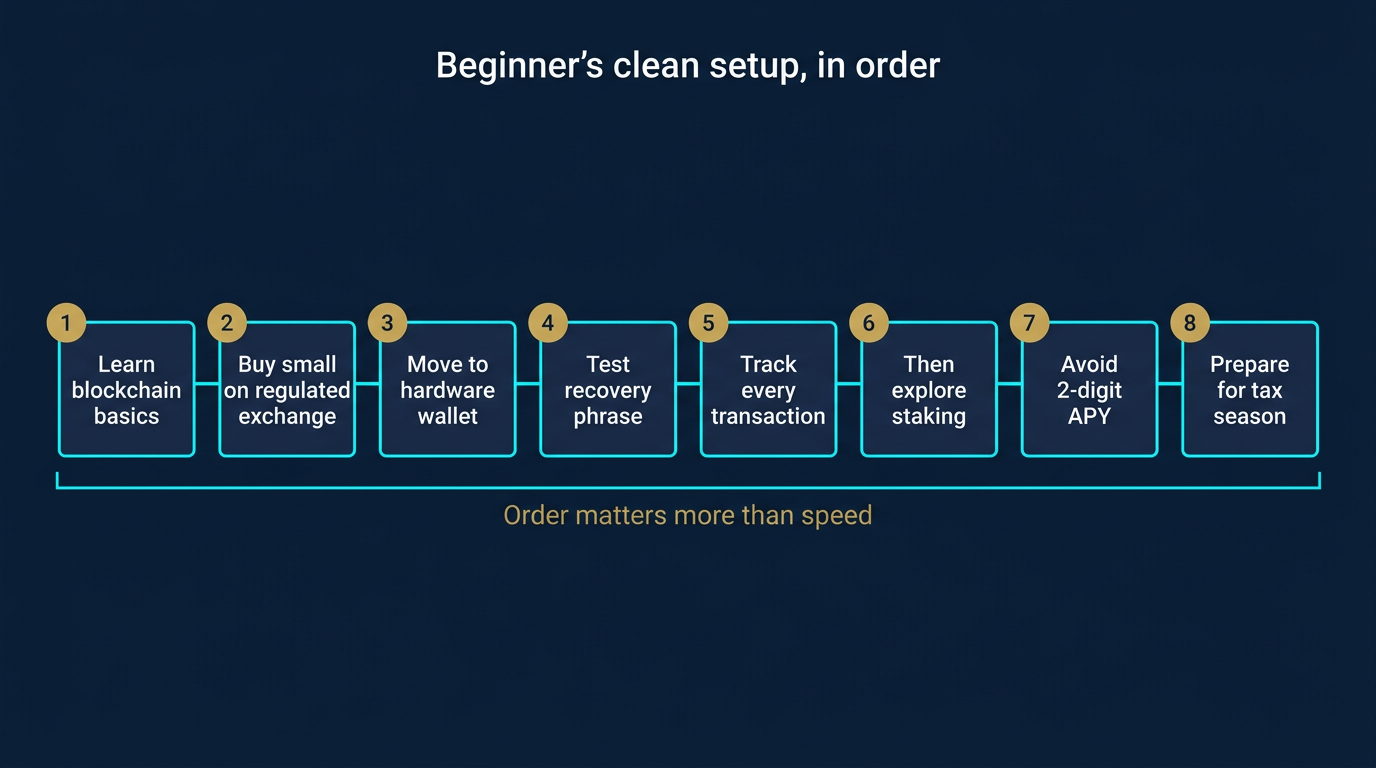
If starting from zero:
- Learn blockchain basics.
- Buy small through a regulated exchange.
- Move to a hardware wallet.
- Test recovery phrase.
- Track transactions.
- Only then explore staking.
- Never chase 2-digit APY blindly.
- Prepare for tax season.
If that sounds boring, good.
Boring survives.
9. Common Beginner Mistakes
- Leaving funds on exchanges
- Screenshotting seed phrases
- Using SMS 2FA
- Chasing influencer coins
- Ignoring wallet updates
- Not testing recovery
- Believing in conspiracy over fundamentals
Crypto rewards discipline.
Not excitement.
Final Section
Crypto is not about getting rich.
It is about:
- Sovereignty
- Risk management
- Controlled exposure
- Understanding systems
If you treat it like gambling, it will treat you like prey.
If you treat it like infrastructure, it becomes leverage.
Start structured.
Move slowly.
Protect your keys.
Sources
- Markets in Crypto-Assets Regulation (MiCA) (European Securities and Markets Authority)
- How Bitcoin Works (Bitcoin.org)
- Ethereum Security and Scam Prevention (Ethereum Foundation)
Frequently Asked Questions
How do I start investing in crypto safely in 2026?
Start with a reputable centralized exchange that has identity verification and regulatory oversight. Buy a small amount to learn how it works. Immediately learn the difference between holding on an exchange and holding your own keys. Never invest more than you can afford to lose entirely, and spend more time learning than buying.
What wallet should a crypto beginner use?
For small amounts and learning, a software wallet like MetaMask or Trust Wallet is a practical starting point. Once you accumulate more than a few hundred dollars, a hardware wallet like a Trezor Safe 3 or Ledger Nano S Plus provides significantly better security by keeping private keys offline.
Do I need to pay tax on crypto?
In most jurisdictions, yes. Selling, trading, or using crypto to make purchases are typically taxable events triggering capital gains or income reporting requirements. Rules vary by country. Using crypto tax software like CoinLedger helps track transactions and generate accurate reports. Consult a tax professional familiar with crypto in your jurisdiction.
What is the biggest mistake crypto beginners make?
Leaving funds on exchanges they do not fully control. Exchanges can freeze withdrawals, become insolvent, or be hacked. Learning self-custody by holding your own private keys in a personal wallet is the single most impactful security step a new crypto user can take.
What is the difference between a hot wallet and a cold wallet?
A hot wallet is connected to the internet, making it convenient for transactions but exposed to software and network attacks. A cold wallet stores private keys on hardware that is never connected to the internet during normal use. Cold storage is the recommended setup for holding any amount of crypto you are not actively trading.