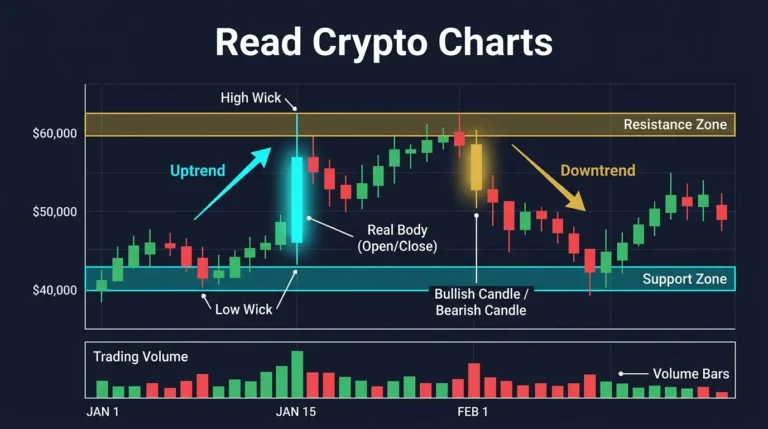


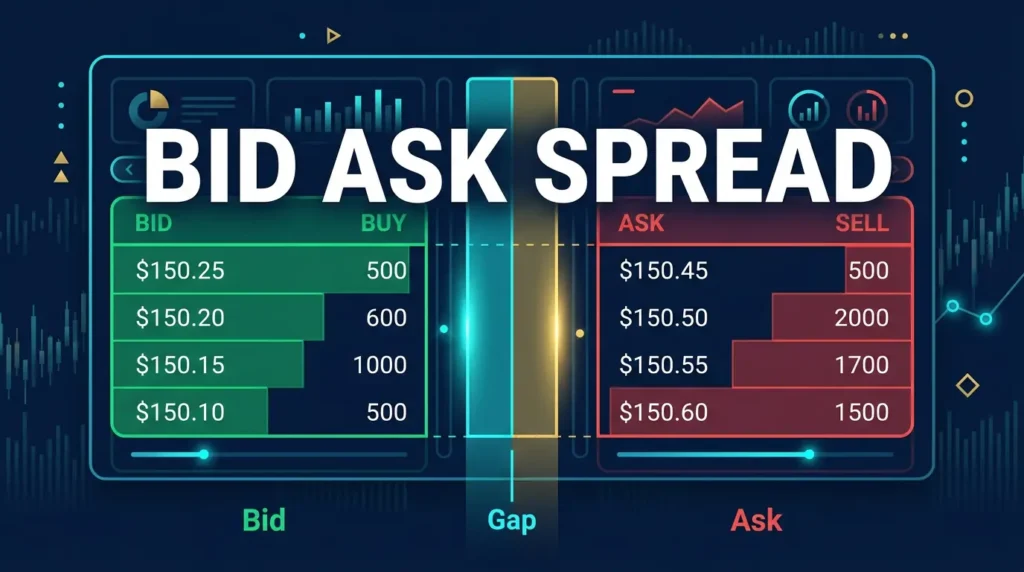
In crypto markets, the bid is the highest price a buyer is currently willing to pay, and the ask is the lowest price a seller is currently willing to accept. The gap between them is the spread. That spread is one of the fastest ways to judge how easy or expensive it may be to enter or exit a trade.
A simple mental model helps: the bid is the market offering to buy from you right now, while the ask is the market offering to sell to you right now. If you want immediate execution, you usually trade against one of those visible prices rather than waiting for someone else to meet your preferred level.
This content is for educational purposes only and should not be considered financial or investment advice.
Key Takeaways
- The bid is the top current buy price: It is what the market is offering to pay a seller now.
- The ask is the top current sell price: It is what the market is offering to sell at now.
- The spread is the gap between them: A tighter spread usually means smoother execution.
- Market orders cross the spread: Buying immediately usually hits the ask, and selling immediately usually hits the bid.
- Wide spreads can be a warning sign: They often signal thinner liquidity, more slippage, or weaker market quality.
What Bid and Ask Mean in Practice
The bid and ask are not abstract labels. They are the two best live prices sitting at the top of the market. If you are selling immediately, the bid is the best currently available buyer. If you are buying immediately, the ask is the best currently available seller.
Real-world example: if BTC has a best bid of 69,950 USDT and a best ask of 70,000 USDT, a trader who wants to buy instantly will likely pay around 70,000 first. A trader who wants to sell instantly will likely receive around 69,950 first. The 50 USDT gap between those two prices is the spread.
What the Spread Actually Tells You
The spread tells you how far apart the nearest buyer and seller currently are. In active markets, that gap is often small. In thinner or more volatile markets, it can widen noticeably. A tight spread usually points to more competition and better execution conditions. A wide spread often means you may pay more to enter or give up more value to exit.
Operator insight: beginners often think only in terms of chart direction, but execution starts before price movement. If the spread is already wide, you begin the trade at a disadvantage even before the market moves against you.
Why Market Orders and Limit Orders Behave Differently
A market order is designed to fill immediately, so it usually crosses the spread and trades against resting liquidity. A limit order is designed around a chosen price, so it may wait in the book until someone else accepts it. That means the same market can feel expensive with a market order but more controlled with a patient limit order.
This distinction matters most when spreads are wide or order-book depth is thin. In those situations, immediate execution can cost more than many beginners expect.
How This Connects to the Order Book
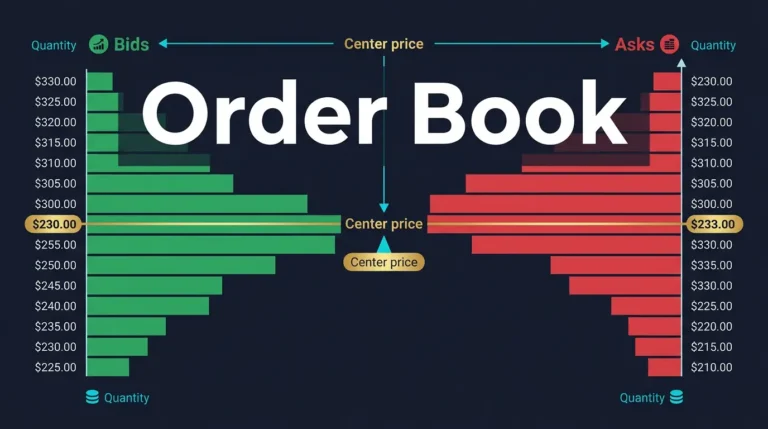
The best bid and best ask sit at the top of the order book. Everything below them on the buy side and above them on the sell side shows deeper layers of liquidity. If you need the full structural picture, the local foundation is What Is a Crypto Order Book?. This article focuses on the prices you interact with first when you trade.
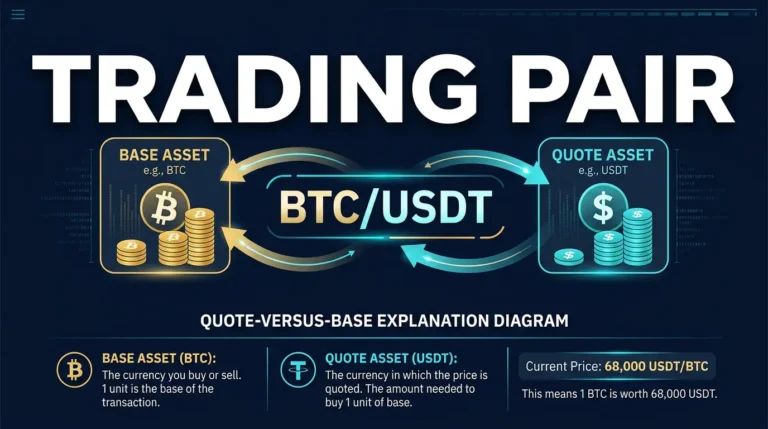
The related pair context matters too. Each market has its own separate spread and liquidity profile. BTC/USDT, ETH/USDT, and ETH/BTC are not interchangeable just because they involve similar assets. The pair determines which market you are actually crossing, as explained in What Is a Crypto Trading Pair?.
What a Tight Spread Usually Means
A tight spread often means buyers and sellers are competing closely around the current price. That usually happens in deeper, more active markets. For traders, this often translates into lower immediate transaction cost, smaller slippage for modest orders, and easier price discovery.
That does not mean the market is safe or predictable. It only means the distance between the nearest visible buy and sell prices is relatively small at that moment.
What a Wide Spread Usually Means
A wide spread often points to weaker liquidity, lower participation, or temporary uncertainty. Small-cap pairs, off-hours trading, and sudden volatility can all widen the gap, and spread behavior differs meaningfully between centralized and decentralized exchanges. In these conditions, entering or exiting quickly may be more expensive than the headline price suggests.
Real-world scenario: a coin may show a last-traded price near your target, but if the spread is wide and size near the top of the book is limited, your actual fill can be meaningfully worse once your order starts consuming available liquidity.
Practical Usage: What to Check Before You Trade
- Check the best bid and best ask: This tells you the current two-sided market, not just the last price.
- Look at the spread in actual numbers: A small percentage difference is very different from a wide one in a thin market.
- Check nearby depth: A good top quote matters less if the visible size behind it is tiny.
- Match the order type to conditions: Wide-spread markets often punish careless market orders.
- Treat illiquid pairs with more caution: A quoted price can look fine while actual execution remains poor.
A practical shortcut is this: if you need immediate execution, assume you will interact with the ask when buying and the bid when selling. That simple frame prevents many beginner mistakes.
Why Beginners Get Confused
Many beginners look at one displayed price and assume that is the price they will personally get. But markets are two-sided. The price someone can sell at now is usually not the same as the price someone can buy at now. That difference is small in strong markets and more painful in weak ones.
Another mistake is treating spread as a minor technical detail instead of part of the cost of execution. For active traders and even casual users, spread is one of the clearest early signals of market quality.
Risks and Common Mistakes
- Buying based on the last price only: A trader may see the last BTC trade print at 70,000 and assume that is the live buy price, but if the best ask has already moved to 70,060 during volatility, the order starts with an immediate pricing disadvantage.
- Selling without checking the bid: In a thin altcoin market, the chart can still show a recent trade near your target while the highest actual buyer has dropped much lower, meaning an urgent sale fills far below the price you thought was available.
- Using market orders in wide-spread pairs: A buy order that looks small on screen can first hit the ask, then sweep into higher sell levels because the size resting near the top of the book is limited, producing worse execution than expected.
- Assuming the spread is the full cost: Even if the visible gap looks manageable, exchange fees plus slippage from shallow depth can make the real execution cost meaningfully larger than the quoted spread alone.
Sources
Frequently Asked Questions
What is the bid in crypto?
The bid is the highest current price a buyer is willing to pay for an asset in the market.
What is the ask in crypto?
The ask is the lowest current price a seller is willing to accept for an asset in the market.
What is the spread in crypto?
The spread is the difference between the best available bid and the best available ask at a given moment.
Do market orders pay the ask?
Market buy orders usually fill against the ask side first, while market sell orders usually fill against the bid side first.
Why does a wide spread matter?
A wide spread usually means worse immediate execution, especially if the market is thin or volatile.