

Last Updated on April 14, 2026 by Snout0x
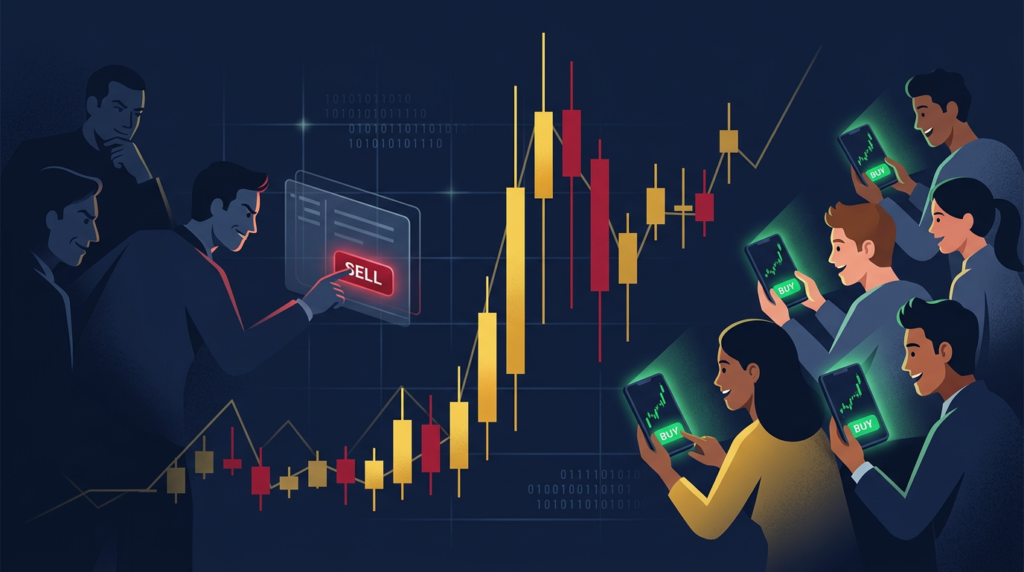
Pump-and-dump schemes are coordinated efforts to rapidly inflate the price of a token and then unload it onto unsuspecting buyers. Understanding how these operations are organized, what signals they leave in price and volume, and how they lure retail traders is essential if you want to participate in crypto without becoming someone else’s exit liquidity.
The practical defense is to treat sudden, unsupported vertical price action as a risk event, not an opportunity. If the move depends on urgency, anonymous coordination, and thin liquidity rather than real news and durable market depth, you are probably looking at a distribution setup rather than a legitimate breakout.
This content is for educational purposes only and should not be considered financial or investment advice.
Key Takeaways
- These schemes coordinate social hype with thin order books to create rapid, unsustainable price spikes.
- Most pumps rely on information asymmetry: organizers plan exits in advance while retail buyers only see “cheap” entry points.
- Order book depth, volume spikes without news, and synchronized social media activity are core detection signals.
- These schemes often overlap with other scam patterns like rug pulls and fake volume, reinforcing broader market manipulation risks.
- The safest strategy is to avoid chasing sudden price moves and focus on assets with real liquidity, transparency, and on-chain history.
How These Schemes Are Structured
Pump-and-dump schemes are not random candles on a chart; they follow a repeatable structure that combines social coordination, thin liquidity, and carefully timed exits. Organizers select tokens with low market capitalization, shallow order books, and few informed holders so that relatively small amounts of capital can move the price dramatically.
Target Selection and Liquidity Engineering
Organizers usually target tokens listed on smaller centralized exchanges or illiquid DEX pairs where order books are thin and surveillance is weak. They may even pre-position liquidity by seeding small buy walls or adding liquidity to a DEX pool, creating the appearance of organic interest. Because the float is small, a coordinated buying wave can push prices up dozens of percent in minutes.
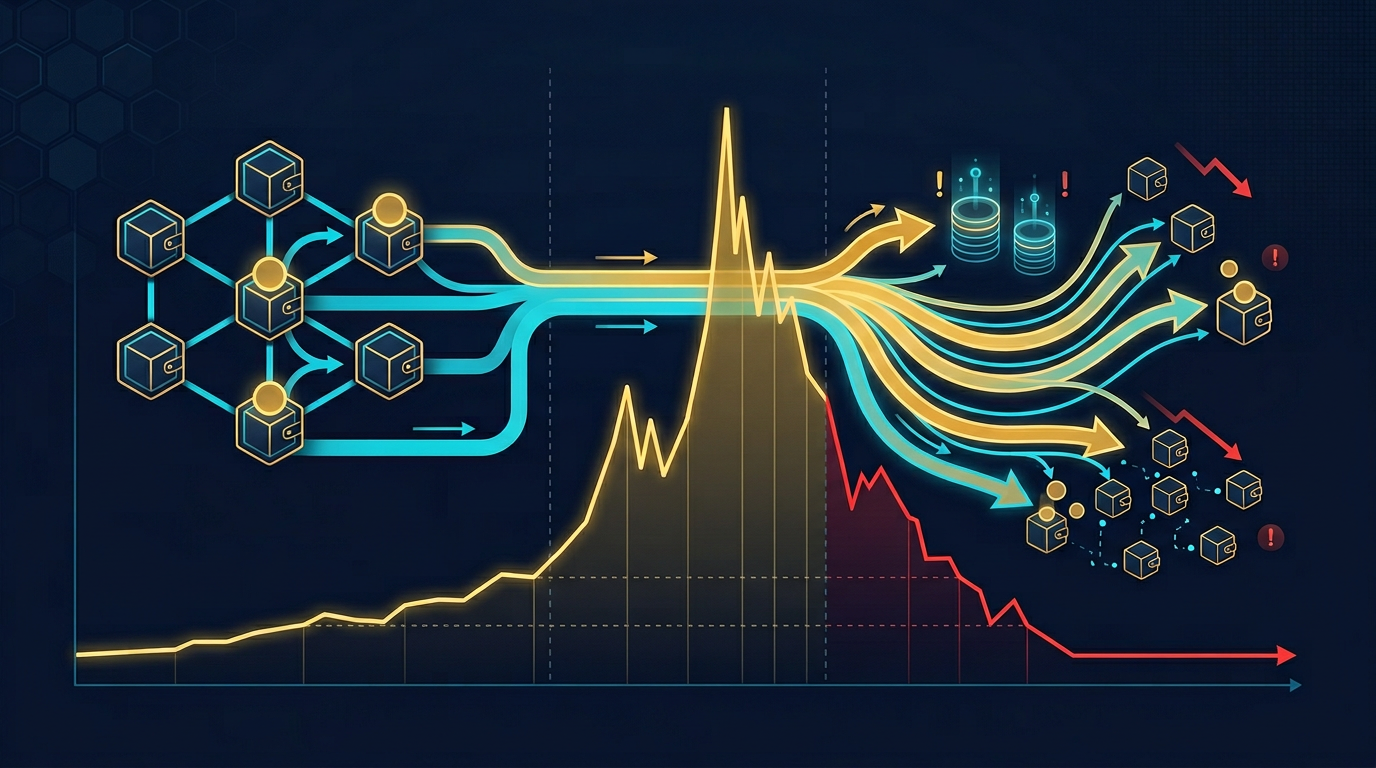
On-chain, this often shows up as a handful of wallets accumulating the token quietly before the public push. Once the “pump phase” begins, these same wallets sit above new buyers in the order book, ready to sell into any spike. The structural goal is simple: concentrate tokens in insider hands first, then offload them onto a much larger crowd of retail traders as price momentum accelerates.
Coordinated Hype and Entry Funnels
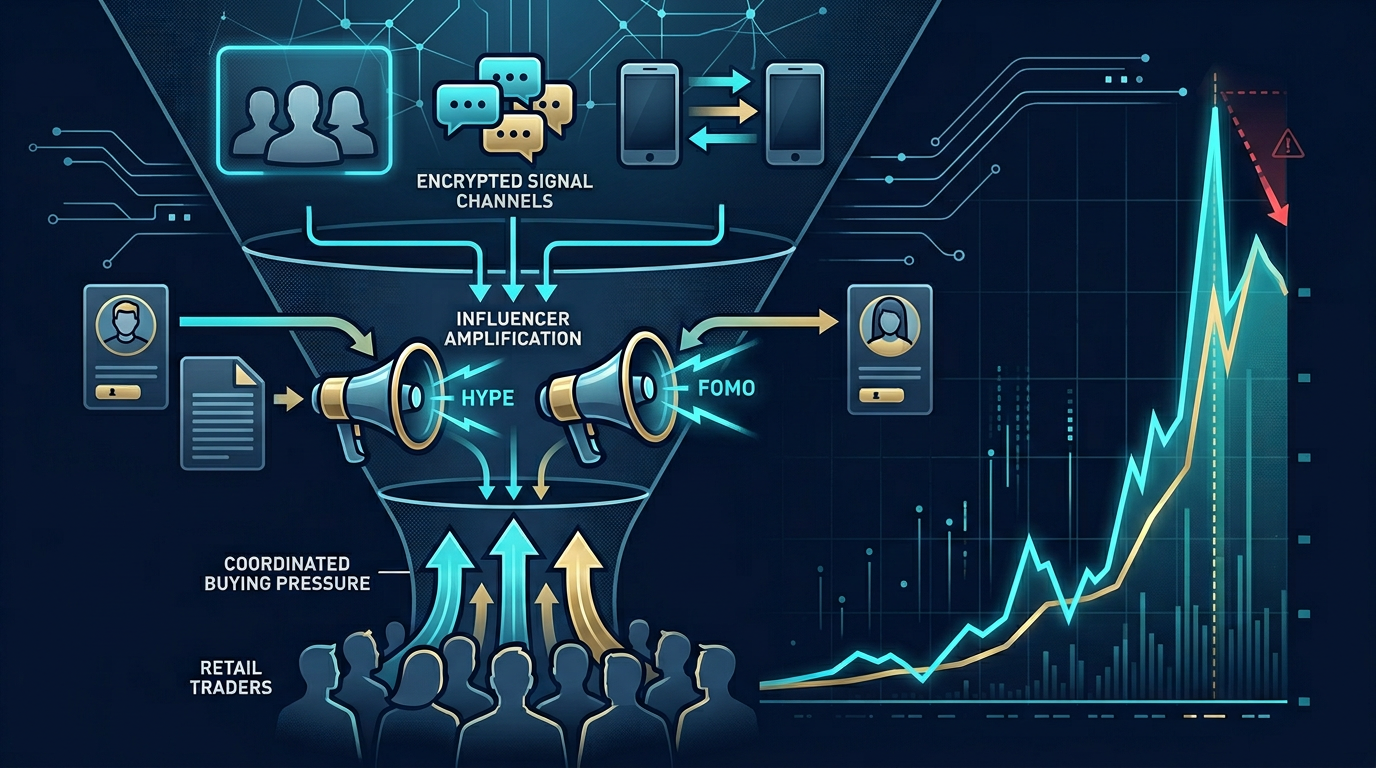
The social layer of these schemes is where most victims enter. Organizers use Telegram groups, Discord servers, X (Twitter) threads, and influencer shoutouts to seed a narrative around “the next 100x micro-cap.” Messages are carefully tuned to create urgency and FOMO: countdowns to the “signal,” hints of insider information, or claims that whales are accumulating quietly.
Retail traders often see only the public side of this funnel, not the private channels where exact entry times and exit targets are discussed. In many cases, “signals” are delayed: insiders buy early, then publish a call to action that reaches the broader group seconds or minutes later. By the time most followers can react, they are already buying at elevated levels while insiders prepare to unload.
Price Action Mechanics of a Pump
The visible part of the move is the chart: a sudden vertical candle, extreme volume, and then a violent reversal. Under the hood, this pattern is created by the interaction between market orders, order book depth, and stop orders placed by traders trying to ride the move.
Thin Order Books and Slippage
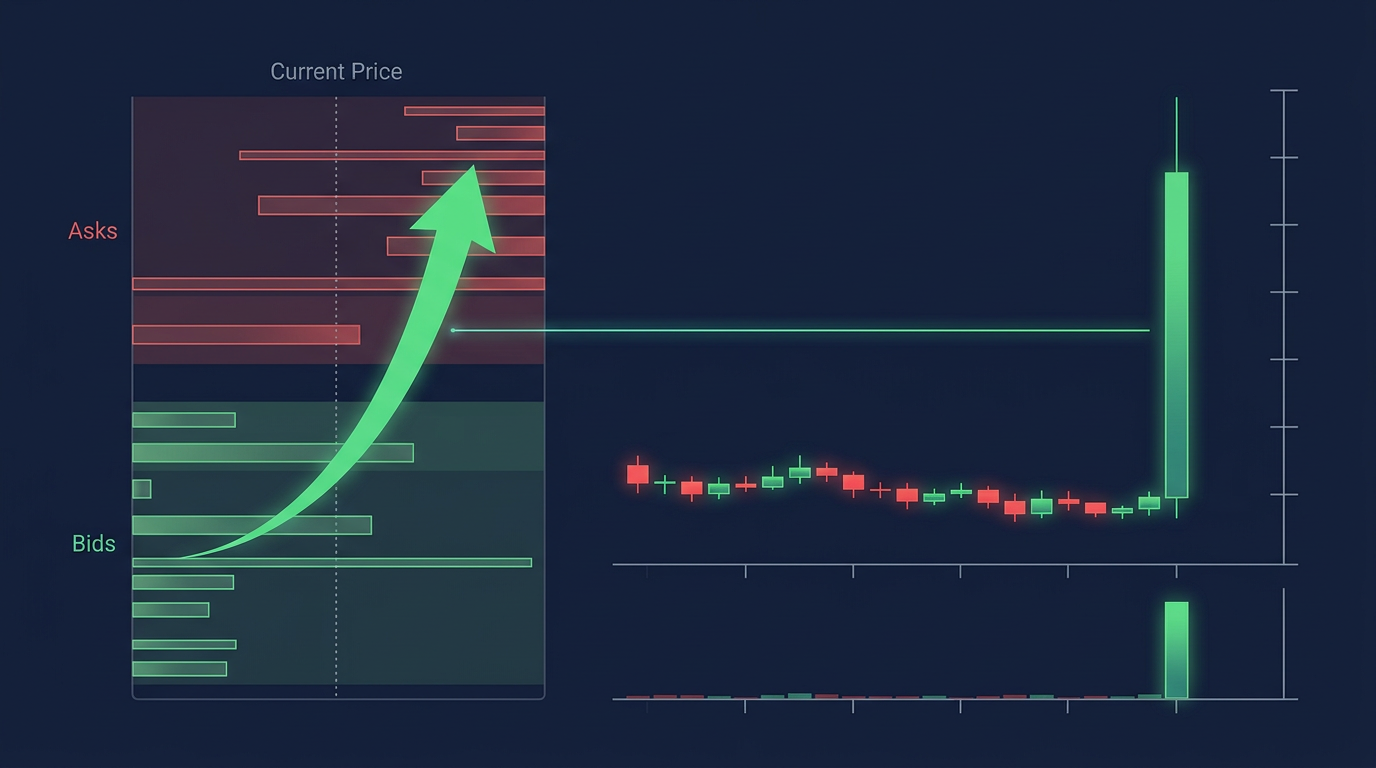
Most targeted tokens trade in environments where the top of the order book may only hold a few hundred or thousand dollars of liquidity. When a wave of coordinated market buys hits, each order has to “walk up” the order book, consuming sell orders and pushing price higher. The result is extreme positive slippage: traders pay far more than the last traded price for their fills.
On DEXs, the same effect happens through automated market maker curves: large buy orders move the price sharply along the curve because the pool is small. In both cases, organizers can use modest capital to create a spectacular price move, which then becomes the visual proof they need to convince latecomers that “the pump has started” and more upside is coming.
Self-Reinforcing Momentum and Liquidity Traps
Once the initial candle appears, momentum traders and bots may enter automatically based on breakout rules. This creates a self-reinforcing loop: rising prices attract more buyers, which pushes price even higher. However, because liquidity is shallow and concentrated among insiders, there is rarely genuine two-sided market depth to support the new level.
Retail traders often believe they can “ride the pump and exit early,” but the mechanics favor the earliest sellers. When insiders begin offloading, they hit bids into an order book now filled with latecomers. As soon as sell pressure exceeds the thin remaining buy interest, the price collapses faster than most participants can react, turning apparent momentum into an illiquid trap.
Dump Phase and Exit Liquidity
The selloff phase is not a single event but a sequence of sells designed to extract maximum value from retail flows. Organizers usually stagger exits across price levels to blend in with general market activity, while still front-running any potential distribution by non-insider holders.
Staggered Exits and Hidden Distribution
Rather than dumping everything at once, insiders sell in tranches into rising volume, often using multiple accounts to avoid obvious on-chain fingerprints. Some may place resting limit orders slightly below the current price, ensuring they get filled as new market orders arrive. Others will use market sells into visible buy walls that they themselves helped build earlier in the pump.
On-chain analytics can sometimes reveal this distribution: clusters of related wallets sending tokens to exchanges right before or during the main spike. When the last tranche of insider tokens has been sold, buy walls are removed, and the price can free-fall through empty order book levels, leaving retail holders with little chance to exit without large losses.
Aftermath: Bagholders, Narrative Shifts, and Repeat Patterns
Once the dump phase is complete, the token’s price typically returns close to or even below its starting level. Telegram groups go quiet, social media attention moves on, and the narrative shifts toward excuses: “market makers pulled liquidity,” “whales took profit,” or “the team will announce new partnerships soon.” In reality, the structural goal of the scheme, transferring value from late entrants to early insiders, has already been achieved.
Many of these schemes target inexperienced traders who have not yet learned basic self-custody and risk control principles. Articles on crypto rug pulls and broader rug pull warning signs are useful context, because they show how this behavior often sits alongside liquidity rugs, fake marketing, and other forms of market manipulation.
Signals That Suggest Manipulation
You cannot predict every coordinated scheme in advance, but you can recognize environments where the probability is high. The main signals fall into three categories: order book and liquidity patterns, price and volume anomalies, and social behavior that hints at coordinated campaigns.
Order Book and Liquidity Red Flags
On centralized exchanges, thin order books are an immediate warning sign. If a token’s top bids and asks only represent a few thousand dollars of total depth within a typical trading range, even a modest influx of buyers can cause violent price moves. Wide spreads between bid and ask prices further increase slippage and make it harder to exit once volatility spikes.
On DEXs, check the size of the liquidity pool and how concentrated it is in one or two wallets. If a single address controls most of the liquidity, that party can pull liquidity or dump tokens rapidly, similar to a rug pull. When this concentration exists alongside aggressive promotional activity, you should assume that any pump could turn into a liquidity event against late buyers.
Price, Volume, and Social Coordination
These operations rarely happen in silence. Look for synchronized spikes in volume, price, and social mentions, especially when there is no genuine news or product release behind the move. If multiple influencers suddenly mention the same low-cap token within a short window, or a Telegram group counts down to a “signal” without clear fundamentals, you are likely seeing orchestrated behavior.
Another red flag is aggressive reframing of risk: organizers claim “it’s not a scam, just a coordinated play,” or they mock anyone asking basic due diligence questions. Similar dynamics appear in other crypto scam patterns and social engineering attacks, where the goal is to silence skepticism long enough for insiders to finish extracting value.
Practical Usage: Screen Tokens Before You Trade
The most effective protection against these schemes is refusing to play the game on their terms. That means avoiding thinly traded tokens, ignoring anonymous “signal” groups, and building a process that treats sudden volatility as a risk event, not an invitation. Your goal is to survive long enough to benefit from legitimate opportunities, not to gamble on orchestrated spikes.
An operator rule worth adopting is to never enter a token because someone else is promising there will be buyers behind you. That is not an investment case. It is a queue. Another good rule is to check whether your planned position size is small enough to exit on current liquidity instead of on the liquidity you hope will appear after you buy.
Position Sizing, Liquidity Filters, and Exit Rules
Before entering any speculative trade, ask whether you can exit without relying on a greater fool. Simple rules help: avoid tokens where 24-hour volume is less than the size of your planned position; reject trades on pairs with extremely wide spreads; and prefer assets listed on reputable exchanges with real liquidity. If a token fails these basic filters, it is a poor candidate for short-term momentum trades.
Equally important are pre-defined exit rules. Decide in advance where you will reduce or close a position, and avoid moving those levels based on emotion. Many victims of these schemes abandon their plans mid-trade, convinced that “one more leg up” is coming. Treat sudden, unexplained spikes as a reason to reduce risk rather than double down.
A common real-world setup looks like this: a low-cap token spikes 60% in minutes, Telegram posts start promising a “second wave,” and buyers focus on the candle instead of the order book depth. By the time most traders place market orders, insiders are already selling into that panic-buy flow. The problem is not just that the chart is extended. The problem is that the exit door is smaller than the crowd trying to reach it.
Education, Scam Awareness, and Long-Term Mindset
Certain scams repeat because they exploit the same psychological vulnerabilities: FOMO, greed, and overconfidence. Strengthening your basic scam awareness, through guides on approval scams, wallet drainers, and social engineering, makes it easier to see this kind of marketing for what it is. Over time, your default reaction to anonymous “100x” calls should be skepticism, not excitement.
A long-term mindset helps here. Investors focused on multi-year outcomes rarely chase anonymous micro-cap calls in illiquid markets. They allocate slowly, prioritize self-custody and security, and use educational resources to understand how hype, urgency, and crowd behavior distort judgment instead of being controlled by them. That approach does not eliminate risk, but it removes you from the most predictable traps.
Risks and Common Mistakes
These schemes sit at the intersection of market structure risk and behavioral mistakes. The mechanical risk is simple: you may be unable to exit anywhere near your entry price once liquidity vanishes. The behavioral risk is that you underestimate how quickly insiders can move and how slowly your own reactions are in comparison.
Common mistakes include ignoring low volume warnings, trusting anonymous organizers, averaging down into sharp drawdowns, and treating obvious manipulation as a sign of future institutional interest. Many victims also concentrate too much capital in a single speculative trade instead of using diversified, safer strategies discussed in broader risk management and self-custody guides.
For adjacent scam context, Social Engineering in Crypto and Crypto Wallet Phishing Attacks help explain why manipulated trades are often marketed with the same urgency and trust tricks seen in other crypto scams.
Sources
- U.S. SEC – Enforcement actions and market manipulation guidance.
- Chainalysis – Crypto crime reporting and scam pattern analysis.
- FBI Internet Crime Complaint Center – Investment fraud and online scam reporting.
Frequently Asked Questions
What is a pump-and-dump scheme?
A pump-and-dump scheme is a coordinated operation where organizers rapidly push up the price of a token using concentrated buying and aggressive marketing, then sell their holdings to late buyers at inflated prices. Once insiders finish exiting, the price typically collapses back toward its original level, leaving retail traders with large unrealized losses and little liquidity to exit.
How can you spot a likely manipulation campaign?
Warning signs include thin order books, sudden volume and price spikes without real news, anonymous “signal” groups promising quick returns, and concentrated liquidity controlled by a few wallets. If multiple influencers push the same low-cap token within a short window and dismiss basic due diligence questions, you should assume that someone is trying to manufacture exit liquidity.
Are all low-cap rallies manipulated?
No. Some low-cap tokens can rally on genuine fundamental developments or listings. The difference is usually in transparency and structure: legitimate projects communicate clearly, have identifiable teams, and show sustained liquidity growth instead of one-time spikes. These schemes tend to appear suddenly, focus on short-term price targets, and fade quickly once insiders exit.
What should you do if you realize you are in a manipulated move?
If you recognize that a move is likely manipulated, the priority is to manage risk, not chase a perfect top. That usually means reducing or exiting the position immediately rather than waiting for a rebound that may never come. Afterward, review how you entered the trade, social signals, lack of liquidity checks, or FOMO, and update your process to avoid similar setups in the future.
Is participating in coordinated trading groups legal?
In many jurisdictions, organized market-manipulation activity can violate securities or fraud laws, especially when it involves misrepresentation, insider coordination, or unregistered offerings. From a practical perspective, the legal and financial risks far outweigh any short-term gains for most participants.