

When a DeFi app says “connect wallet,” it is usually asking your wallet to identify which address you want to use and to establish a session so the site can read public information tied to that address. By itself, connecting a wallet does not usually give the app permission to move funds. The bigger risks begin later, when the app asks you to sign a message, approve a token spender, or send a transaction that changes on-chain state.
That distinction matters because many users treat the first connection popup like the dangerous part and the later prompts like routine details. In practice, it is often the opposite. Connection is usually the introduction. Signatures, approvals, and transactions are where the real trust decision happens.
This content is for educational purposes only and should not be considered financial or investment advice.
Quick Answer
This wallet-connection step usually lets the app see your public wallet address and prepare interactions for that address. It does not normally let the app spend funds automatically. Actual risk appears when you sign messages, approve token permissions, or confirm transactions.
Key Takeaways
- Connecting is not the same as spending permission: The first wallet connection step usually just links the app to your address.
- Public data becomes readable: The app can often see balances, NFTs, token holdings, and prior activity tied to the connected address.
- Signatures and approvals are the real trust boundary: Message signing, token approvals, and transactions are what can create serious exposure.
- The wallet only executes what you authorize: Bad outcomes often come from users approving prompts they do not fully understand.
- Risk separation still matters: Burner wallets and hardware wallets can reduce the damage or improve review quality, but neither replaces careful reading.
What “Connect Wallet” Usually Means
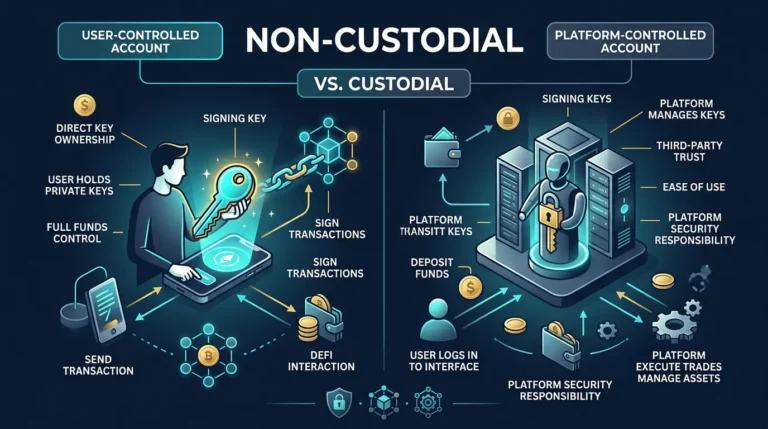
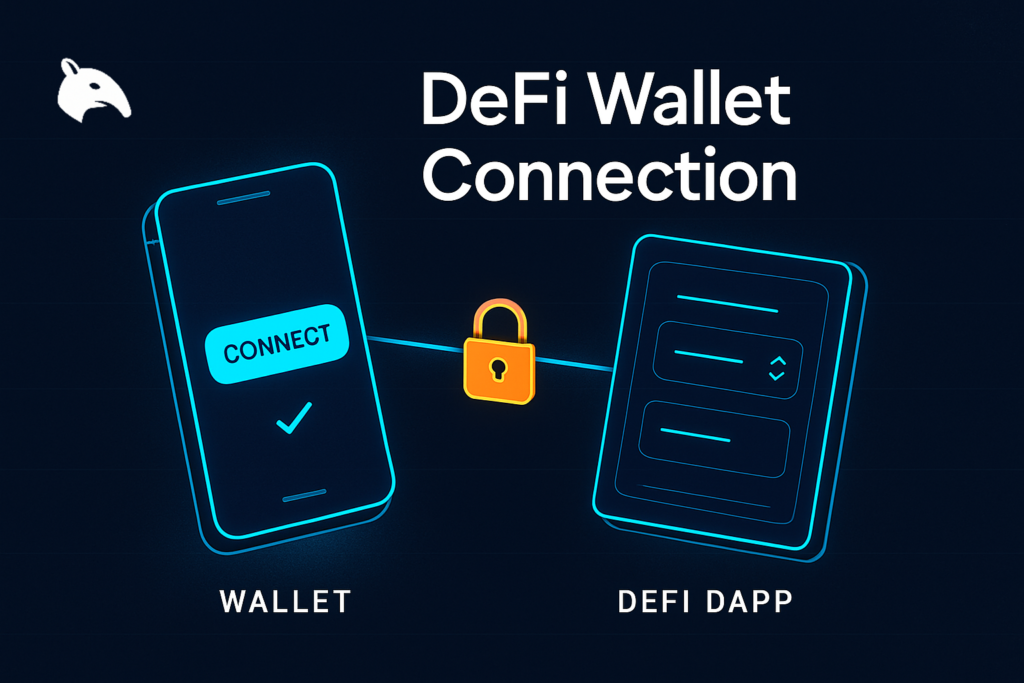
In a typical DeFi flow, the website asks your wallet for access to a public address. The wallet then lets you choose which account to expose to that site. Once connected, the app can read public blockchain data associated with that address and tailor the interface around it. That may include token balances, NFT ownership, available pools, past protocol positions, or whether you qualify for a claim or reward.
The important point is that this first step is usually about identity and interface context, not automatic custody transfer. The app learns which public account it is dealing with so it can prepare requests for that account.
What the App Can See After Connection
Because blockchain activity is public, a connected app can often inspect much more than users expect. It may read token balances, previous approvals, NFT holdings, historical transactions, DeFi positions, and sometimes estimate how valuable the wallet is. That is why high-value wallets can become more attractive targets for phishing, fake claims, or tailored scam flows after they are exposed to risky sites.
Real-world example: a malicious site may detect that a connected wallet holds high-value ERC-20 assets and then present a fake claim or mint flow designed to trigger a high-value approval. The site does not need private access to learn that the wallet is interesting. Public on-chain data is enough.
Where the Real Risk Starts
The real risk starts when the app asks you to do more than connect. In practice, there are three common escalation steps: sign a message, approve a token spender, or send a transaction. These actions are not interchangeable. They carry very different consequences.
Signing a message
Message signing often proves wallet control without moving funds directly. It can be legitimate for login, session creation, or proving ownership. But malicious message flows can still be used in phishing or off-chain trickery, especially if the user does not understand what is being signed.
Approving a token spender
Token approvals are much riskier because they can grant a contract permission to move specific tokens from your wallet. This is where many wallet-drain attacks begin. The cleanest local explainer is Crypto Approval Scams.
Sending a transaction
A transaction changes blockchain state directly. Swaps, deposits, borrows, bridge transfers, staking actions, and revokes all happen here. Once signed and confirmed, the result is typically final on-chain.
If you want the broad system around these interactions, What Is DeFi? is the foundation page. For the exact wallet-side mechanism, use What Is Transaction Signing in Crypto.
Why Users Confuse Connection With Approval
Most DeFi interfaces make the whole process feel like one smooth sequence: connect, sign, approve, confirm. Because the steps appear close together, users often mentally compress them into one harmless action. That is dangerous. The wallet connection may be low risk by itself, while the next prompt may be an unlimited approval or a high-impact contract call.
Operator insight: many bad outcomes happen because the user thinks “I’m just connecting my wallet” even after the flow has already advanced into permissions or transactions. The wording in the user’s head stays simple while the actual on-chain action becomes much more serious.
Why Burner Wallets Help
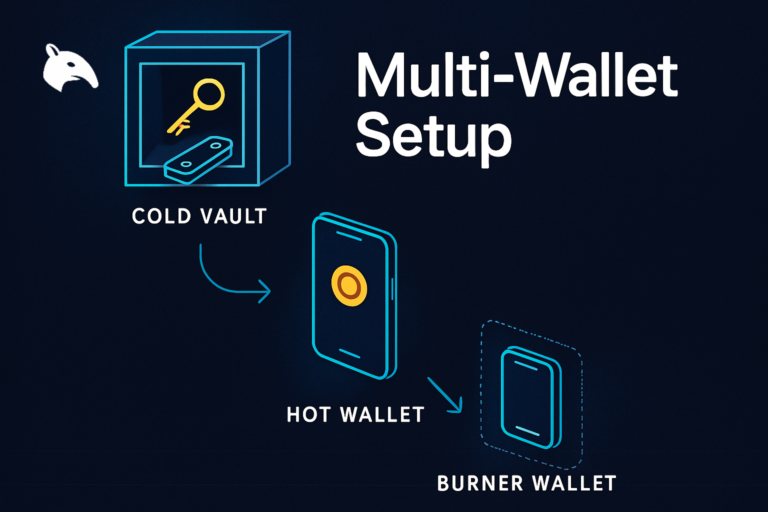
A burner wallet helps because many DeFi risks are about exposure radius, not only about whether the site is good or bad. If the connected wallet holds only a modest working balance and limited approvals, a bad interaction has less room to become catastrophic. That is why burner wallets are common for airdrops, new mints, new DeFi apps, and any uncertain claim flow.
The local definition page is What Is a Burner Wallet in Crypto?. The short version is that a burner wallet reduces blast radius, not risk to zero.
Why Hardware Wallets Still Matter
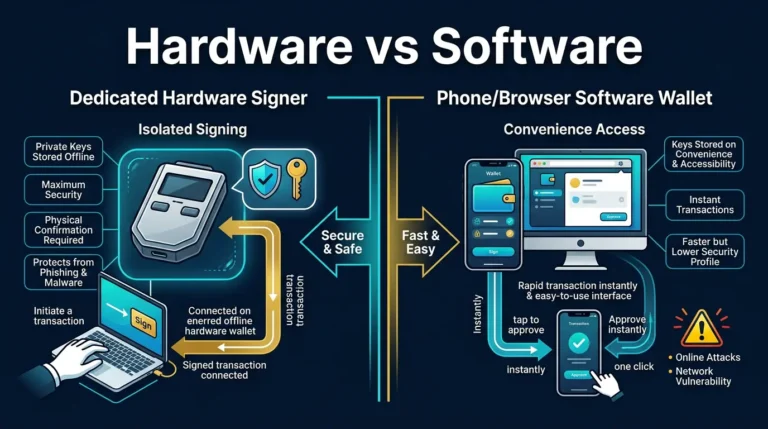
A hardware wallet can help by giving you a separate screen and confirmation path for reviewing actions. It does not magically block malicious DeFi prompts, but it can make it harder to approve them mindlessly on the same browser screen where the site is pushing you. That review separation is useful when the difference between a harmless message and a dangerous approval matters.
The right background explainer here is What Is a Hardware Wallet?. The key point is that better review conditions can reduce bad approvals, but they do not replace judgment.
How Wallet Drainers Exploit These Flows
Wallet drainers often rely on normal-looking connection flows to get users comfortable before presenting the dangerous prompt. The site may ask you to connect first, then make the later approval or transaction feel like a routine claim, mint, or verification step. That is why the most important question is never just “Should I connect?” but “What exactly is this next prompt asking me to authorize?”
For the threat model behind that, the most relevant local explainer is What Is a Crypto Drainer?. A drainer does not need your seed phrase if it can get the right approval or signature from you.
Practical Usage: Safer Connection Habits
- Treat connection as the start of evaluation, not the end: The real risk may appear in the next prompt, not the first one.
- Read every prompt by type: Message, approval, and transaction prompts have very different consequences.
- Use a burner wallet for uncertain apps: Keep new or risky DeFi interactions away from your main wallet.
- Verify domains and links before connecting: Fake sites often imitate real DeFi frontends closely.
- Review and revoke old approvals: Connection sessions may end, but token permissions can remain on-chain until you remove them.
A useful operator rule is to slow down as the prompts become more powerful. Connecting is one level. Signing is another. Approving spend or sending a transaction is a much higher level. The safer your mental model maps those differences, the better your odds in DeFi.
For a closely related follow-up, see Crypto OpSec Mistakes: Common Security Errors.
For a closely related follow-up, see When to Use a Burner Wallet: Safer DeFi and Web3 Habits.
Risks and Common Mistakes
- Thinking connection itself gives away funds: Usually it does not, which can make users dismiss later, more dangerous prompts as equally harmless.
- Signing prompts without understanding their type: A login-style message, unlimited token approval, and on-chain swap are very different actions.
- Using a high-value wallet everywhere: Public wallet visibility plus risky approvals make large visible wallets attractive targets.
- Trusting the interface more than the action: A polished DeFi site or familiar brand styling does not prove the prompt is safe.
- Forgetting that approvals outlive sessions: Closing the tab does not undo token permissions already written on-chain.
Sources
Frequently Asked Questions
Does connecting a wallet let a DeFi app steal funds automatically?
Usually no. Connection alone normally just exposes the public address and lets the app prepare interactions. The bigger risk comes from later signatures, approvals, or transactions.
What can a DeFi app see after I connect?
It can usually inspect public on-chain data tied to that address, such as balances, NFTs, prior transactions, and protocol positions.
What is the riskiest prompt after connection?
Token approvals are often among the riskiest because they can grant contracts permission to move assets later without asking again for each transfer.
Should I use a burner wallet for DeFi?
For new, unfamiliar, or higher-risk apps, yes. A burner wallet can limit the balance and approval history exposed if something goes wrong.
What is the biggest misunderstanding about wallet connections?
The biggest misunderstanding is thinking the danger is all in the initial connection popup, when the more serious risk often appears in the approvals and transactions that come after it.