

You are not choosing between two logos. You are choosing between two reporting engines: one optimized for US filing speed (especially TurboTax), and one optimized for integration breadth, DeFi depth, and international tax formats. Both import exchanges and wallets, classify taxable events, and output capital-gains reports. The buyer mistake is paying for the wrong engine and then spending tax season manually fixing classifications.
This content is for educational purposes only and should not be considered financial or investment advice.
This article may contain affiliate links. Snout0x may earn a commission at no additional cost to you.
Tax software quality is integration depth first; interface polish is a distant second.
Quick Answer
Key Takeaways
- Koinly leads on raw coverage: 800+ exchange integrations, 290+ blockchains, 7,200+ DeFi protocols, and 100+ localized country reports.
- CoinLedger leads on US filing ergonomics: direct TurboTax import partnership and a guided setup that minimizes review time for simple portfolios.
- Entry pricing matches at $49/year for 100 transactions; Koinly pulls ahead at scale ($279 for 10,000 txs vs CoinLedger $499 for unlimited).
- DeFi-heavy portfolios: Koinly reduces manual classification work; CoinLedger is workable but expects more human review on complex routes.
- Neither tool replaces a CPA for entity-level accounting, audits, or ambiguous positions; both target individual filers and freelancers.
Software outputs are only as good as imports + your review. If your chain or exchange is not supported cleanly, the bill lands when you finalize your return with manual fixes — not when the dashboard looks clean after the first sync.
- Do not buy CoinLedger for heavy DeFi or rare venues if unresolved imports will dominate your workflow.
- Do not buy Koinly if your only edge case is US TurboTax speed — CoinLedger’s direct import path is the purpose-built shortcut.
- Confirm country report formats for your jurisdiction before checkout; “works in the US” is not the same as “works for my country’s filing pack.”
Side-by-Side Comparison
| Category | CoinLedger | Koinly |
|---|---|---|
| Best for | US TurboTax filers, simple exchange portfolios | International filers, DeFi-heavy, many venues |
| Exchange integrations | 1,000+ integrations (official pricing) | 800+ |
| Chains / wallets | Unlimited exchange & wallet syncs; multi-chain import | 290+ blockchains, 220+ wallet apps |
| DeFi protocol coverage | Solid; narrower vs Koinly | 7,200+ protocols |
| Country reports | US-first; verify international export for your jurisdiction | 100+ countries |
| TurboTax | Direct one-click import | Compatible export; not same direct flow |
| Free tier | Tracking; limited tax preview | Up to 10k txs tracked; fuller gain preview |
| Scale pricing (signal) | Unlimited plan tops higher ($499/yr) | 10k txs tier lower ($279/yr) |
Key Differences (Decision Layer)
Coverage vs speed. Koinly wins when your problem is “get everything in automatically across many venues and chains.” CoinLedger wins when your problem is “get my US return filed with minimal tool friction,” especially alongside TurboTax.
Trust surface. Both are custodians of your transaction data in the operational sense: you connect APIs and paste addresses. Neither replaces your judgment on classification. Koinly exposes more complexity in the UI because it is built to resolve more edge cases. CoinLedger hides complexity until you hit an unsupported venue — then you are back to CSVs and manual fixes.
CoinLedger is the better product when your activity maps cleanly to major US exchanges and you value guided setup.
Koinly is the better product when your activity maps to long-tail integrations, DeFi routers, and non-US reporting formats.
What Both Tools Actually Do
Both import exchange and wallet activity, match internal transfers so moving coins from Coinbase to self-custody does not look like a taxable sale, classify transactions (trade, income, transfer, etc.), apply accounting methods (FIFO, LIFO, HIFO, average cost where supported), and generate outputs such as IRS Form 8949 / Schedule D patterns for US users. The divergence is how completely imports work without manual intervention and how painful review is when imports break.
Integrations and Coverage
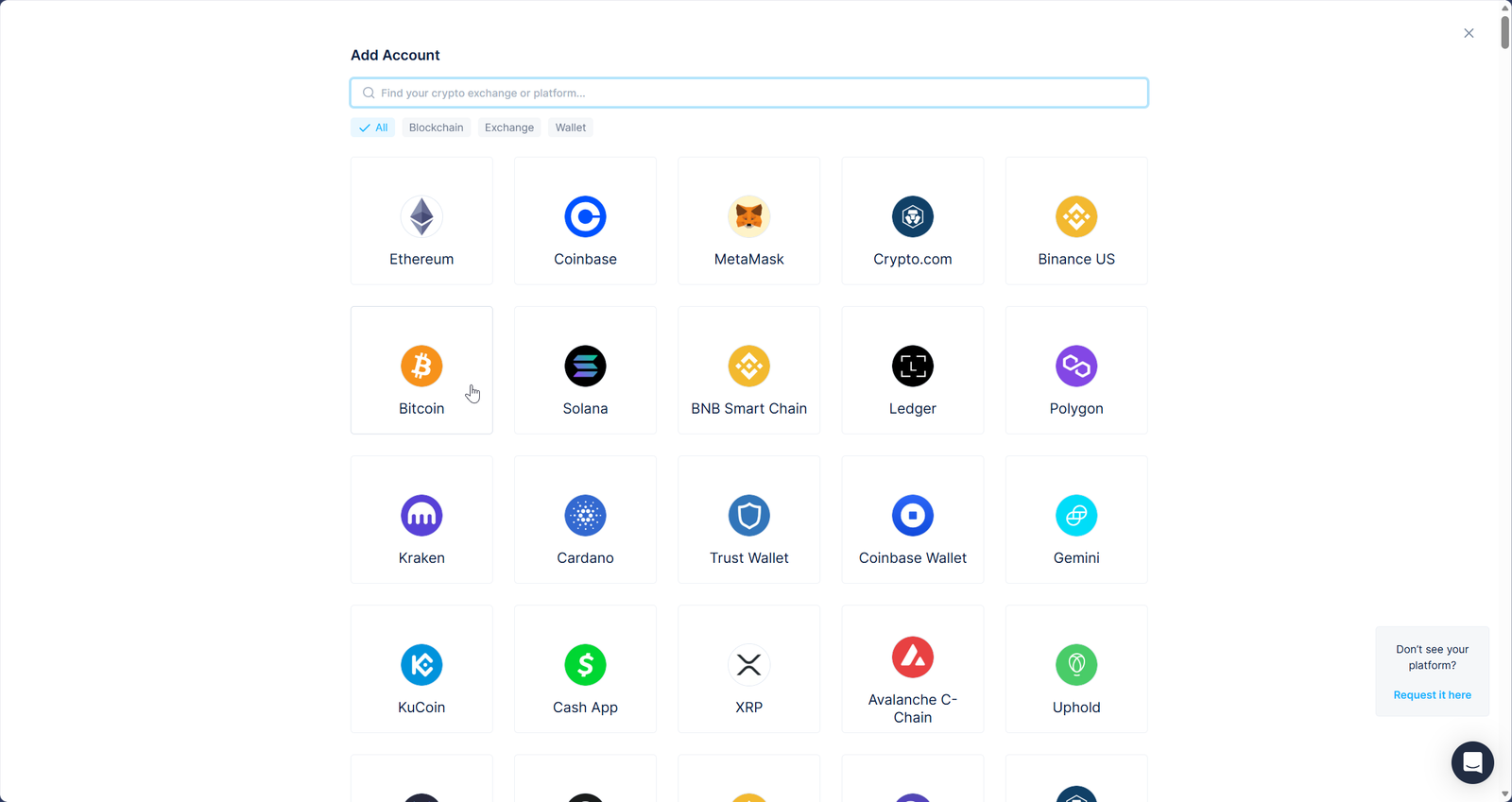
Koinly’s larger integration library matters when you use regional exchanges, newer chains, or wallets that are not first-class everywhere. Fewer CSV rescues means fewer human errors before you generate a return.
CoinLedger still covers the majors (Coinbase, Kraken, Binance-class venues, etc.) strongly. If you truly have two or three large exchange accounts and little on-chain activity, both tools are likely to import cleanly. The advantage shows up at scale: five or more venues, or frequent on-chain movement, favors Koinly.
DeFi, NFTs, and Messy Transactions
This is where Koinly’s protocol coverage translates into fewer hours of review. Liquidity adds/removes, yield routes, lending interest, staking inflows, aggregator paths, and NFT royalties are all high-error zones if the tool does not recognize the contract behavior.
CoinLedger handles common DeFi patterns, but complex multi-hop flows and newer protocols are more likely to land in “needs review.” If DeFi is a material share of your volume, run both free tiers on the same wallets and compare unresolved counts before you buy.
Pricing and Value
Both charge $49/year at the 100-transaction entry tier. That parity ends when volume rises. Koinly’s high-volume tier (10,000 transactions) is priced around $279/year, while CoinLedger’s true unlimited tier sits around $499/year. Active traders should model their transaction count before checkout.
CoinLedger tiers (typical structure): free tracking without report generation; Hobbyist ~$49 (100 txs); Investor ~$99 (1,000); higher tiers for 3,000+; unlimited at premium pricing.
Koinly tiers (typical structure): free tracking with a large preview window (up to 10,000 transactions tracked); paid tiers from ~$49 (100 txs) stepping up to ~$279 for 10,000. Koinly also supports crypto payment for plans.
If you need to see your gain picture before paying, Koinly’s free tier is usually more informative. If you already know you are sub-100 transactions and US-only, either paid entry tier is economically similar — choose on workflow fit, not price alone.
Country Reports and Filing Reality
Koinly ships localized report formats across 100+ countries. That is the decisive international advantage.
CoinLedger is strongest for US outputs (8949 / Schedule D patterns) and TurboTax handoff. It supports a smaller set of additional countries — verify your exact jurisdiction’s export before you rely on it. For common filing mistakes that stem from wrong jurisdiction assumptions, see the linked guide.
Usability and Workflow
CoinLedger is built for speed-to-done: fewer knobs up front, clearer guided steps, less visible transaction archaeology. That is an advantage when your sources are simple.
Koinly is built for accuracy-under-complexity: more flags, more classification controls, more visible lineage per transaction. That is an advantage when your sources are not simple.
Backup discipline is identical in requirement: export CSVs, preserve API keys securely, and keep a frozen snapshot of what you filed. The tool does not remove your obligation to retain evidence.
Who Should Choose CoinLedger
- US residents filing with TurboTax who want the smoothest import path.
- Investors whose activity is mostly centralized exchanges with limited on-chain complexity.
- Users who prioritize onboarding clarity over maximum integration breadth.
- Sub-1,000 transaction filers where pricing is often a tie — optimize for workflow, not specs.
Who Should Choose Koinly
- Non-US filers or anyone who needs localized formats across many countries.
- DeFi-heavy, NFT-heavy, or cross-chain-heavy portfolios.
- Users on many exchanges, including smaller venues where CSV fallback is expensive.
- High transaction counts where Koinly’s top pricing tier is materially cheaper.
- Anyone who wants a stronger free preview before purchasing report access.
Verdict 2026
Bottom line: Koinly is the capability leader for complex and international portfolios. CoinLedger is the workflow leader for US TurboTax filers with straightforward sources. For a three-way view including CoinTracking, use the best crypto tax software for 2026 roundup.
Frequently Asked Questions
Is CoinLedger or Koinly cheaper?
They match at $49/year for 100 transactions. Koinly is usually cheaper at high volume (about $279/year for 10,000 transactions vs CoinLedger around $499/year for unlimited). Model your transaction count before you buy.
Which is better for DeFi taxes?
Koinly. Broader protocol coverage reduces manual classification for liquidity, yield, lending, and router-heavy activity. CoinLedger is fine for simpler DeFi but expects more manual cleanup on complex flows.
Does CoinLedger work with TurboTax?
Yes. CoinLedger’s direct TurboTax import partnership is the strongest US filing convenience in this comparison. Koinly can export compatible formats, but the workflow is not identical to CoinLedger’s one-click path.
Can I use Koinly outside the US?
Yes. Koinly supports localized reports for 100+ countries. If you are not US-only, verify CoinLedger’s country list for your jurisdiction before you commit.
Which has more native exchange integrations?
Koinly lists 800+ exchange integrations. CoinLedger’s official pricing page advertises 1,000+ integrations (broader definition than exchanges-only). The practical metric is whether your uncommon venue imports without CSV rescue — check both libraries for your exact sources.
Do both handle NFT taxes?
Both support NFT buys/sells, but Koinly’s auto-detection is typically stronger for royalties and marketplace-heavy activity. CoinLedger may require more manual tagging on complex NFT workflows.