

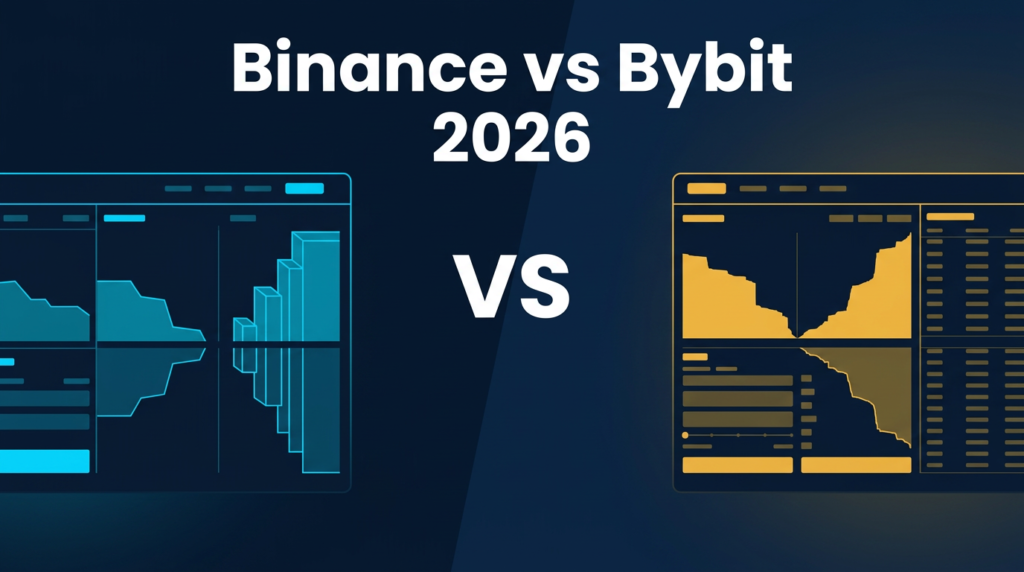
This is not really a question of which exchange is “better.” It is a question of what job you need done, how much exchange risk you are willing to carry, and what jurisdiction you are operating from. Binance usually makes the stronger case for broader ecosystem access, deeper books, and lower-friction mainstream trading flow. Bybit makes the stronger case for a derivatives-first workflow, cleaner interface, and more focused account structure. Neither solves custody risk, compliance friction, or the basic problem of leaving too much money on an exchange.
This content is for educational purposes only and should not be considered financial or investment advice.
This article may contain affiliate links. Snout0x may earn a commission at no additional cost to you.
Liquidity depth, not brand reputation, determines your real execution cost on every trade.
Quick Answer
Do not choose by headline size, token count, or marketing noise. Check your jurisdiction, KYC path, product access, withdrawal route, and whether you are about to use leverage you do not understand.
The practical failure mode is not just trading fees. It is getting stuck between compliance checks, restricted products, open positions, and coins you should have withdrawn sooner.
Key Takeaways
- Binance usually has the stronger liquidity edge, especially for larger spot orders and broader altcoin coverage.
- Headline spot fees start in a similar place, but the real cost story is spread, funding, withdrawal path, and how often you actually trade.
- Bybit usually makes more sense for derivatives-first workflow; Binance usually makes more sense for broader exchange use.
- Jurisdiction and entity matter: product access, compliance friction, and local protections can differ sharply by region and account status.
- Neither is a storage solution. Use self-custody for holdings that are not actively in use.
Binance vs Bybit Fee Comparison
Both exchanges use tiered fee structures based on trading activity and related account qualifiers. At the lowest tier, the headline spot rate starts in the same place, but the discount mechanics and the real cost picture differ in ways that matter once you trade regularly.
Spot trading fees:
- Binance: base spot trading starts at 0.1% maker / taker for regular users, with fee discounts available when using BNB where supported by the current fee schedule.
- Bybit: base spot trading also starts at 0.1% maker / taker, with lower rates available through VIP tiers based on qualifying volume or account conditions.
Derivatives fees:
- Binance: 0.02% maker, 0.05% taker.
- Bybit: 0.02% maker, 0.055% taker.
The derivatives taker gap is small on paper. For traders who do a lot of turnover, it can still add up. For lower-volume users, that fee gap usually matters less than funding, spread, and whether the platform actually fits the way they trade.
Withdrawal fees:
Both exchanges charge network-dependent withdrawal fees. On the same network, costs can look similar, but available routes and supported networks can differ by asset and region. Always check the live withdrawal screen before funding size, because the cheapest exit path often matters more than a small trading fee advantage.
Both platforms may offer better pricing or related benefits at higher tiers. Promotions, coupons, and asset-specific discounts can change, so they are weak reasons to choose an exchange on their own.
Liquidity and Order Book Depth
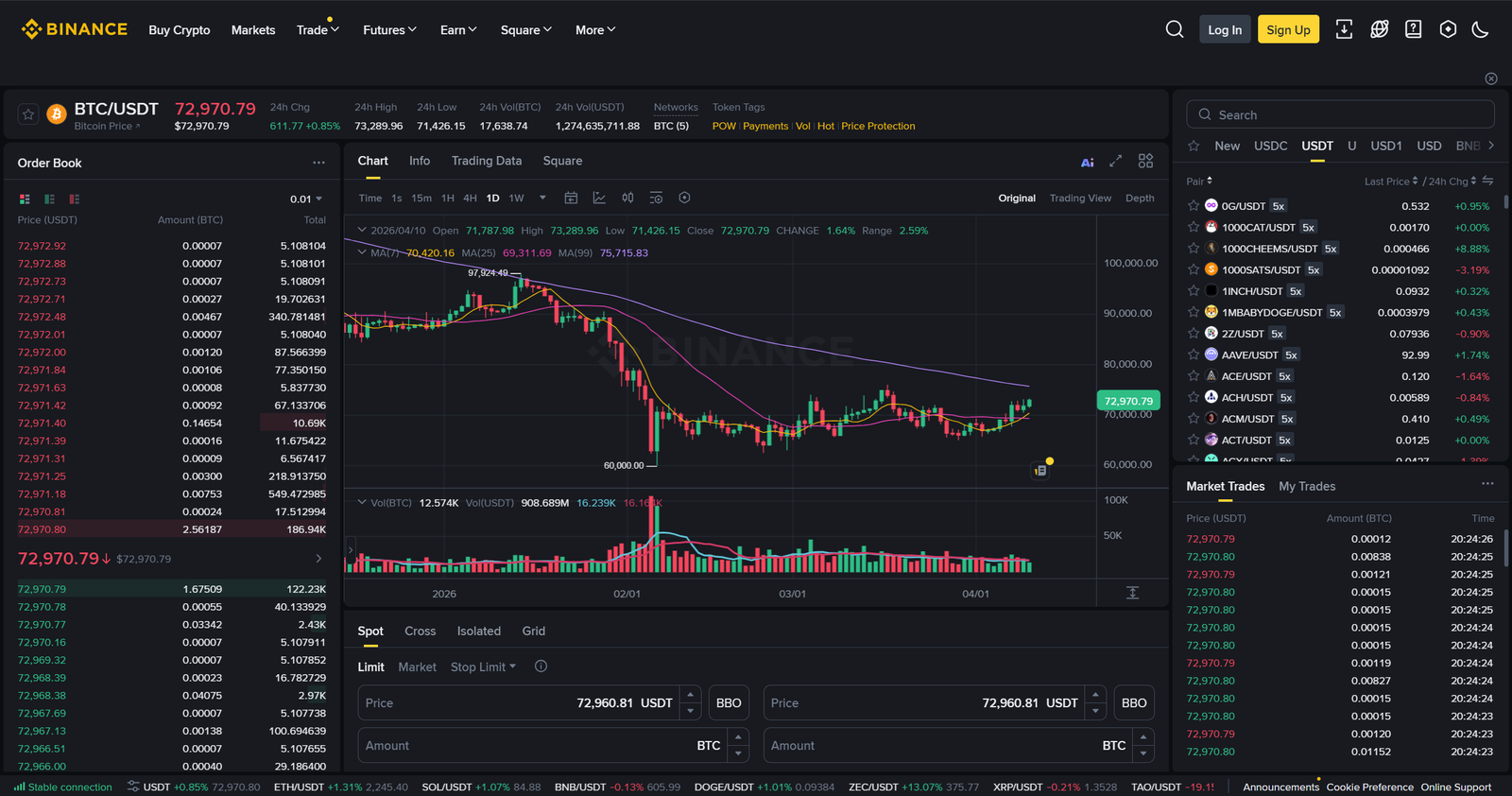
Liquidity is where Binance usually holds its strongest edge. On major pairs and larger tickets, Binance generally offers deeper books and better execution. That matters most when your position size is big enough for slippage to become a real line item instead of background noise.
Order book depth matters because it determines how much of your order fills at the price you see on screen. A thin order book means your market order eats through multiple price levels before filling completely. The resulting slippage is an invisible cost that never appears on your fee statement but directly reduces your realized entry or exit price.
For retail-sized orders on major pairs, both exchanges can work fine. The gap matters more on larger orders, thinner books, and mid-cap names where execution quality separates faster. If you regularly trade size or move through less-liquid markets, Binance usually has the better case.
Bybit’s derivatives liquidity is competitive on major contracts, but thinner books matter more once leverage enters the picture. A small execution disadvantage becomes a bigger realized cost when the position is levered and the exit is stressed.
Trading Features and Products
Both platforms offer broad product menus, but they do not feel the same in day-to-day use. Binance is usually the broader general-purpose exchange. Bybit feels more like a platform built around active trading flow first, especially for derivatives users.
Binance advantages:
- Broader ecosystem surface for users who want more than one exchange function under one account.
- Stronger fit for traders who care about spot breadth, larger books, and a more mainstream “one place for everything” setup.
- More appealing to users who want launches, ecosystem extras, and a larger exchange environment around the core trading desk.
Bybit advantages:
- Unified Trading Account that pools collateral across spot, futures, and options in a single margin balance.
- Stronger copy trading platform with a larger community of verified strategy providers.
- Aurora AI trading suggestions (informational context, not actionable signals).
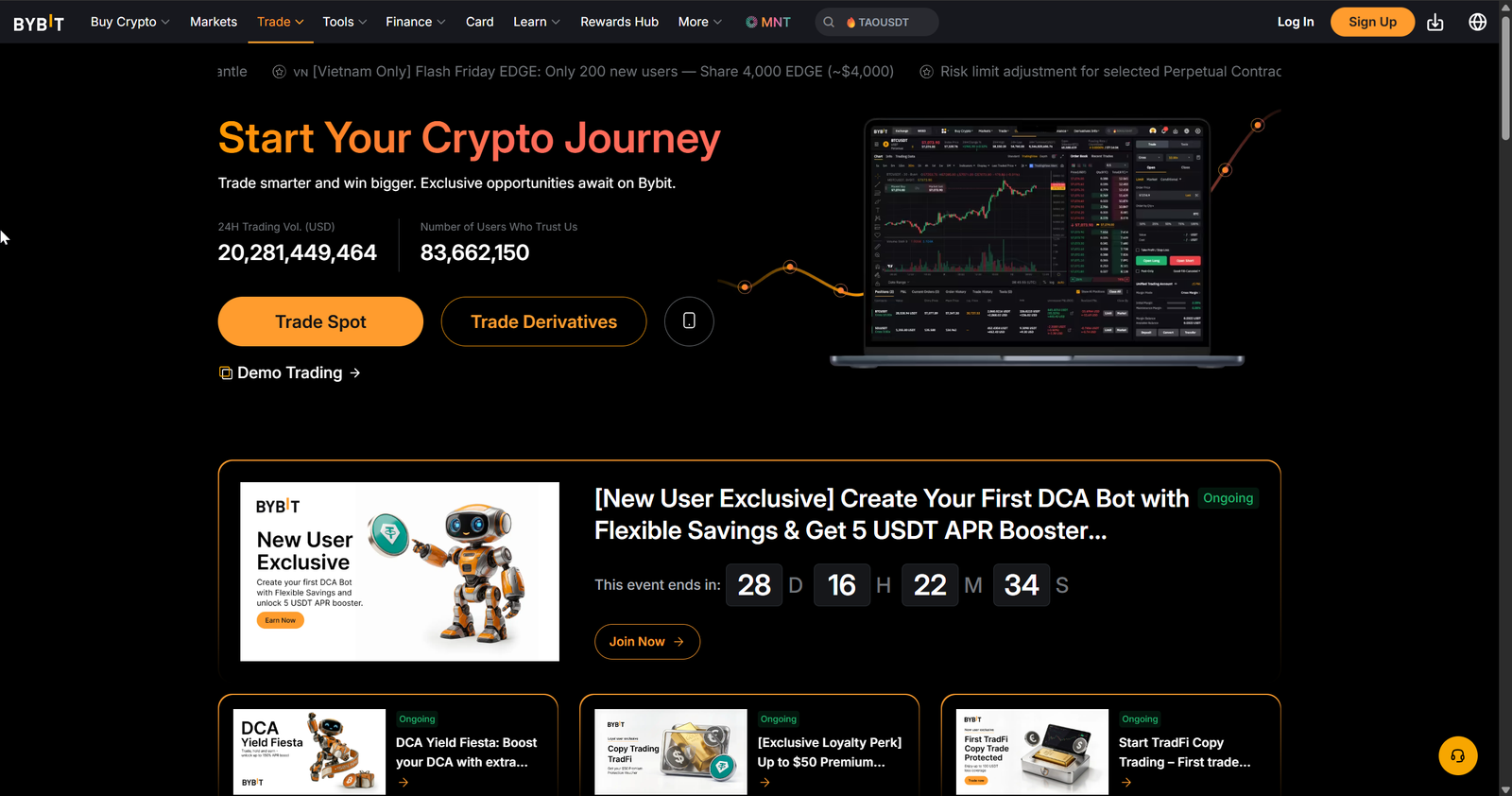
- Cleaner, less cluttered interface that reduces decision fatigue for derivatives-focused traders.
- Faster orientation for users who want a more focused platform rather than maximum ecosystem sprawl.
Binance’s ecosystem is broader. Bybit’s trading experience is more focused. If you want maximum product breadth, Binance usually has the advantage. If you want a tighter trading workflow with less visual sprawl, Bybit often feels cleaner.
Security Models Compared
Both exchanges use the usual major-exchange controls around cold storage, 2FA, anti-phishing tools, and withdrawal protections. The real comparison is not which one “solves” security. It is how each platform has handled trust, reserves, and incident recovery under pressure.
Binance maintains the SAFU (Secure Asset Fund for Users), which it presents as a reserve pool for security incidents. Binance was hacked in 2019 and covered user losses from that event. It also publishes proof-of-reserves materials and related verification tooling. That improves transparency, but it does not remove the underlying risks of custodial exchange use.
Bybit suffered a major 2025 hack tied to the multisig signing interface rather than the exchange’s core matching engine. Bybit said it replenished the loss quickly and kept users whole from the event itself. The response improved the case for Bybit as an operationally resilient trading venue, but not as a place to ignore custody risk. Like Binance, it publishes proof-of-reserves materials that are useful as transparency signals, not as a substitute for self-custody.
Both exchanges are custodial. The risks of exchange custody apply equally regardless of which platform you use. Active trading balances belong on exchanges; long-term holdings belong in self-custody. Understanding how much crypto to keep on an exchange helps set a practical boundary between trading capital and stored wealth.
Neither Binance nor Bybit becomes “safe enough” for long-term storage because of reserves reports, insurance language, or a strong crisis response.
The better question is how quickly you can reduce exchange exposure after the trade is done. That is where self-custody still wins.
Regulation and Geographic Access
Binance operates through multiple entities and has a broader international regulatory footprint than Bybit. The exact product set, local protections, and onboarding path can vary materially by jurisdiction and account status. Binance.US exists separately for American users and does not mirror the global platform feature-for-feature. KYC is a core part of exchange access.
Bybit also operates through regulated entities in some regions, including Europe and the UAE, but its overall regulatory footprint is narrower. Availability, product access, and legal protections can differ by entity and location, so users should confirm the current rules directly before funding the account.
For US-based users, Binance.US is the only legal path between the two, and it is a different product from global Binance. Bybit is not a normal US option. In other regions, both availability and product access can shift over time. Using a VPN to bypass restrictions adds real account-freeze and compliance risk.
Binance vs Bybit: Which Should You Choose?
You want broader exchange coverage, bigger books, more ecosystem features, and a stronger fit for general-purpose exchange use.
You are more derivatives-focused, want a cleaner workflow, and care more about trading focus than broad ecosystem sprawl.
Choose Binance if:
- You trade large positions where order book depth and slippage cost directly affect profitability.
- You want the broadest asset selection and the largest general-purpose exchange environment.
- You are in the US and need the only legal route between the two (via Binance.US, with its own limits).
- You care more about ecosystem breadth and deeper books than a more focused interface.
Choose Bybit if:
- You are primarily a derivatives trader and want a Unified Trading Account for cross-margin efficiency.
- You use copy trading as a core part of your strategy.
- You prefer a cleaner interface with less feature clutter.
- You are in a supported jurisdiction and want a more focused product around active trading flow.
- You care more about trading workflow than maximum platform breadth.
Neither is the right choice if:
- You plan to hold assets long-term without active trading. Centralized exchanges are not storage solutions.
- You require full privacy. Both platforms enforce mandatory KYC with identity verification.
- You trade exclusively on decentralized protocols. Both are centralized custodial platforms with counterparty risk.
Your main goal is simple long-term holding, privacy without KYC, or minimizing exchange dependence. In those cases, the better move is often a smaller exchange footprint and faster withdrawal to self-custody, not a harder comparison between two custodial platforms.
Verdict: Binance vs Bybit in 2026
Binance is usually the better choice if your priority is broader exchange access, deeper books, and a bigger all-in-one platform. That matters most for users who trade larger spot size, touch more assets, or want the wider exchange ecosystem around the core trading desk.
Bybit is usually the better choice if your workflow is more derivatives-first and you want a tighter, more focused trading environment. Its account structure and cleaner interface can make it feel more direct for active traders who do not need maximum ecosystem breadth.
For most users, the practical decision comes down to trading style, jurisdiction, and how much exchange complexity they want to manage. Spot-heavy portfolios with larger orders usually lean Binance. Derivatives-first workflows often lean Bybit. On retail-sized major-pair activity, both can be workable, which is why custody discipline matters more than trying to declare one universal winner.
Regardless of which exchange you choose, do not store assets on any platform longer than necessary. Move holdings to a hardware wallet after trading. The history of exchange failures applies to every centralized platform without exception.
Sources
- Binance: Spot Trading Fee Rate
- Binance: Proof of Reserves
- Bybit Help Center: Trading Fee Structure
- Bybit Help Center: Service Restricted Countries
- Bybit Hit with $1.46 Billion Loss in Largest Crypto Hack (SecureWorld)
Frequently Asked Questions
Is Binance or Bybit cheaper?
At the base level, spot pricing starts in a similar place on both exchanges. Binance can offer additional discounts depending on fee settings and account conditions, while Bybit lowers costs through its own tier structure. For most retail traders, the fee gap is not the main decision driver. For heavier derivatives turnover, Binance can keep a small cost edge.
Which has better liquidity?
Binance generally has stronger order book depth, especially once order size grows or the pair gets thinner. For large orders, that usually means lower slippage. For retail-sized activity on major pairs, both can be workable. The liquidity gap becomes more noticeable on larger tickets and weaker books.
Can I use both exchanges in the US?
For American users, Binance.US is the only normal legal route between the two, and it has a more limited feature set than global Binance. Bybit is not a standard US option. Using a VPN to bypass restrictions adds real account-freeze and compliance risk.
Which is safer after the Bybit hack?
Neither exchange should be treated as “safe enough” for passive storage because both are still custodial platforms. Binance has SAFU and a longer operating footprint. Bybit has a more recent, very public hack-and-recovery test. The safer habit is the same either way: keep only active trading capital on exchange and move long-term holdings to self-custody.
Which is better for derivatives trading?
Both are competitive, but for different reasons. Binance usually has the edge in raw derivatives depth and slightly better taker pricing. Bybit usually has the edge in unified account flow, copy trading, and a cleaner derivatives-focused experience. The better choice depends on whether you care more about book depth or workflow fit.
Should I use both Binance and Bybit?
Sometimes, yes. Using both can reduce single-platform exposure and give access to different books and workflows. The trade-off is more account management, more KYC overhead, and more withdrawal complexity. Many retail users are still better served by choosing one primary exchange and keeping long-term holdings in self-custody.