

Last Updated on April 20, 2026 by Snout0x
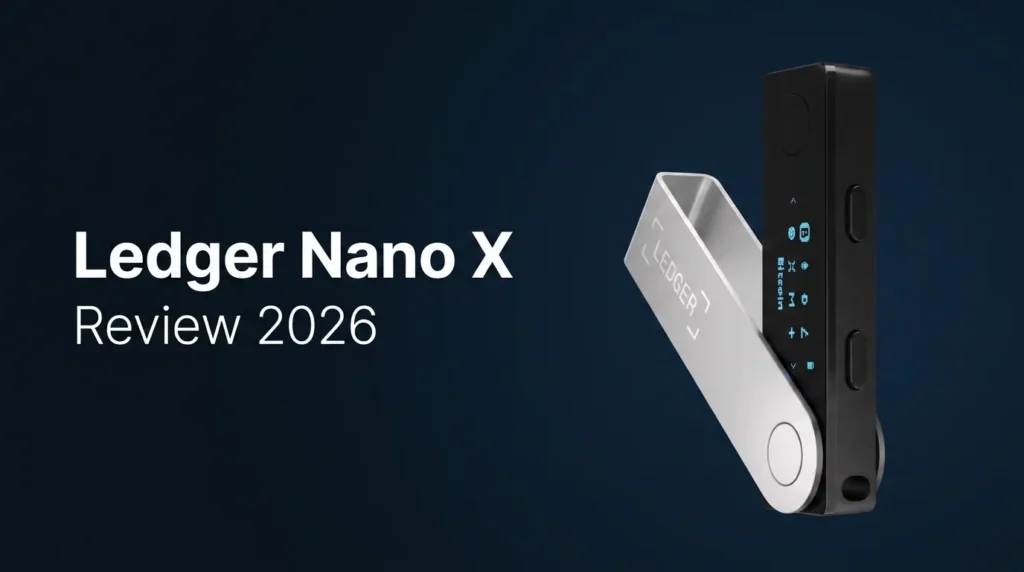
The Ledger Nano X has never suffered a cryptographic key compromise. The CC EAL5+ secure element has held through every attack attempt, every firmware update, and every controversy. If “safe” means “has anyone extracted private keys from this device,” the answer is no — and that matters.
But safety is not just about whether the chip can be cracked. In 2026, the Ledger trust model includes closed-source firmware that no external researcher can audit, a Recover feature that proves the firmware can export seed phrases, and two separate data breaches (2020 and January 2026) that exposed customer identities to attackers. The hardware wallet itself protects your keys. The question is whether the trust model around it matches your requirements.
This content is for educational purposes only and should not be considered financial or investment advice.
This article may contain affiliate links. Snout0x may earn a commission at no additional cost to you.
A secure element that has never been cracked does not prove the firmware running on it is trustworthy.
Is it safe? The hardware has never been compromised. The secure element isolates keys effectively. But the closed firmware cannot be independently verified, and Recover proves the firmware has seed-export capability.
Safe for: Active traders and multi-chain users who want Bluetooth convenience, Ledger Live ecosystem, and 5,500+ coin support — and are comfortable trusting Ledger’s closed firmware.
Not safe enough for: Users who require firmware they can independently audit. If “trust but verify” is your security standard, the Nano X fails the “verify” half.
Price: ~$149 — positioned against the Trezor Safe 5 ($169) which offers open firmware, and the Ledger Nano S Plus ($79) which shares the same firmware model without Bluetooth.
Check Current Price at LedgerKey Takeaways
- The CC EAL5+ secure element has never been cryptographically compromised. Private keys remain isolated inside the chip.
- Ledger Recover proves the firmware has seed-export capability. Even if you never activate it, the code path exists.
- Firmware is closed-source. No external researcher can verify what runs on the device.
- The January 2026 Global-e breach exposed customer names, addresses, and order details — not keys or PINs.
- Bluetooth is cryptographically contained but widens operational attack surface.
- Best suited for active multi-chain traders who value Ledger Live convenience. Not ideal for maximum-sovereignty cold storage.
Ledger Nano X Security Architecture
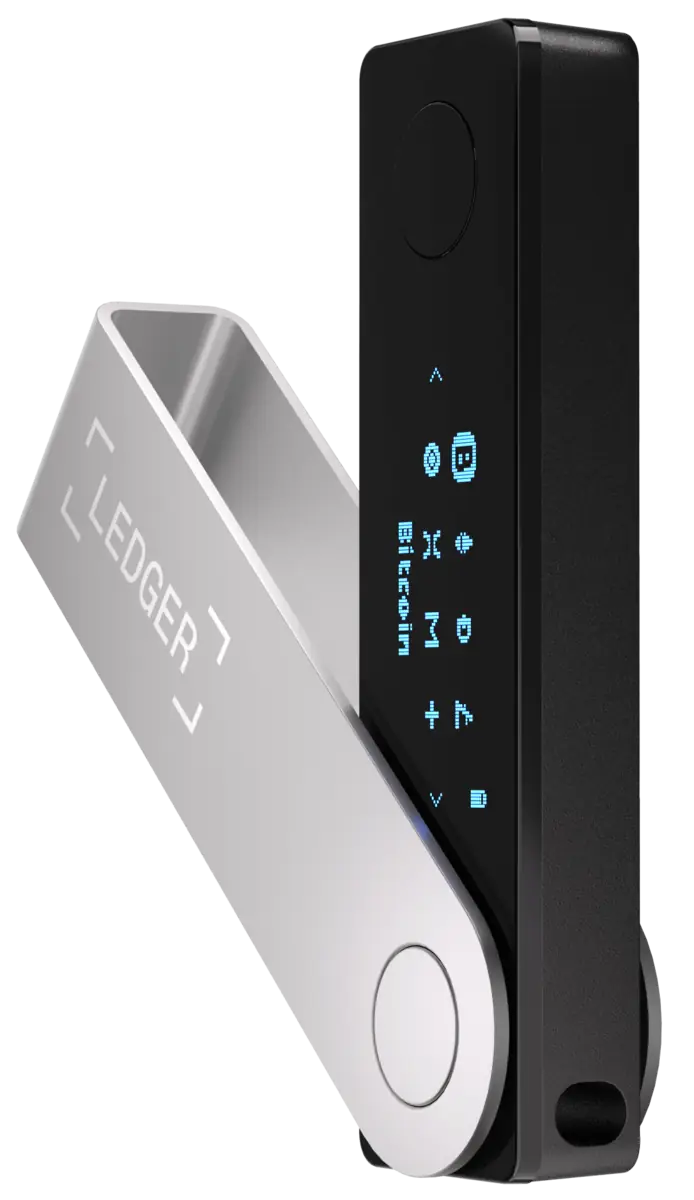
The Ledger Nano X uses a dual-chip design. A general-purpose STM32 microcontroller handles the user interface, Bluetooth communication, and USB connectivity. A separate ST33J2M0 secure element, certified at Common Criteria EAL5+, generates and stores private keys. The secure element performs all cryptographic operations — signing transactions, deriving addresses, verifying PINs — in hardware isolation. The MCU never sees the raw key material.
This architecture means a compromised host computer, a malicious Bluetooth connection, or a tampered USB cable cannot extract private keys. The secure element enforces physical button confirmation for every transaction, so even if an attacker controls the MCU or the companion app, they cannot authorize a transfer without your physical press.
The hardware security is real and proven. No researcher has demonstrated key extraction from a Ledger secure element in a real-world attack scenario. This is why the Nano X remains widely used despite the trust controversies around its firmware.
The Closed-Firmware Trust Model
The firmware running on the Ledger Nano X is proprietary and closed-source. Ledger does not publish the source code, and no external researcher can independently audit the signing logic, key derivation, or communication protocols. This is a deliberate design choice — Ledger argues that secrecy adds a layer of security — but it creates a fundamental trust asymmetry: you must trust Ledger’s claims about what the firmware does, because you cannot verify them yourself.
This is the core trade-off that separates Ledger from open-source alternatives like the Trezor Safe 5, Keystone 3 Pro, or BitBox02. Those devices publish their firmware for anyone to audit. Trezor’s firmware is GPL-licensed. BitBox02 offers reproducible builds. With Ledger, the secure element may be provably tamper-resistant, but the software running on it is a black box.
For a deeper comparison of these architectures, see secure element vs open-source wallet security models.
Ledger Recover: What It Actually Means
Ledger Recover is an optional paid subscription that encrypts your seed phrase, splits it into three shards, and distributes them to third-party custodians (Ledger, Coincover, EscrowTech). If you lose your device and seed backup, you can recover your wallet through identity verification and a 2-of-3 shard reconstruction.
The service is opt-in. You do not have to activate it. But its existence proves something important about the firmware: the code running on your device is capable of extracting and transmitting your seed phrase. Before Recover, Ledger’s security narrative rested on the claim that seed phrases never leave the secure element. Recover demonstrates that the firmware has a code path to do exactly that — encrypted and sharded, but exported nonetheless.
This is not a hidden backdoor. It is a documented feature with a legitimate use case (recovery for users who lose their seed). But it shifts the security model from pure cryptographic isolation to conditional trust in Ledger’s firmware integrity. For users whose threat model requires independently verifiable firmware, this shift is disqualifying. For users who trust Ledger and want the recovery safety net, it may be a feature.
You can read Ledger’s official explanation at ledger.com/ledger-recover.
The Global-e Data Breach (January 2026)
In January 2026, Global-e — Ledger’s merchant-of-record partner for online sales — confirmed unauthorized access to customer order records. This was Ledger’s second major customer data exposure, following the 2020 breach that leaked names, email addresses, and physical addresses of approximately 270,000 customers.
The 2026 breach exposed:
- Full names
- Email addresses
- Shipping addresses
- Order details (what was purchased and when)
The breach did not expose private keys, recovery phrases, or device PINs. This was a commerce database compromise, not a cryptographic attack.
The security consequence is indirect but real: attackers now know who owns Ledger hardware wallets, where they live, and what they bought. This information fuels targeted phishing attacks, physical theft planning, and social engineering. After the 2020 breach, Ledger customers reported a significant increase in phishing emails impersonating Ledger support. The same pattern is expected from the 2026 exposure.
To reduce exposure from future commerce breaches, always buy hardware wallets directly from the manufacturer and consider using a PO box or shipping alias. For broader supply chain risks, see hardware wallet supply chain attacks.
Bluetooth: Contained Risk, Not Zero Risk
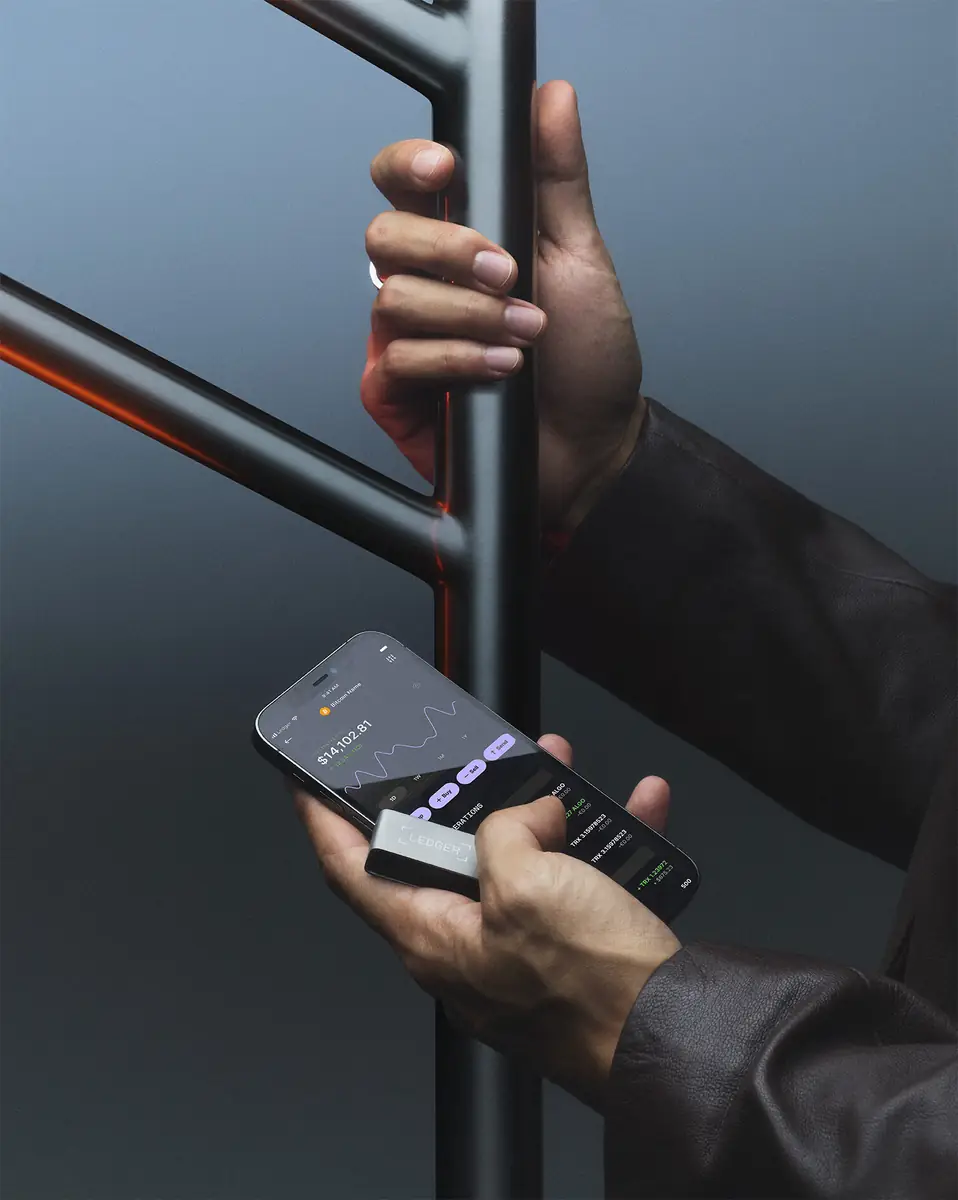
The Nano X uses Bluetooth Low Energy for wireless communication with the Ledger Live mobile app. The Bluetooth channel is encrypted, and private keys never leave the secure element over Bluetooth or any other channel. Physical button confirmation is required for every transaction regardless of connection method.
From a cryptographic standpoint, Bluetooth does not expose your seed phrase. The concern is operational: Bluetooth widens the device’s attack surface compared to USB-only wallets. A wireless radio that can be probed, paired, or interfered with creates potential vectors that USB-only devices eliminate entirely. No Bluetooth exploit has resulted in key theft from a Ledger device, but the radio’s presence means the theoretical surface is larger.
If Bluetooth makes you uncomfortable, use the USB-C connection instead — the Nano X supports both. If you want to eliminate wireless attack surface entirely, USB-only wallets like the Trezor Safe 5 or air-gapped devices like the Keystone 3 Pro remove the radio from the equation.
Screen: A Verification Risk, Not Just a Comfort Issue
The Nano X’s 128×64 monochrome OLED with two-button navigation was competitive at launch. In 2026, it is the weakest screen in its price class. Simple Bitcoin transfers display clearly, but complex DeFi interactions, long Ethereum addresses, and multi-parameter transactions require scrolling through multiple small screens — increasing the risk of approval mistakes. This matters because on-device verification is the last line of defense: if you approve the wrong transaction, the secure element signs it faithfully. The Trezor Safe 7 (2.5-inch OLED touchscreen) and Keystone 3 Pro (4-inch display) make verification faster and less error-prone. For a detailed comparison, see Ledger Nano X vs Trezor Safe 7.
Who Should Buy the Ledger Nano X (and Who Should Not)
The Ledger Nano X remains a strong option if most of these apply:
- You hold assets across many chains and need support for 5,500+ coins with a polished ecosystem.
- You sign from both desktop and phone and want Bluetooth + USB-C flexibility.
- You trust Ledger’s closed-firmware model and are comfortable with a vendor who has demonstrated seed-export capability in firmware.
- You value the Ledger Live app’s integrated staking, swaps, and exchange features over raw security minimalism.
- Your primary threat is losing access to funds, and Recover’s existence as a recovery option is reassuring rather than concerning.
The Ledger Nano X is not the right choice if:
- You require firmware you can independently audit. The Trezor Safe 5 ($169) offers open-source firmware with an EAL6+ secure element at a nearly identical price.
- You want maximum network isolation. Air-gapped wallets like the Keystone 3 Pro or SafePal S1 eliminate Bluetooth, USB data, and all wireless attack surface.
- Ledger’s breach history concerns you. Two separate customer data exposures (2020 and 2026) mean your identity as a Ledger customer may already be known to attackers.
- You want reproducible firmware builds. The BitBox02 offers the strongest firmware verifiability in any retail wallet.
- You are Bitcoin-only and want a stripped-down single-chain device. Trezor and BitBox02 both offer Bitcoin-only firmware editions.
- CC EAL5+ secure element — never cryptographically compromised
- 5,500+ coins — broadest multi-chain support in category
- Bluetooth + USB-C — mobile and desktop signing
- Ledger Live ecosystem — staking, swaps, exchange integration
- Physical button confirmation for every transaction
- Closed-source firmware — cannot be independently audited
- Recover proves firmware has seed-export code path
- Two customer data breaches (2020 + 2026)
- Small monochrome OLED dated for DeFi verification
- Bluetooth widens operational attack surface
How Ledger Nano X Compares to Trezor Safe 5
The Trezor Safe 5 is the most direct alternative at a nearly identical price. Both are USB-C hardware wallets with secure elements. The table below isolates the trust and feature trade-offs that determine which device fits your security requirements.
| Ledger Nano X | Trezor Safe 5 | |
|---|---|---|
| Price | ~$149 | $169 |
| Firmware | Closed-source | Open-source (GPL) |
| Secure element | CC EAL5+ (ST33J2M0) | EAL6+ (Infineon OPTIGA) |
| Seed export capability | Yes (Recover) | No |
| Bluetooth | Yes | No |
| Screen | 128×64 mono OLED | 1.54″ color touchscreen |
| Coin support | 5,500+ coins | 9,000+ coins |
| Shamir backup | No | Yes (Multi-Share) |
| Breach history | 2 breaches (2020, 2026) | None |
Choose Ledger Nano X if you need Bluetooth mobile signing and are comfortable with closed firmware. Choose Trezor Safe 5 if you require open-source firmware, a higher-certified secure element, and no seed-export code path in the firmware. For $20 more, the Trezor Safe 5 removes the two biggest trust concerns — closed firmware and Recover — while adding a color touchscreen and Shamir backup.
Need open firmware at the same price? → Trezor Safe 5 ($169) — open-source, EAL6+, no Recover.
Need air-gapped + QR signing? → Keystone 3 Pro ($149) — zero network connectivity, 4-inch screen.
Need reproducible builds? → BitBox02 ($149) — strongest firmware verifiability.
Need the simplest possible starter wallet? → Tangem ($55) — NFC cards, no seed phrase.
For the full security model comparison, see Ledger vs Trezor security model. For the full market overview, see the hardware wallet comparison.
Is Ledger Nano X Safe? The Verdict
The Ledger Nano X is hardware-safe and trust-compromised. The secure element has never been broken. Private keys remain isolated. Physical confirmation prevents unauthorized signing. On pure hardware security, the Nano X holds up in 2026.
The trust model is where it weakens. Closed firmware means you cannot verify what code runs on your device. Recover proves the firmware can export your seed. Two data breaches have exposed customer identities to attackers. None of these individually mean “your funds are at risk today.” Together, they mean the Nano X asks for more trust than any open-source competitor at the same price — and delivers less transparency in return.
For active multi-chain traders who value Bluetooth, Ledger Live, and broad asset support, the Nano X remains practical and well-supported. For users whose security standard requires auditable firmware and no seed-export code path, the Trezor Safe 5 exists at $20 more and eliminates both concerns.
The 7.2 reflects proven hardware security reduced by trust-model weaknesses. The uncompromised CC EAL5+ secure element and 5,500+ coin support earn top marks. The score drops sharply for closed-source firmware that cannot be audited, firmware-level seed export capability (Recover), and two customer data breaches. The Nano X is safe enough for convenience-focused multi-chain traders. It is not safe enough for users who require firmware transparency.
Check Price at LedgerIf firmware transparency is non-negotiable, see the Trezor Safe 5 review. For the full market overview, see the hardware wallet comparison.
Sources
- Ledger Recover — Official Explanation (Ledger)
- Ledger Security Update — Global-e Breach Notice (Ledger Blog)
- Common Criteria Portal — EAL Certification Standards
Frequently Asked Questions
Has the Ledger Nano X secure element ever been compromised?
No. The CC EAL5+ secure element (ST33J2M0) has never been cryptographically compromised in any publicly documented attack. Private keys remain isolated inside the chip. The data breaches in 2020 and 2026 exposed customer commerce data, not cryptographic material.
Can Ledger steal my crypto through Recover?
Recover is opt-in and requires your explicit enrollment plus identity verification. However, the firmware-level seed export capability exists whether you activate Recover or not. Because the firmware is closed-source, you cannot independently verify that this capability is only triggered by the Recover enrollment flow. The risk is not that Ledger will steal funds — it is that the code path for seed export exists and cannot be externally audited.
Should I still buy a Ledger Nano X in 2026?
If you need Bluetooth mobile signing, broad multi-chain support, and a polished companion app, and you are comfortable with closed firmware, the Nano X remains a practical choice. If you require open-source firmware or are uncomfortable with the Recover seed-export capability, the Trezor Safe 5 offers a stronger trust model at a similar price.
How does Ledger Nano X compare to Trezor Safe 5?
Both are USB-C hardware wallets with secure elements at similar prices (~$149 vs $169). The Ledger Nano X adds Bluetooth but uses closed firmware and has Recover seed-export capability. The Trezor Safe 5 has open-source firmware, an EAL6+ chip, a color touchscreen, and Shamir backup with no seed-export code path. Choose Ledger for Bluetooth convenience, choose Trezor for firmware transparency.
What happened in the 2026 Ledger data breach?
In January 2026, Global-e (Ledger’s merchant-of-record partner) confirmed unauthorized access to customer order records including names, emails, shipping addresses, and order details. No private keys, recovery phrases, or PINs were exposed. The breach increases phishing and social engineering risk for affected customers.